
Lesser Bonewalker
"It shambles on stolen bones, stitched by spite and shadow, wearing death like a beggar’s cloak and hungering for the warmth it can never feel again."In the shadowed corners of Domen Aria, where grave soil lies restless and the air tastes faintly of old blood, the Lesser Bonewalker stirs. Neither wholly man nor beast, it is a crude amalgamation of skeletal remains, lashed together by the will of fledgling necromancers or born unbidden in places steeped in slaughter. Rattling and lurching with each unnatural step, these brittle abominations serve as the first rung on the ladder of undeath, simple-minded, tireless, and easily replaced. Though individually weak, their numbers and relentlessness have made them a favored tool of apprentice death-dealers and a dreaded sight for the living, for where one Bonewalker clatters into view, more are often close behind.
Origins & Creation
Lesser Bonewalkers are the work of those new to the art of necromancy, apprentice sorcerers, hedge-witches dabbling in corpse magic, or even young warlocks testing the limits of their pacts. The spells to animate them are simple compared to the complex rituals needed for more potent undead, requiring only a crude arrangement of bones, an incantation of binding, and a sustaining focus of will. On rare occasions, these creatures form without a deliberate necromancer, in places of slaughter, betrayal, or prolonged torment, where piles of bones are steeped in hatred and grief. Such spontaneous Bonewalkers are far more erratic, lashing out with primal rage rather than following even the simplest commands.Description
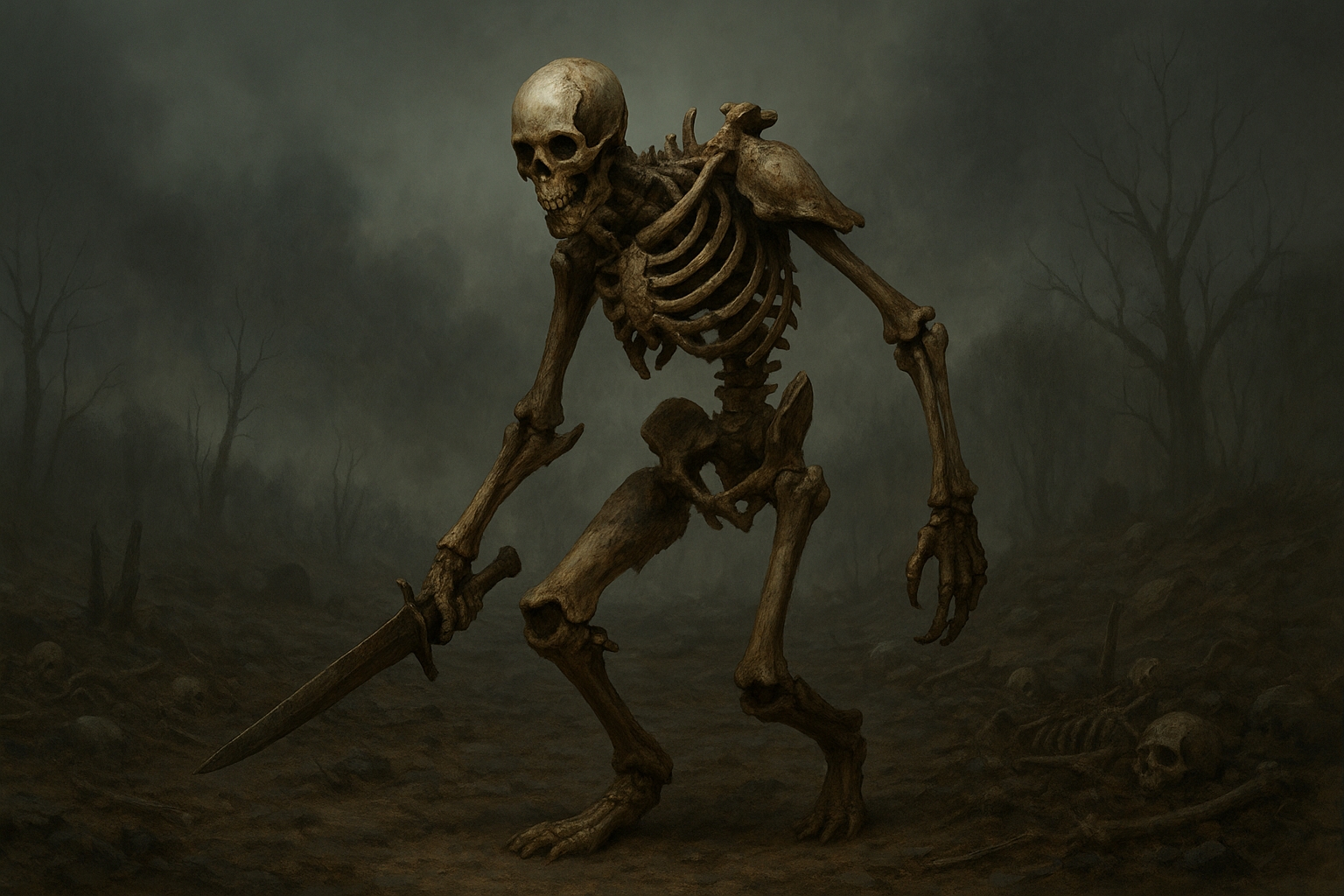
The Lesser Bonewalker appears as a lopsided, patchwork skeleton, its frame a mismatched collage of humanoid and beast bones bound together by scraps of sinew, rusted wire, or hardened clots of resinous binding material. The bones are yellowed, cracked, and often stained with soil, dried blood, or the greenish patina of long-buried remains. It carries a faint, acrid stench of grave dust, rotting marrow, and old rust, with an undercurrent of the sharp, unnatural tang of necromantic magic. When it moves, it produces a constant chorus of rattling joints, scraping bone, and the occasional sharp snap as a loose fragment grinds against another, often accompanied by the soft hiss or whisper of the magic that animates it."They do not serve willingly. The dead should stay buried, if they walk, it is because someone has sinned."
Basic Information
Anatomy
The Lesser Bonewalker has a crude and mismatched anatomy, stitched together from whatever skeletal remains are available. Its frame is rarely symmetrical, a human spine might connect to the ribcage of a dwarf, with an orc’s arm on one side and a beast’s foreleg crudely reshaped into the other. The skull, often cracked or incomplete, is lashed or magically bound to the spine, while missing bones are replaced with fragments from other creatures. Joints are rarely aligned correctly, giving the Bonewalker an awkward, jerking gait. Splits and gaps in the skeleton are often sealed with scraps of leather, twisted wire, or hardened clots of binding resin, and the entire construct is held together as much by necromantic force as by its actual bone structure.
Genetics and Reproduction
This skeleton cannot reproduce, replicate, clone or otherwise make more of itself. The only way in which this being can be created is through necromantic magic and dark powers.
Ecology and Habitats
The Lesser Bonewalker has no place in a natural ecosystem, existing solely as an intrusion of necromantic magic into the living world. It does not hunt for food or shelter, instead lingering wherever it was created or commanded to remain. Its “habitat” is typically a graveyard, crypt, ruined battlefield, or any place dense with unburied bones and residual death magic. In such areas, Bonewalkers may wander in small, aimless groups, often alongside other low-tier undead. Their presence disrupts local ecology, scavengers avoid them, plant growth withers in their wake, and nocturnal predators sometimes follow them at a distance, feeding on the corpses they leave behind.
Dietary Needs and Habits
The Lesser Bonewalker has no true dietary needs, as it is sustained entirely by necromantic energy rather than flesh or sustenance. However, some exhibit a disturbing mockery of hunger, gnawing on bones, snapping at living creatures, or grinding their teeth together when prey is near. This behavior is not for nourishment, but is believed to be a residual instinct from the lives of the beings whose bones now make up its form. In rare cases, Bonewalkers animated with lingering soul-fragments may consume flesh or marrow, not to survive, but to strengthen the magical tether that binds them to the mortal world.
Behaviour
Lesser Bonewalkers are driven by the simplest of instructions: guard, kill, fetch, follow. They lack higher reasoning and cannot wield complex weapons effectively, though they may carry clubs, rusted swords, or farming tools if ordered to. If left without direction, they will wander aimlessly until they crumble apart or are destroyed.
They have no fear, no sense of self-preservation, and no recognition of former life, a Bonewalker may bear the skull of a man’s own father, yet it will kill without hesitation. However, they do display an eerie fixation on warm-blooded creatures, as if some fragment of life deep within them still remembers hunger.
Additional Information
Social Structure
This species does not communicate and has no social structure at all.
Domestication
The Lesser Bonewalker cannot be domesticated in any natural sense, but it can be controlled through necromantic binding spells, glyphs, or enchanted talismans. Without magical control, they revert to aimless wandering or violent aggression toward the living, making them dangerous to keep outside of strict confinement or direct supervision. Any “taming” is purely magical coercion, not loyalty or true domestication.
Uses, Products & Exploitation
The Lesser Bonewalker is chiefly exploited as cheap, expendable labor or disposable muscle by those with even modest necromantic skill. They serve as guards for tombs, scouts in dangerous ruins, or cannon fodder in battles where living soldiers are too valuable to risk. Some unscrupulous practitioners use them for menial tasks such as carrying loads, digging graves, or hauling battlefield salvage. In darker corners of Domen Aria, Bonewalkers are displayed in arenas for morbid entertainment or sold by black market bonewrights as “pre-assembled” undead servants. Their ease of creation makes them common tools for exploitation, but their fragility ensures they are rarely kept for long-term use.
Geographic Origin and Distribution
The Lesser Bonewalker has no natural habitat and appears wherever bones and death are plentiful. They are most often found near battlefields, ancient burial sites, plague pits, abandoned catacombs, and regions under the sway of necromancers or death cults. In rare cases, they roam cursed or haunted lands where dark magic lingers, such as blighted swamps, desecrated temples, or massacre sites. Their distribution is entirely dependent on where their creators, or the supernatural forces that occasionally birth them, operate, meaning they can appear in almost any region of Domen Aria touched by death and decay.
Average Intelligence
The Lesser Bonewalker possesses only the barest flicker of intelligence, enough to follow simple commands, recognize its master, and navigate basic terrain. It cannot reason, learn, or adapt beyond its initial instructions, acting more like a trained hunting hound than a thinking being. Left without direction, it will either stand idle, patrol in repetitive patterns, or wander aimlessly until something living enters its awareness. Any cunning it displays is not its own, but the echo of instinct from the lives whose bones compose its form.
Perception and Sensory Capabilities
The Lesser Bonewalker lacks eyes, ears, or flesh, yet perceives the world through the faint necromantic energy animating it. It “sees” as a ghost might, sensing movement, heat, and life force within a short radius, though fine detail is lost beyond a few paces. Sound is perceived as vibrations through bone rather than true hearing, making them sensitive to loud noises or heavy footsteps. They cannot smell, but some seem to detect blood and magic as faint pulls or tugs in their awareness. This limited extrasensory perception makes them effective in close quarters, but easily eluded at distance or in magically deadened areas.
"A Bonewalker is a novice’s boast, easy to raise, easier to break… but still enough to send a farmer screaming."
Scientific Name
Ossium Ambulo Minor
Origin/Ancestry
These entities originate from any number of previously living creatures.
Conservation Status
This patchwork undead creature is not under any protection status of any nation. All who encounter it are encouraged to flee or destroy it if they can do so safely and/or report it to the nearest religious center or government agency.
Average Height
The height is variable depending on the original creature or creatures that make up this skeleton.
Average Physique
Roughly humanoid in size, shape, and physique, if somewhat disjointed.
Body Tint, Colouring and Marking
The bones are often stained with old soil, rusted iron dust, or dried blood, giving each Bonewalker a unique, macabre patterning. In dim light, their eye sockets often seem to smolder faintly with necromantic motes, not true flames, but glimmers of the binding magic that forces their remnants to move.
Strengths And Weaknesses
The Lesser Bonewalker is valued for its tireless endurance, lack of fear, and ease of creation, making it a cheap and expendable servant for novice necromancers. It can march endlessly, endure wounds that would kill any living creature, and remain loyal so long as magical control holds. Its mismatched construction sometimes grants unpredictable reach or striking angles in combat, which can surprise the unprepared. However, its crude assembly also makes it fragile, brittle bones, loose joints, and poorly aligned limbs leave it vulnerable to strong blows. It is slow to react, incapable of independent thought, and easily deceived or lured into traps. Holy magic, sunlight, and certain warding substances like salt or blessed ash quickly erode its animating force, ensuring that even a modestly prepared foe can dispatch it with relative ease."Destroy the magic, and the bones fall silent. Fail… and the bones will learn your name."
Combat Tactics
Bonewalkers attack with reckless persistence, often swarming foes in packs. They will grab, bite, claw, and bludgeon with whatever is in reach. When armed, they use crude, wild swings rather than skillful strikes. Their unpredictable movements can startle inexperienced fighters, and the sound of clattering bones in the dark is often enough to break a man’s nerve.Known Variations
While most Lesser Bonewalkers are humanoid in shape, their piecemeal nature means some bear animal skulls, claws instead of hands, or even animal legs if beast bones are plentiful. Scholars have recorded “Fang-walkers”, skulls with full predator jaws and “Vulture-skulls”, raptor-headed Bonewalkers used by swamp necromancers for intimidation."It matters not whose skull it wears, to the Bonewalker, all flesh smells the same."
Rumors
Whispered tales about the Lesser Bonewalker vary from morbid superstition to chilling possibility. Some claim that certain Bonewalkers carry the skull of their most vengeful victim, granting them a flicker of memory and a relentless drive to hunt down the murderer. Others speak of whispering Bonewalkers whose mismatched jaws still clack out fragments of the last words their bones once spoke. Rural folk warn that destroying one without scattering its bones invites it to rise again by the next moonrise, stronger and more aware. Among gravekeepers, there is an old belief that a Bonewalker assembled from seven different individuals becomes bound to the place of its creation, forever defending it even after the necromancer’s death. Darker rumors tell of Bonewalkers that continue to serve long after their master has perished, wandering the countryside in silent, purposeful marches toward some unseen goal. A few even insist that, on moonless nights, the glimmers in a Bonewalker’s eye sockets are not mere necromantic sparks, but the trapped souls of those whose bones were stolen, pleading for release.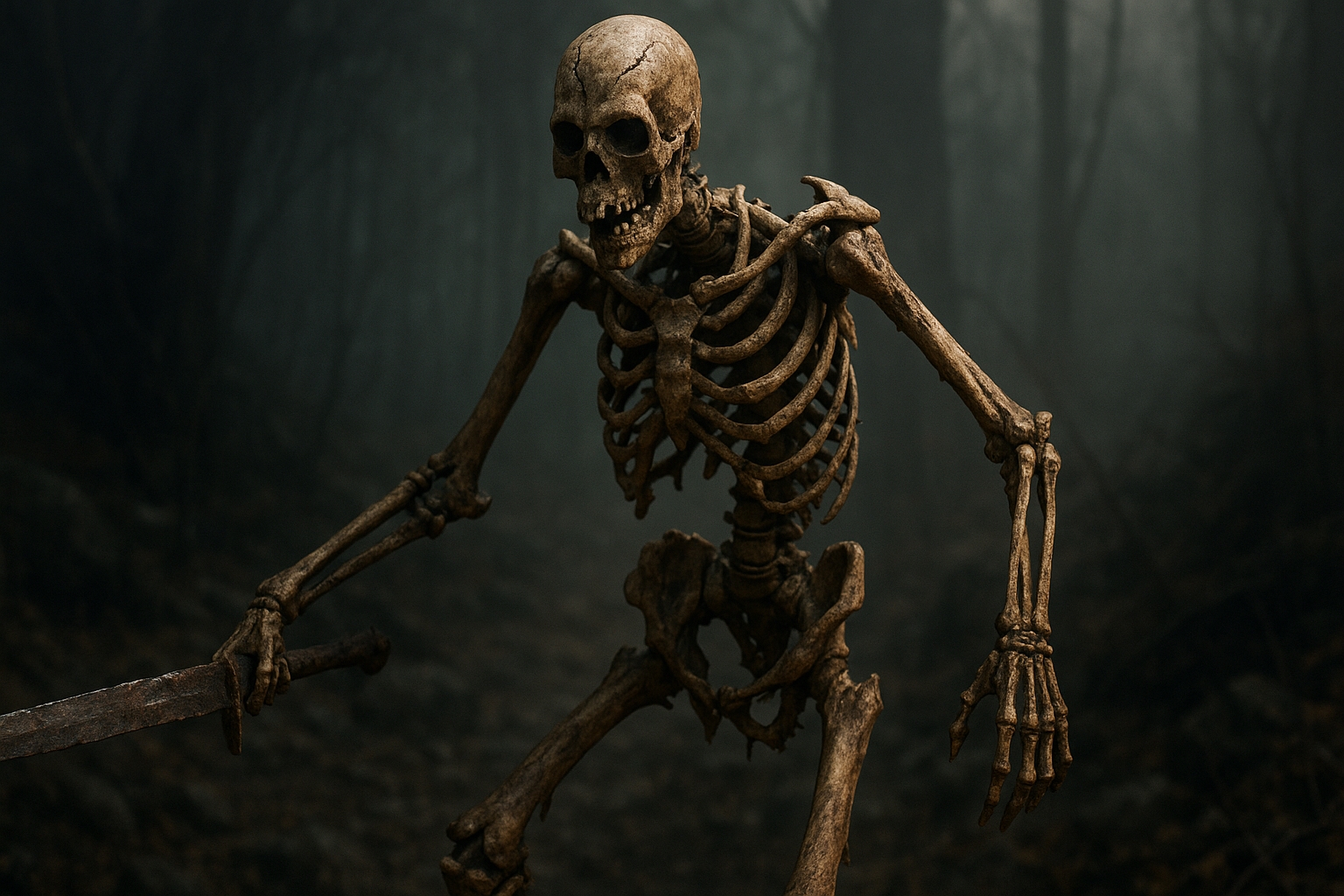

Comments