Pylmae
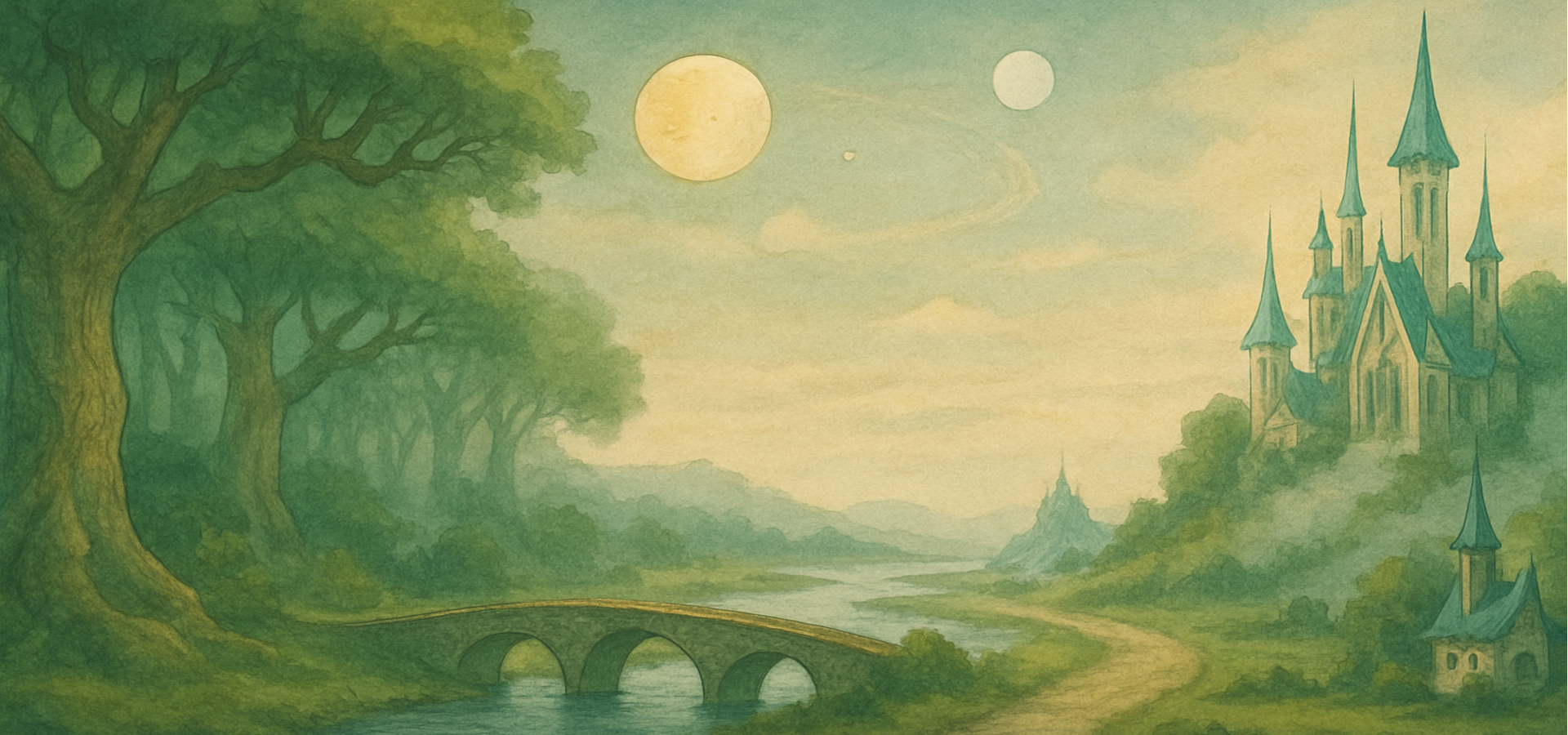
The elves of the Whispering Forest
Our long-standing research on the subject has not imparted us with mountains of knowledge on the Pylmae. We know they are elves, they live deep in the forest and have little interest for societal and technological advancements as we perceive them. But the rest is all speculation, myth, legend, or fairytales.
The Children of the Forest are an elven people considered native to Doriande. As is true for all sentient species, they were created during the closing days of the Age of Monsters, when the greater deities unleashed their mortal children on Dolvareth to tame the beasts roaming it and inherit the world.
Their connection to the Whispering Forest binds their origin to Anara, the Verdurous Mother. This is why they are also often called Anara's children, even though that term is used to describe all forest creatures and even Spirits.
The name Pylmae is not elven in origin but Dorian. It was given to the species by the first northerners who made contact with them while migrating toward the southern coastline. The elves call themselves Ginthal, which roughly translates to "kin" or "people" in their language and they do not assign a particular identification tied to their home. The Rolfgari people call them Sgundar, and although there is no historical evidence of their co-existence prior to their arrival in the Dorian peninsula, they have legends of their own about a mystical forest-dwelling species living under their noses in the forests of Rolfgar Mountain.
The Pylmae have been living in complete seclusion, building a civilization parallel to the Dorians for eons. The ancient forest they call home is vast and still largely unexplored. Their species has been blessed to live in total harmony with it. They build settlements that disappear seamlessly into the trees and are able to trace paths invisible to other creatures and to survive in conditions that are less than ideal for other mortals. Although some non-elven factions such as the Rangers and certain druidic circles also dwell in the forest, they pose no threat to the Pylmae, as they respect the wishes of the Verdurous Mother. And if some malevolent actor were to threaten her children, they would most certainly feel the wrath of the entire forest.
Some elves decide to leave the confines of their society. There is truly nothing preventing them from doing so, but to protect their brethren strong magic is placed upon them to make them unable to return ever again. After they abandon their past, these elves have no option but to make a new life for themselves in the villages, towns and cities of Doriande. Many of them create families and bear progeny with other species, who often inherit their semblance but never Anara’s favor.
The Pylmaic culture remains mysterious to the Dorians. Even though they live within the borders of the Kingdom, they are not considered its citizens and do not abide by its laws unless they leave the forest. Their population is unknown to the Royal Council. They are considered a neutral entity, even though they participated in the final battle of the Second Invasion of Doriande and they sent a delegation to observe the founding of the Kingdom.
Culture
Major language groups and dialects
The Pylmae speak the Elven language, known in their tongue as sormiar. Most urban elves adopt the Dorian language, as it is necessary for everyday communication, and even use it among themselves and their kin. However, the Elven tongue persists in oral tradition, especially in spiritual and ritual practice.
Scholars believe that the urban Elven dialect has diverged from the original, as loanwords were introduced to describe new concepts.
Culture and cultural heritage
Other than their connection with Anara and the Whispering Forest, little is known about the Pylmaic culture.
Most of it is extrapolated by observation of urban elves.
They tend to create smaller families and are not strictly monogamous but are forced into the convention by the Dorian society. They are good-natured, polite and thrive in small communities. Dorians used to hold prejudice against them, believing them to be barbaric because of their forest-dwelling heritage, but they seem to be very civilized.
All these observations indicate a civilization that is based on tight-knit communities where every member applies themselves selflessly towards the common good.
Shared customary codes and values
Even though urban elves have abandoned their cradle, they still feel a strong connection to nature and living beings. They spend a lot of time in groves and parks, where they still worship Anara. It is also believed that they brought their mother's teachings to other mortals, later forming Anara's Followers.
Average technological level
Pylmae do not rely on technological advances. They are very capable in divine and arcane magics, which they use to aid their society. They are not particularly interested in industry and despise technologies that meddle with nature's intent, such as Garmint.
Common Etiquette rules
Much of Pylmae etiquette mirrors that of the wider Dorian society, though it is often marked by a greater degree of courtesy. An elf will greet even the most disagreeable acquaintance with the same formal warmth they would offer a beloved person, at least when in public view.
Because elves age so differently from other peoples, it can be difficult for outsiders to distinguish between an elder and a young adult. The Pylmae themselves, however, perceive subtle signs of age and experience that others overlook, and they extend to elderly humans the same deference they would to their own elders, even when those humans may be younger in years by many decades.
Yet the elves are not without their peculiarities. A Pylmae may politely refuse an invitation to dine if they are uncertain of how the food was sourced, and they are known to take offense at offerings that other peoples would consider ordinary gestures of hospitality.
I promise you, mister guard sir, I only offered her some flowers and then she knocked me out. I didn't do nothing wrong!
Common Dress code
Light clothing is almost always preferred by the Pylmae. Tunics, dresses, shirts, and breeches are the garments most commonly worn. Wool is avoided; cotton and hemp are favored in warm weather, while fur trimmed with leather details is used in the cold. Many elves prefer to craft their own coats, procuring the necessary materials through hunting.
Foods & Cuisine
Pylmae avoid wasteful cooking above all. They tend to make soups, stews and salads with anything they have at hand.
They usually avoid herded cattle, opting instead for prey they hunt on their own, when they can. In order to avoid waste, they either sell what they don't need, feed the whole community in a large feast, or preserve the meat with various techniques such as salting and smoking.
Many elves avoid eating meat in general, while some adopt diets consisting only of fruits and vegetables, even abstaining from dairy, honey, eggs and other foods produced by animals.
In the larger cities, some elves open taverns and restaurants, offering Pylmae-friendly dishes for their kin.
Common Customs, traditions and rituals
As with all cultures bound to nature, elven tradition places great importance on the turning of the seasons. For the Pylmae, each passing month is a time of spiritual reflection and religious reverence.
Birth & Baptismal Rites
Pylmae parents wish their newborns to share the same sacred bond with nature that they themselves hold. Even those living in great cities such as Skarm, often insist that the child be born outside artificial constructs; in forests, by lakes and rivers, or even in the sea. This practice is known to cause friction in mixed families, particularly when the mother is human, as many humans regard the custom as dangerous, archaic or even barbaric.
Coming of Age Rites
Accords recorded by Dorian observers describe that when an urban elf comes of age, they embark on a journey accompanied by a senior relative, who instructs them in hunting, herbalism, and other essential skills. Some never return and are reported as dead or missing. Yet there are suspicions that a few may have been permitted to rejoin the forest elves, since it was their parents, not they, who left the forest. These rumors are fueled by the fact that not a single half-elf has ever disappeared during such a rite.
Funerary and Memorial customs
Pylmae communities honor their dead differently from the Dorians. They believe nature’s balance must always be preserved, and that the passing of one life should give way to another. For this reason, their funerary custom requires that the dead be buried unclothed in the soil, with a tree planted above the grave. The tree is marked with the person’s name, and surviving relatives return to tend it and renew the markings. As long as the tree endures, the departed is considered to remain in Anara’s good grace.
Common Taboos
Part of the problem with studying them is their stubborn avoidance of the topic of their origins. They are so dedicated to their act, that they can truly make you believe they don't remember where they came from. And if you insist too much, you will eventually step over the threshold of their good nature.
Elves never discuss the place of their origin or any intention of going back to the forest. It is considered impolite to query them on the topic, and if someone insists on it, they are unlikely to respond kindly.
Common Myths and Legends
Many Pylmae are hesitant to form relationships with people of other species. It is said that this is due to the legend of Dwerkivir, whose lover was supposedly an ancient elf. Some elves believe that Anara does not approve inter-species marriage, which is why she doesn't bless the half-elf children.
Divine and scholarly theories suggest that the elves are not completely isolated, but they can somehow travel between forests that are not visibly connected or may, in fact, be separated by large distances. The means through which it happens is unknown to common folk. Some believe it is achieved through powerful magic, while others think that the forests are interconnected via underground passageways. While no solid evidence proving any of this has been found, the fact that elves appear in Doriande and other places as suggested by the Rolfgari myths, with no historical or legendary record of their migration, coupled with the subtle differences in appearance and dialect between some urban elves, reinforces these conjectures.
It is rumored that some Pylmae may have fallen under the influence of malevolent entities lurking in the forest. If this is confirmed, it may signify that there is an ongoing struggle within the Whispering Forest.

Comments