
Dwarf
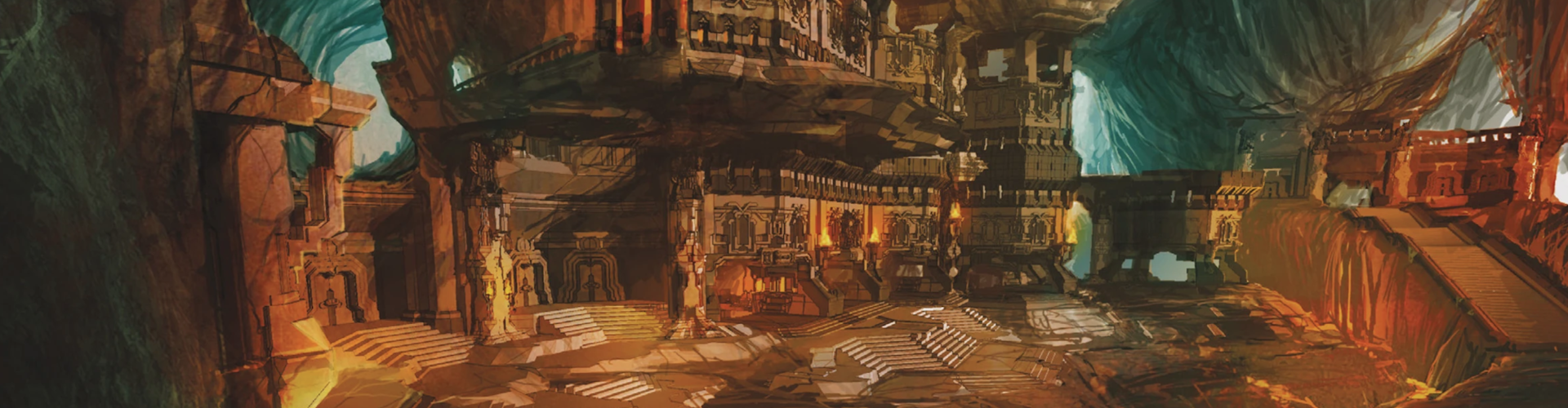
Dwarfs in Irulia are a solitary bunch. The bulk of the dwarven people are the underground dwarfs, who have carved out expansive cities of stone in the earthen crust. It is rare to ever see an under dwarf come up to the surface, for it is deeply taboo in their culture. This has not stopped them from entering the space of the surfacefolk entirely, however, and a caste of dwarfs known as the surface dwarfs have come to interact with the outside world. At first, this was done out of necessity, to trade and explore. Once they exchanged goods, established trade routes and deals, and exchanged culture with the surface world, the dwarfs once again kept themselves in the bosom of the earth. Dwarf kingdoms are known for their exceptional craftsmanship, especially in regards to stonework, and expansive mining routes through a network of tunnels known as the Wurm Ways. Having mastered clockwork and rather limited steam powered mechanisms, the dwarven people are also well known for their strange mechanical cities and passageways, and many scholars seek entrance into the underground kingdoms to study. However, dwarfs rarely let outsiders very far into their cities.
Surface dwarfs, however, are an entirely different matter. Some of the dwarfs who were selected to explore the surface during the first emergence vanished from dwarven histories. At first thought lost to the dangers above, it was later discovered that, while some of them did indeed give their lives in the pursuit of discovery, many simply decided they enjoyed life above to life below. Given dwarven religion, this was deeply taboo for the underfolk, and they were stricken from ever having existed in dwarven culture, and barred from access to the underground. These surface dwarfs, however, quickly established themselves in the surface world as a merchant's guild in the kingdom of Ardoren, though not a part of the kingdom itself. This guild grew in power and influence, and was the founding of the common language of Brasstongue as well as a common currency for the continent of Irulia. This dwarven guild was one of the founding families of Rhûv, sent on the initial expedition to explore the islands and establish trade routes. This guild now even holds significant power in Kosterdam, capital of Rhûv and one of the busiest trade ports in the Known World.
The underfolk, and a rare few surface dwarfs, follow a religious doctrine known simply as the Stone. Other names for it do exist, Lady Stone, Mother Earth, the Pillars, just to name a few, but the Stone is what it is most commonly named. The Stone does not have any divinity as most cultures see it, but rather perceives the world of Divaan, a name that came originally from the dwarfs, as a living being itself, a god in its own right. The dwarfs perceive civilization, the natural cycle, and all the people therein to be micro organisms living on, or in, the flesh of this divine being and only by the grace of that divine being are they provided for and kept safe. In this way, the dwarfs see their peoples as something akin to antibodies or white blood cells within the veins of the earth. This doctrine says that the dwarven peopel were hewn from the very same divine rock that encircles them and keeps them protected from outside threats, and it is their charge to make sure the Stone is protected in turn. In some ways, one can interpret their religion as little more than symbiotic relationship like that of the mutualistic relationship between bee and flower. The bee pollenates the flower, and in turn the bee receives nectar.
Dwarfs also believe they are related to other beings of the underground. While they believe they are hewn from the same rock of the Stone, they do not believe themselves so lucky to have been hewn directly from that rock. Rather, they believe themselves to be descended from the great titans. Beings of living rock and metal that once sifted through the underground and surface as they saw fit. What happened to the titans is unknown, but in their wake was born several different peoples. The fearsome giants, firstborn of the titans, who retained the stature and great strength of their progenitors. Next came the dwarfs, who had little of the titans' size but retained their great minds, their propensity for creation. Finally came the dredge, the hollow men of stone, who were left with none of the titans' size, none of their wit, but inherited the titans' affinity for the Stone Song.
Surface dwarfs, however, are an entirely different matter. Some of the dwarfs who were selected to explore the surface during the first emergence vanished from dwarven histories. At first thought lost to the dangers above, it was later discovered that, while some of them did indeed give their lives in the pursuit of discovery, many simply decided they enjoyed life above to life below. Given dwarven religion, this was deeply taboo for the underfolk, and they were stricken from ever having existed in dwarven culture, and barred from access to the underground. These surface dwarfs, however, quickly established themselves in the surface world as a merchant's guild in the kingdom of Ardoren, though not a part of the kingdom itself. This guild grew in power and influence, and was the founding of the common language of Brasstongue as well as a common currency for the continent of Irulia. This dwarven guild was one of the founding families of Rhûv, sent on the initial expedition to explore the islands and establish trade routes. This guild now even holds significant power in Kosterdam, capital of Rhûv and one of the busiest trade ports in the Known World.
The underfolk, and a rare few surface dwarfs, follow a religious doctrine known simply as the Stone. Other names for it do exist, Lady Stone, Mother Earth, the Pillars, just to name a few, but the Stone is what it is most commonly named. The Stone does not have any divinity as most cultures see it, but rather perceives the world of Divaan, a name that came originally from the dwarfs, as a living being itself, a god in its own right. The dwarfs perceive civilization, the natural cycle, and all the people therein to be micro organisms living on, or in, the flesh of this divine being and only by the grace of that divine being are they provided for and kept safe. In this way, the dwarfs see their peoples as something akin to antibodies or white blood cells within the veins of the earth. This doctrine says that the dwarven peopel were hewn from the very same divine rock that encircles them and keeps them protected from outside threats, and it is their charge to make sure the Stone is protected in turn. In some ways, one can interpret their religion as little more than symbiotic relationship like that of the mutualistic relationship between bee and flower. The bee pollenates the flower, and in turn the bee receives nectar.
Dwarfs also believe they are related to other beings of the underground. While they believe they are hewn from the same rock of the Stone, they do not believe themselves so lucky to have been hewn directly from that rock. Rather, they believe themselves to be descended from the great titans. Beings of living rock and metal that once sifted through the underground and surface as they saw fit. What happened to the titans is unknown, but in their wake was born several different peoples. The fearsome giants, firstborn of the titans, who retained the stature and great strength of their progenitors. Next came the dwarfs, who had little of the titans' size but retained their great minds, their propensity for creation. Finally came the dredge, the hollow men of stone, who were left with none of the titans' size, none of their wit, but inherited the titans' affinity for the Stone Song.
Related Ethnicities