
The Coast
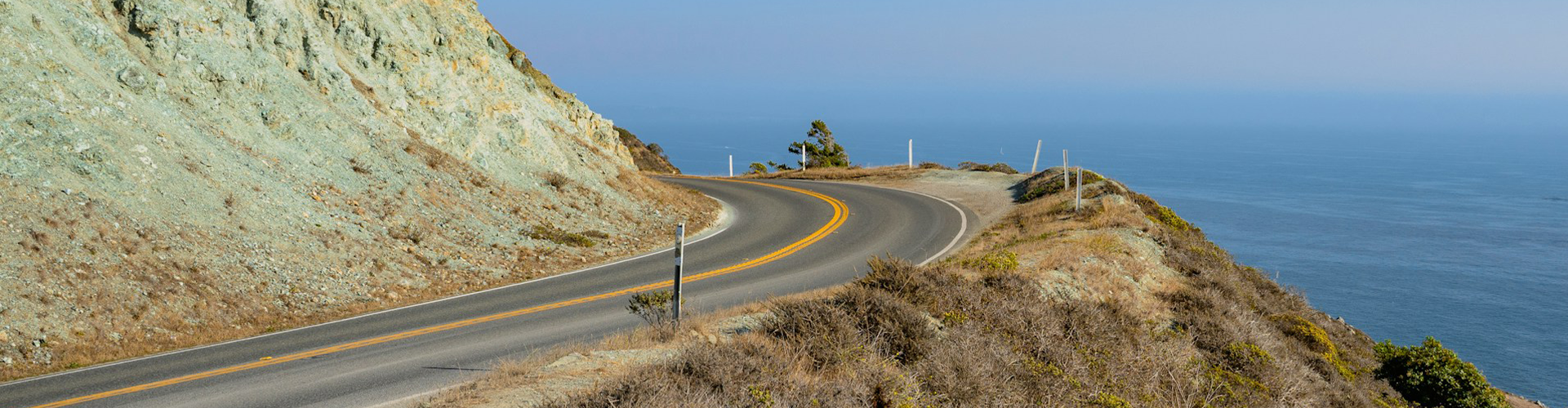
The Boom set off a series of earthquakes that left nearly all of California either underwater or radioactive. Most survivors with the option open to them migrated north to the Lumberlands or set off across the Basin in search of a new place to settle. Most of those who couldn't leave mostly settled along the new coast along the Seirra Nevada foothills where the radiational levels are survivable or became scavengers along the edges of the ruined cities of the old coast, but the wetter parts of the region are also home to boat people and "skyscraper islands" where peopel have set up camps in the upper floor of half-submerged buildings where pre-Boom cities used to be.
Geography
Most of California is underwater, with only the foothills of the Sierra Nevada, the higher ground in the northern part of the state, and a strip of hot zones along the old coast are still on dry ground. This divides th are into a few distinct regions:
Most Californians live in the foothills of the Sierra Nevadas. This is a large "yellow zone" where the background radiation levels will only shave a decade or two off your life as long as you avoid the extra fallout routinely brought in on dust and wind. The people here make their living farming, either as members of a co-op (often founded by pre-Boom workers after the bosses set out for greener pastures) or under the rule of some local warlord. Communities are careful to grow enough crops to feed themselves in greenhouses or using other enclosed farming methods, treating the orchards and outdoor crops as potential surplus. The value of each harvest depends on how much fallout it's soaked up and how hungry the potential buyers are. Even the worst crops here are cleaner that what little grows in the archipelago, so especially hot harvests typically get sold cheap to the boat tribes who trade with the people there.
Northern California is cut in two by a large yellow zone that's nearly always hot with fallout carried by the rain from the Portland and Eugene hot zones. The eastern section is an extension of The Basin. To the west is the heavily-forested Shasta region, which stretches north along the Oregon Coast. This area is similar to The Lumberlands, but the people here have a distincly more New Age vibe. Hippie communes and oddball nature cults are the norm.
The Old Coast is the archipelago where the higher ground of drowned coastal regions remains above the waterline. The whole area is a hot zone populated by survivors who couldn't or wouldn't leave. It's a place where life is short, everyone's sick, and mutations are common, which is probably why the people here have embraced blood sports and death races when they're not trying to drudge useable scrap from the underwater cities. The only safe section of the archipelago is Monteray Island, which managed to avoid most of the fallout, but it is not open to visitors or settlers. The island is heavily patrolled by both land and sea and outsiders deemed radiation-free enough to come aground are restricted to a single heavily-guarded port camp. Very little is known about what happens on the island, but the secrecy has spawned a wealth of rumors.
The bulk of what used to be California is occupied by San Andreas Bay, the large, shallow gulf formed by massive tsunamis that rolled in from the Pacific in the early years after the Boom. The bay is home to various camps of boat people who survive by a combination of fishing, trade, and raiding. Some boat camps consist of barge cities made up of various floating debris connected with rope, chain, and makeshift bridges. Others consist of a fleet of separate craft, usually with a large yacht or cargo hauler serving as a sort of town square. There are also rumors of camps in oil tankers and battle ships prowling the deeper water off the Old Coast, but many regard these stories as urban legends.
Most Californians live in the foothills of the Sierra Nevadas. This is a large "yellow zone" where the background radiation levels will only shave a decade or two off your life as long as you avoid the extra fallout routinely brought in on dust and wind. The people here make their living farming, either as members of a co-op (often founded by pre-Boom workers after the bosses set out for greener pastures) or under the rule of some local warlord. Communities are careful to grow enough crops to feed themselves in greenhouses or using other enclosed farming methods, treating the orchards and outdoor crops as potential surplus. The value of each harvest depends on how much fallout it's soaked up and how hungry the potential buyers are. Even the worst crops here are cleaner that what little grows in the archipelago, so especially hot harvests typically get sold cheap to the boat tribes who trade with the people there.
Northern California is cut in two by a large yellow zone that's nearly always hot with fallout carried by the rain from the Portland and Eugene hot zones. The eastern section is an extension of The Basin. To the west is the heavily-forested Shasta region, which stretches north along the Oregon Coast. This area is similar to The Lumberlands, but the people here have a distincly more New Age vibe. Hippie communes and oddball nature cults are the norm.
The Old Coast is the archipelago where the higher ground of drowned coastal regions remains above the waterline. The whole area is a hot zone populated by survivors who couldn't or wouldn't leave. It's a place where life is short, everyone's sick, and mutations are common, which is probably why the people here have embraced blood sports and death races when they're not trying to drudge useable scrap from the underwater cities. The only safe section of the archipelago is Monteray Island, which managed to avoid most of the fallout, but it is not open to visitors or settlers. The island is heavily patrolled by both land and sea and outsiders deemed radiation-free enough to come aground are restricted to a single heavily-guarded port camp. Very little is known about what happens on the island, but the secrecy has spawned a wealth of rumors.
The bulk of what used to be California is occupied by San Andreas Bay, the large, shallow gulf formed by massive tsunamis that rolled in from the Pacific in the early years after the Boom. The bay is home to various camps of boat people who survive by a combination of fishing, trade, and raiding. Some boat camps consist of barge cities made up of various floating debris connected with rope, chain, and makeshift bridges. Others consist of a fleet of separate craft, usually with a large yacht or cargo hauler serving as a sort of town square. There are also rumors of camps in oil tankers and battle ships prowling the deeper water off the Old Coast, but many regard these stories as urban legends.
Climate
The weather here is beautiful as long as you ignore all that clicking from the Geiger counter.
Fauna & Flora
The farms of the foothills mostly consists of fruit and nut orchards, berry fields, and the occasional vineyard along with grain, potatoes, rice in the wetter areas, and other staple food crops. The most notable creatures in this area are mountain lions, bears, and packs of mutant coyotes. The archipelago has many stories of mutated aquatic life, but few of them have any proof to back them up.
History
California survivors of the Boom who were Lucky had the choice of whether to set out over harsh terrain in search of something better or settle in the least polluted portions of their home state and hope for the best. Those who were less lucky--especially those on the archipelago--didn't even have those options, and were forced to survive as best as they could in the hot zone. Today, the state is a mix of those still looking for a way out and those who have embraced a "life is short" philosophy that often manifests as a sort of desperate, oddly level-headed hedonism.
Tourism
Nobody visits The Coast by choice. Convoys only end up there when they're looking for something very specific or have been offered a substantial payout.

People
Places
Everything Else
Alternative Name(s)
The Fringe, The End of the World,


Comments