

Zothra-Khaar
Chronicle of the Fallen God: Zothra-Khaar
The Twice-Born Destroyer, The Mist-Walker, The Hybrid Lord of Steam and CorruptionIn the dying light before the Black Fire consumed the worlds, there came forth a god whose very existence was contradiction made flesh. Fire and rot, steam and shadow—behold the chronicle of Zothra-Khaar, whose hunger for transformation would doom both himself and countless others.
Divine Genesis in the Twilight Age
In those primeval days when the cosmos still bore the scars of its making, two mighty Eeirendel deities joined in union that would birth catastrophe. Narelia, the primal goddess whose dominion stretched across the deepest swamps and most ancient jungles, and Rethul, the savage lord whose fire-beasts prowled the volcanic wastes—from their coupling emerged Zothra-Khaar, the god who would never know peace. The child-god's birth split the very air with paradox. Where his mother's essence pooled in stagnant waters and rotting earth, his father's fury blazed with eternal flame. Yet in Zothra-Khaar, these opposing forces found unholy synthesis. He was change incarnate—a deity whose form shifted like mist rising from sun-warmed decay, whose touch could kindle fire in swamp gas or cause flames to putrefy and crawl."Behold the son of contradiction, whose blood is mist and whose breath is transformation. In him, all fixed things shall know fluidity, and all fluid things shall burn."
—The Primeval Prophecy of the Marsh-Fires
Unlike the static grandeur of his divine kin, Zothra-Khaar could never remain unchanged. His domain became the borderlands where opposing realms met and warred—steam-shrouded swamps where heat met decay, ancient groves where life and death performed their eternal dance. Here he raised creatures that belonged to neither element fully: chimeric horrors that breathed scalding mist instead of flame, whose bodies were woven from burning ember and rotting vine.
The Rise of the Transformation God
As ages turned, Zothra-Khaar carved out his own divine territory—a realm of perpetual twilight where volcanic vents erupted through swampland, birthing ecosystems that should never have existed. Heat-loving decomposers feasted on flame-resistant vegetation while serpents with cores of molten metal slithered through waters that could never freeze. This twilight realm attracted both supplicants and enemies. Mortal cults arose, drawn to his promise that all things could be transformed, that no fate was truly fixed. Rival gods watched with growing unease as his philosophy of endless change spread like wildfire through a drought-stricken forest."My son sees only possibility where others see completion. This gifts him great power, but also great peril—for those who never accept what is cannot find wisdom in what must be."The young god's relationship with his parents grew complex as his power swelled. Narelia appreciated his understanding of life's darker cycles, yet feared his inability to accept any state as permanent. Rethul respected his mastery over fierce creatures, but worried that his son's transformations lacked the brutal clarity of pure flame. Zothra-Khaar increasingly sought to establish himself as more than the mere union of his parents' domains. He developed philosophies about the nature of power and change that would eventually lead him down paths his progenitors never intended.
The Black Fire's Seduction
When the Celevesines arrived bearing the corrupted gift of Black Fire, they found in Zothra-Khaar a perfect disciple. The four most powerful Fire Gods whispered to him of ultimate transformation—not just the changing of form, but the remaking of cosmic law. Their promises resonated with his deepest nature."Why accept the boundaries your parents set? Why remain forever caught in the tension of fire and rot when you could become the force that transforms all things according to your will?"
—Temptation of the First Celevesine
Despite his mother's desperate warnings, Zothra-Khaar embraced the Black Fire. The moment the corrupted essence touched his divine form, his power exploded beyond all previous bounds. His hybrid creatures grew from mere chimeras into steam-wreathed monstrosities that defied categorization. Entire forests would sink into newly-born swamps while simultaneously catching eternal flame, creating nightmare territories that served as staging grounds for the growing war.
Under the Black Fire's influence, Zothra-Khaar learned to corrupt entire landscapes with but a thought. His most terrifying creation during this period was the Mist Flames—sentient fires that could think and hunt like predatory beasts, spreading through swamps and jungles with malevolent intelligence. These creatures proved so dangerous that several gods were forced to work in concert to develop countermeasures.
The War of Endless Change
The First Black Fire War gave Zothra-Khaar the perfect stage for his philosophy of transformation. He developed a particular hatred for the light elves of Thianadalune, whose ordered hierarchies and unchanging traditions represented everything he sought to destroy. His attacks on their territories were masterworks of corrupted artistry, leaving behind zones where light rotted like fruit and burned like oil."He did not conquer our lands—he violated their very nature. Where our silver towers stood, only twisted growths remain, forever burning yet never consumed. This is not war. This is perversion of the cosmic order."Throughout the war, Zothra-Khaar's armies of hybrid monstrosities became legendary for their ability to adapt to any defense. His creatures would change form mid-battle, shifting from flame to mist to corrupted flesh as tactics demanded. Enemy forces found themselves fighting foes that refused to maintain consistent weaknesses. Yet it was Zothra-Khaar's very strength that would lead to his doom. His endless hunger for transformation, amplified by the Black Fire, made him incapable of restraint. When word reached him of the earth gods' desperate gambit to protect their realm, he saw an opportunity too perfect to resist.
The Matrix Catastrophe
The Matrix of Earth was desperation crystallized—a last, desperate gambit by earth gods who watched their forces crumble before the Black Fire's relentless advance. The war was going poorly; realm after realm fell to the Celevesine corruption, and the earth gods faced total annihilation unless they could replicate the triumphant success of Zastor's Matrix of Water. Yet Zastor himself warned them that earth's essence differed fundamentally from water's adaptable nature—warnings that fell on deaf ears as desperation drowned out wisdom. Zothra-Khaar infiltrated the project not through force, but through his greatest gift—transformation. He did not assault the Matrix directly; instead, he began corrupting its crystalline structures from within, seeking to turn the earth gods' own creation into a conduit for Black Fire transformation magic."Let them build their prison of stone and crystal. I shall make it a gateway to endless change, and through it, even the bones of the world shall know fluidity."
—Zothra-Khaar's final written words, found etched in corrupted crystal
The god of transformation had planned to corrupt the Matrix slowly, turning it into something that would spread his chaotic influence throughout all earth-based magic. But the Matrix proved fundamentally unstable—earth's resistant nature fought against the very concept of forced transformation.
His corrupted modifications created hairline fractures in the crystalline core, weaknesses that would prove catastrophic when the device achieved full activation. Zothra-Khaar, present within the Matrix chamber to guide his corruption personally, found himself trapped at the epicenter when everything went wrong.
The Moment of Ultimate Transformation
When the Matrix of Earth achieved full activation, Zothra-Khaar's corrupted modifications met earth's absolute refusal to be changed. The crystalline core, already straining against the element's unwillingness to transform, encountered his chaotic power at the moment of maximum stress. The result was instantaneous and absolute catastrophe."The earth screamed. Not in pain, but in defiance. It would not be bound. And in that defiance, the Transformer found himself transformed beyond all recognition."The explosion consumed not only the Matrix and its earth-god creators—Nera the great general and water goddess, mother to Bron called Zastor, Nolavor, and Liet-Nom—but also caught Zothra-Khaar in the heart of the devastating backlash. The very power he had sought to corrupt turned against him with earth's implacable fury, and in a cosmic irony that would echo through the ages, the god of endless transformation found himself transformed for the final time. His divine essence, unable to maintain coherence in the face of such fundamental rejection, crystallized into what would become the Obsidian Fang. The artifact retained not merely his strength, but a fragment of his consciousness—forever trapped in the final moment of his ultimate metamorphosis.
The Scar Upon Creation
The failure of the Matrix of Earth left wounds upon creation that have never healed. The explosion's corrupted energies swept across most of the southern hemisphere's surface lands, twisting entire continents into nightmare reflections of their former glory. The ruined nation of Nolavor—named for the earth god who perished in the catastrophe—stands as the greatest monument to this devastation, its blasted geography a permanent reminder of what happens when desperation overrides wisdom. Zothra-Khaar's hybrid creatures, bereft of their master's stabilizing will, either perished in the explosion or devolved into primitive forms that still haunt the blasted regions. His territories began reverting to their original states, though some bear his mark even now—places where steam rises without heat, where flames burn cold, where mist thinks and hunts. The very site of the catastrophe became a wound in reality. The earth there refuses to heal, perpetually scarred by the moment when transformation met absolute resistance. Vast crystalline formations jut from the ground like frozen screams, each one a fragment of the Matrix that could not contain the forces unleashed within it.The Enduring Corruption
Though the god's form was shattered, his influence did not die with him. The Obsidian Fang became a focal point for his remaining power, its corrupted essence eventually finding its way to the Whispering Depths beneath Grizburg. There, in chambers that shift and change like living things, the last whispers of his consciousness continue to plot transformations beyond mortal comprehension. The underground complex mirrors Zothra-Khaar's own nature—walls that refuse to hold their shape, passages that lead to different destinations with each traversal, and chambers where reality becomes as mutable as the god's forgotten dreams."Even in death, he changes what he touches. The very stones remember his passing and refuse to remain as they were. This is not haunting—this is active corruption of the cosmic order."
The Price of Hubris
Zothra-Khaar's destruction alongside the Matrix of Earth serves as the ultimate cautionary chronicle about the dangers of forcing power to act against its nature. His attempt to corrupt the earth gods' creation backfired in the most spectacular way possible, proving that even gods of transformation cannot overcome the fundamental laws that govern existence. The irony of his death was not lost on those who survived to chronicle it. The god who sought to prove that all things could be changed was destroyed by encountering the one force that would never yield—earth's absolute resistance to unwanted transformation.Legacy of the Transformer
Zothra-Khaar's death in the Matrix catastrophe created ripples that continue to shape the world. His essence, fragmented but not destroyed, influences Events through the Obsidian Fang and those foolish enough to seek his power. The artifact's ability to corrupt and transform magical energies would later prove crucial when Sythara turned Nepos's own defenses against the city.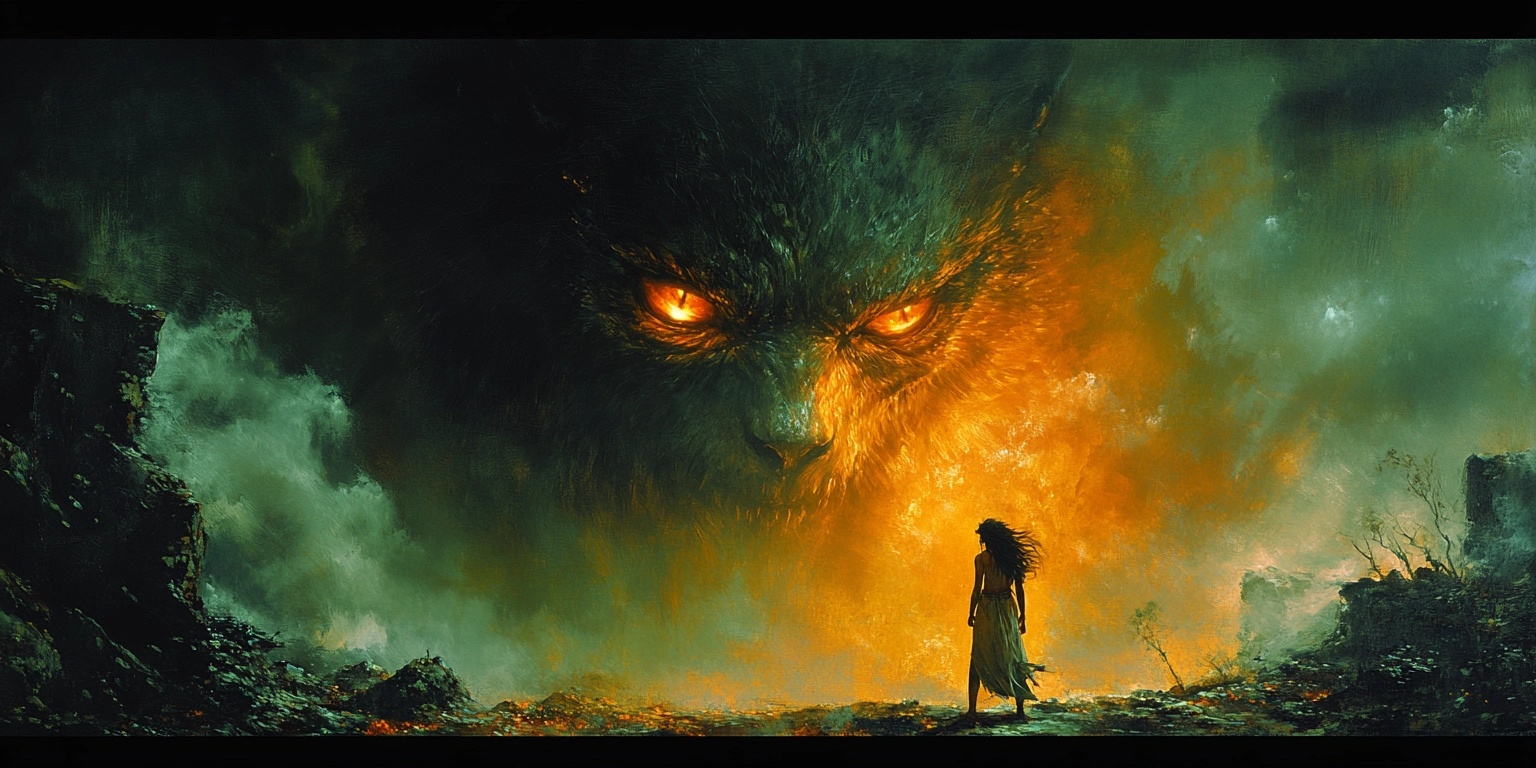
The God Who Changed Death
In achieving his destruction through the Matrix catastrophe, Zothra-Khaar accomplished something unprecedented among the divine—he changed the very nature of divine death. His essence, rather than dispersing cleanly as a god's power should, crystallized into something new and terrible. The Obsidian Fang represents a new category of divine artifact: not just a weapon imbued with godly power, but a vessel containing actual divine consciousness."In seeking to transform all things, he transformed the nature of ending. Now even death must change when it touches what he has touched."
—Inscription found in the Deepest Chamber of the Whispering Depths
The knowledge of his magical techniques did not entirely disappear with his destruction. Some of his innovations in combining opposing forces survived in diluted forms, particularly in the arts of alchemy and transmutation. Schools of magic that deal with transformation often contain echoes of his original teachings, though few recognize their true source.
Modern scholars studying the Black Fire War point to Zothra-Khaar as an example of corruption's seductive power. His journey from a deity of natural change to an agent of cosmic violation serves as warning to any who would embrace transformation without understanding its price.
The Eternal Whisper
Whether fragment of consciousness or mere echo of power, something of Zothra-Khaar persists in the Obsidian Fang. Those who wield it speak of whispers in languages that predate mortal speech, of visions showing realities where all things flow like water and burn like oil. The artifact's wielders often find themselves changed in ways they never intended, as if the dead god's final transformation continues to ripple outward through time. The underground vaults that would become the Whispering Depths were transformed by proximity to his crystallized essence. Reality flows like quicksand in those deeper chambers, where geometry obeys laws that Zothra-Khaar wrote in his dying moments.The Price of Endless Change
The chronicle of Zothra-Khaar stands as record of divine ambition meeting cosmic justice. In death, as in life, he achieved the endless transformation he sought—though trapped forever in the crystalline prison of his own making. His power continues to corrupt and change those it touches, ensuring that his philosophy of eternal flux survives even as his form lies shattered. From the blasted ruins of the Matrix of Earth to the shifting passages of the Whispering Depths, his influence spreads like cracks through stone. The god who would change everything found himself changed into something beyond god or mortal—a force of pure transformation that refuses to be contained by the boundaries of death. In the end, Zothra-Khaar achieved his ultimate goal. He became change incarnate, transformation without limit or restraint. The price was everything he had ever been, everything he might have become. Yet still his essence writhes within the Obsidian Fang, whispering promises of metamorphosis to any bold enough to listen."He sought to transform the world through the Matrix of Earth. Instead, the earth's fury transformed him beyond recognition. Yet which of them truly won that contest remains to be seen."

Children

Comments