

Northland Trading Company
The Northland Trading Company stands as one of the most influential and controversial organizations in the kingdom of Hangard. With roots stretching back centuries, this powerful merchant consortium has become deeply intertwined with the politics, economy, and military of the northern realms.
Founded in the early days of Hangard's establishment as a unified kingdom, the Northland Trading Company initially served as a collective of merchant families seeking to expand trade beyond the borders of their fledgling nation. The company's charter, granted by the first kings of Hangard, gave it unprecedented autonomy and privileges to conduct commerce across the northern seas and lands.
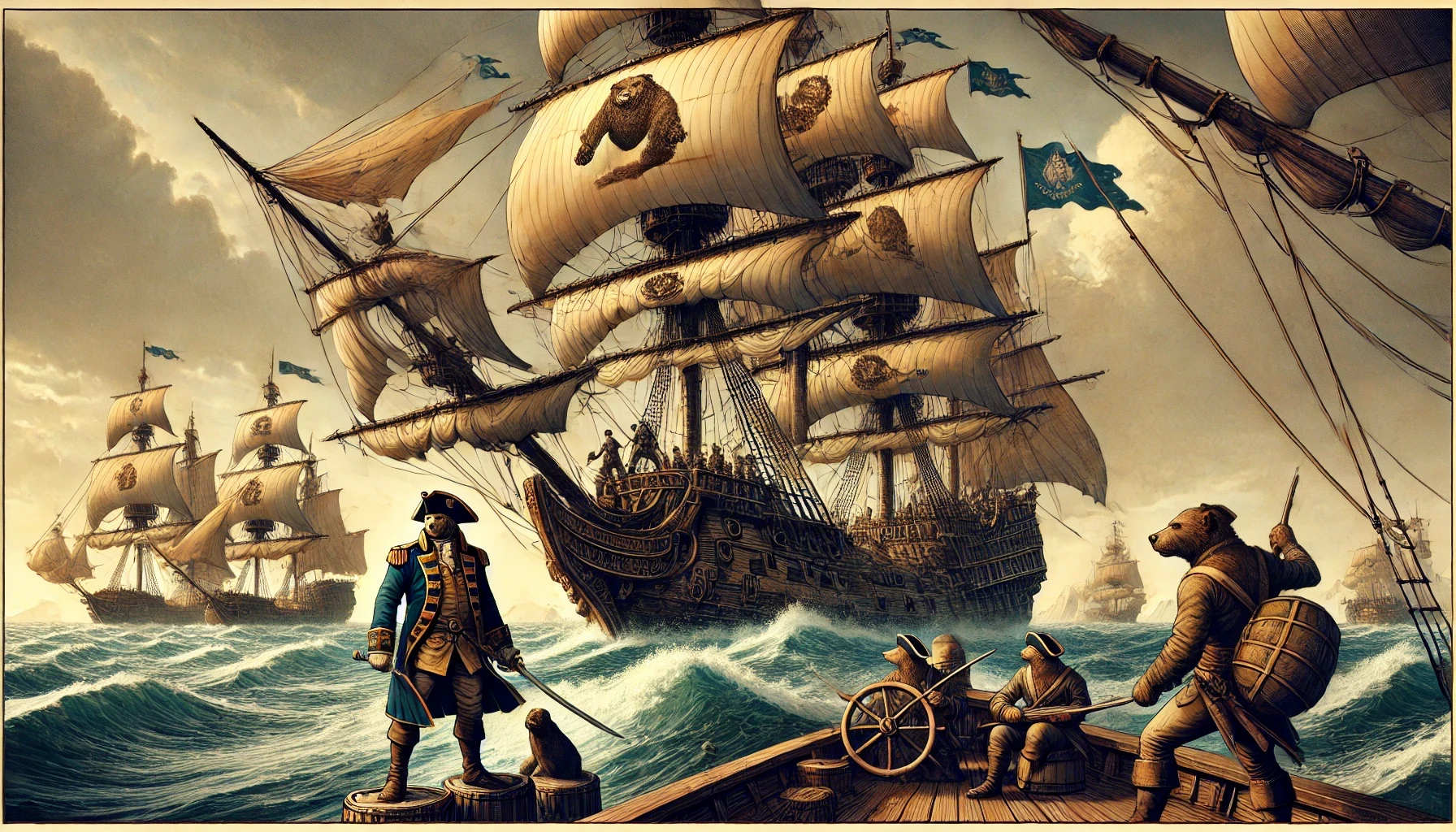 As Hangard grew in power and influence, so too did the Trading Company. Its fleets of merchant vessels came to dominate maritime trade routes, while its network of outposts and factors spread across ports from Sommeris to the distant reaches of Vorcia. The company's coffers swelled, as did its political clout within the royal court of Hangard.
By the modern era depicted in the novel, the Northland Trading Company had evolved into a quasi-governmental entity unto itself. While technically beholden to the Crown of Hangard, the company wielded enough economic and military might to often act with impunity. Its fleet of armed merchant vessels rivaled the Royal Navy in size and capability.
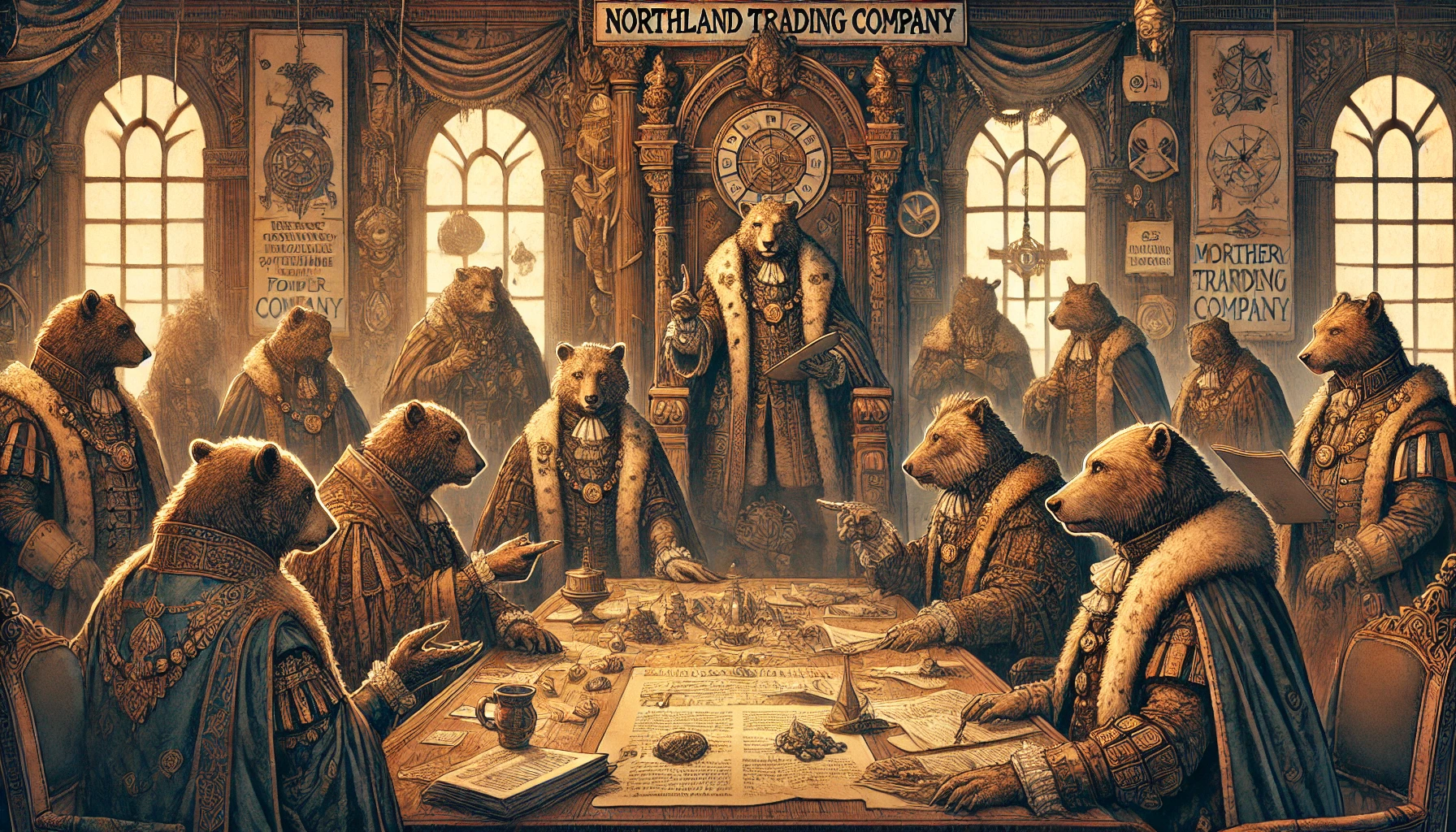
Leadership of the Trading Company rested with a council of merchant Barons, each representing powerful commercial interests within Hangard. These Barons competed fiercely amongst themselves for influence and profit, often using underhanded tactics. Above them sat the office of Chancellor, appointed directly by the monarch to oversee the company's operations.
Queen Finean Erlin XII took a particular interest in the affairs of the Trading Company early in her reign. Seeing it as both a valuable asset and potential threat to royal authority, she moved to assert greater control. She purged several notorious figures from the company's leadership and began personally appointing loyal followers as Chancellor and other key positions.
Under Queen Finean's oversight, the Trading Company entered a golden age of profitability and expansion. tax exemptions and legal autonomy granted by the Crown allowed the company to dominate commerce across the northern realms. Many saw this as a mutually beneficial arrangement - the company's success filled royal coffers, while the Queen's patronage shielded it from rivals.
However, the intimate relationship between Crown and Company also bred corruption and abuse. Many accused the Queen of using the Trading Company to circumvent laws and enrich herself. There were persistent rumors that the Company engaged in the same black market dealings and criminal enterprises as the rival Tormar cartel it helped suppress.
As Hangard grew in power and influence, so too did the Trading Company. Its fleets of merchant vessels came to dominate maritime trade routes, while its network of outposts and factors spread across ports from Sommeris to the distant reaches of Vorcia. The company's coffers swelled, as did its political clout within the royal court of Hangard.
By the modern era depicted in the novel, the Northland Trading Company had evolved into a quasi-governmental entity unto itself. While technically beholden to the Crown of Hangard, the company wielded enough economic and military might to often act with impunity. Its fleet of armed merchant vessels rivaled the Royal Navy in size and capability.
Leadership of the Trading Company rested with a council of merchant Barons, each representing powerful commercial interests within Hangard. These Barons competed fiercely amongst themselves for influence and profit, often using underhanded tactics. Above them sat the office of Chancellor, appointed directly by the monarch to oversee the company's operations.
Queen Finean Erlin XII took a particular interest in the affairs of the Trading Company early in her reign. Seeing it as both a valuable asset and potential threat to royal authority, she moved to assert greater control. She purged several notorious figures from the company's leadership and began personally appointing loyal followers as Chancellor and other key positions.
Under Queen Finean's oversight, the Trading Company entered a golden age of profitability and expansion. tax exemptions and legal autonomy granted by the Crown allowed the company to dominate commerce across the northern realms. Many saw this as a mutually beneficial arrangement - the company's success filled royal coffers, while the Queen's patronage shielded it from rivals.
However, the intimate relationship between Crown and Company also bred corruption and abuse. Many accused the Queen of using the Trading Company to circumvent laws and enrich herself. There were persistent rumors that the Company engaged in the same black market dealings and criminal enterprises as the rival Tormar cartel it helped suppress.
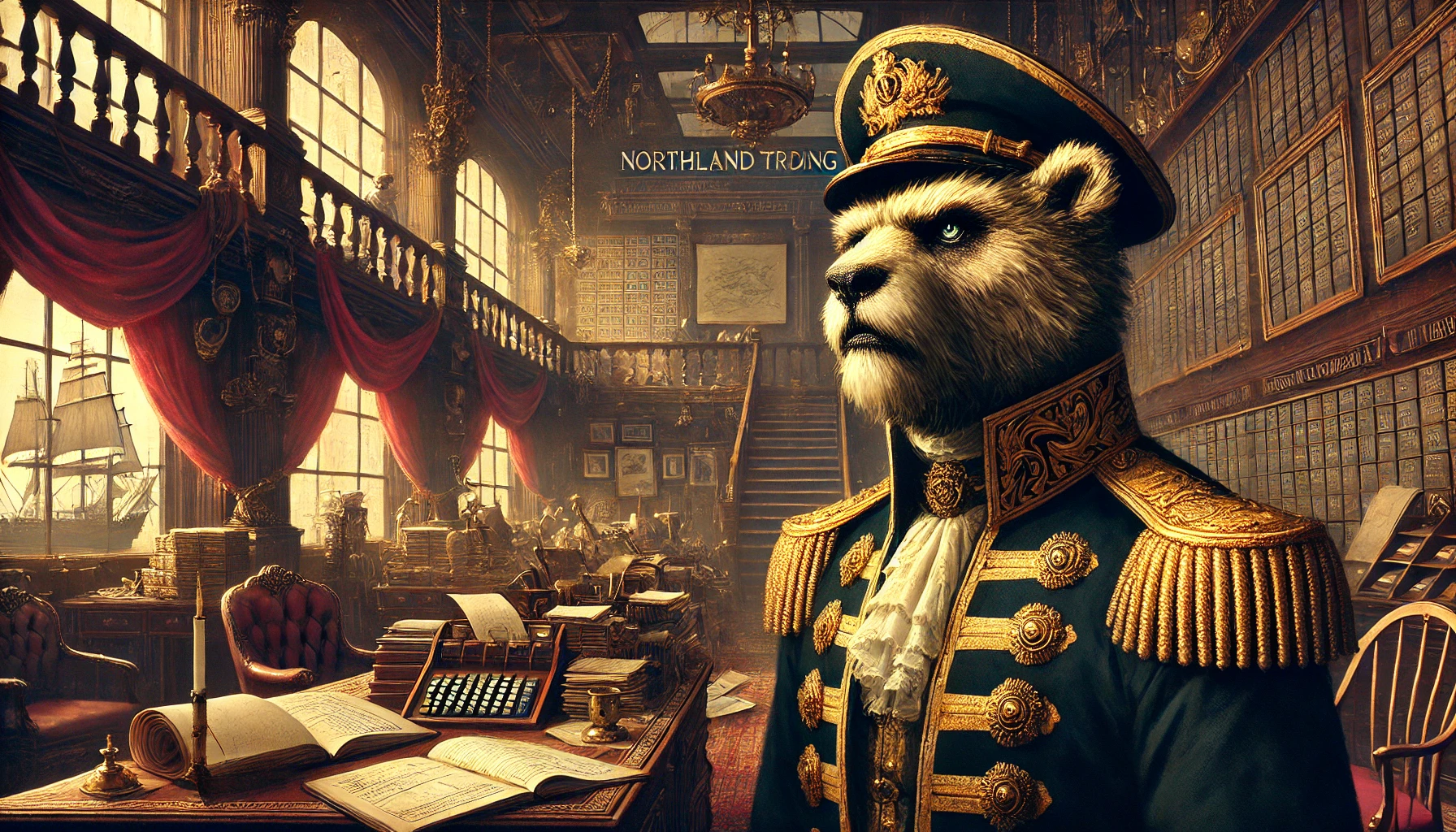 The novel's depiction of Commodore Garared Canao provides insight into the complex internal politics of the Trading Company. A decorated naval officer born into the company's service, Canao found his career stymied by rivalries and schemes among the merchant Barons. His request for retirement was repeatedly denied, keeping him bound to the company against his will.
Canao's story hints at the often exploitative nature of service to the Trading Company. While it offered opportunities for advancement and wealth, it also demanded absolute loyalty and obedience. Many found themselves trapped in the company's employ, unable to leave without facing ruin or worse.
The Trading Company maintained its own private military forces, including the substantial Merchant Navy. Officially chartered to protect trading vessels and colonies, this fleet engaged in numerous conflicts across the northern seas. It played a major role in the ongoing Jingthol Conflict against goblin pirates and raiders.
During times of war, Trading Company forces were often folded into the regular Hangardian military. The novel mentions that under Queen Finean, there was an increasing merging of the Merchant Navy with the Royal Navy proper. This further blurred the lines between commercial and state interests.
Crew and officers of Trading Company vessels underwent rigorous military-style training. The novel's protagonist Bruinan was slated to attend Durvanild Academy alongside regular army cadets. This academy system allowed the company to indoctrinate loyalty from a young age while producing capable warriors and sailors.
The Trading Company's reach extended far beyond maritime trade. It established numerous colonies and outposts across the northern realms, often in frontier regions beyond the reach of traditional governments. In these areas, company governors ruled as de facto heads of state.
The novel's depiction of Commodore Garared Canao provides insight into the complex internal politics of the Trading Company. A decorated naval officer born into the company's service, Canao found his career stymied by rivalries and schemes among the merchant Barons. His request for retirement was repeatedly denied, keeping him bound to the company against his will.
Canao's story hints at the often exploitative nature of service to the Trading Company. While it offered opportunities for advancement and wealth, it also demanded absolute loyalty and obedience. Many found themselves trapped in the company's employ, unable to leave without facing ruin or worse.
The Trading Company maintained its own private military forces, including the substantial Merchant Navy. Officially chartered to protect trading vessels and colonies, this fleet engaged in numerous conflicts across the northern seas. It played a major role in the ongoing Jingthol Conflict against goblin pirates and raiders.
During times of war, Trading Company forces were often folded into the regular Hangardian military. The novel mentions that under Queen Finean, there was an increasing merging of the Merchant Navy with the Royal Navy proper. This further blurred the lines between commercial and state interests.
Crew and officers of Trading Company vessels underwent rigorous military-style training. The novel's protagonist Bruinan was slated to attend Durvanild Academy alongside regular army cadets. This academy system allowed the company to indoctrinate loyalty from a young age while producing capable warriors and sailors.
The Trading Company's reach extended far beyond maritime trade. It established numerous colonies and outposts across the northern realms, often in frontier regions beyond the reach of traditional governments. In these areas, company governors ruled as de facto heads of state.
 Within Hangard itself, the Trading Company heavily influenced local economies and politics. Major port cities like Aerendor saw much of their commerce and labor tied to company interests. This gave the merchant Barons significant sway over urban populations and local officials.
The novel hints at tensions between the Trading Company and the traditional landed nobility of Hangard. aristocratic houses like the Wilhelms viewed the company's growing power with suspicion and resentment. There were likely ongoing political struggles between the old guard and the ascendant merchant class.
Corruption appears endemic within the Trading Company's ranks. The story of Chancellor Thar Norel's assassination suggests high-level intrigue and betrayal among the leadership. Lower-level officials and factors likely engaged in all manner of graft, bribery, and embezzlement to enrich themselves.
While immensely profitable overall, service in the Trading Company could be extremely dangerous. Canao's father died in battle against goblin pirates, while Canao himself witnessed the deaths of the royal princes during a naval engagement. The constant warfare and perilous voyages exacted a heavy toll in lives.
The Trading Company's activities brought it into frequent conflict with rival powers. Primary among these was the Tormar, a shadowy cartel engaged in smuggling, piracy, and black magic. The two organizations fought a decades-long shadow war for control of northern markets and shipping lanes.
Queen Finean used the Trading Company as a tool to destroy the Tormar's power base, granting it unprecedented authority to wage economic warfare. This included using company forces to conduct raids, seizures, and even assassinations against Tormar affiliates under the guise of "peacekeeping."
The novel implies that despite the Tormar's suppression, elements of the organization survived by going further underground. Some may have even infiltrated the Trading Company itself as a means of protection and continued illicit business. The lines between company, cartel, and crown grew increasingly blurry.
Magic played a significant role in Trading Company operations, despite official restrictions on its use. Company vessels likely employed battle-mages and hedge wizards to gain advantage in combat and trade. There are hints that the company delved into forbidden magics and artifacts to further its goals.
The Trading Company's unparalleled network of factors and informants made it a valuable intelligence asset for the Crown. Queen Finean almost certainly used company resources to gather information and conduct espionage across the northern realms and beyond.
Within Hangard itself, the Trading Company heavily influenced local economies and politics. Major port cities like Aerendor saw much of their commerce and labor tied to company interests. This gave the merchant Barons significant sway over urban populations and local officials.
The novel hints at tensions between the Trading Company and the traditional landed nobility of Hangard. aristocratic houses like the Wilhelms viewed the company's growing power with suspicion and resentment. There were likely ongoing political struggles between the old guard and the ascendant merchant class.
Corruption appears endemic within the Trading Company's ranks. The story of Chancellor Thar Norel's assassination suggests high-level intrigue and betrayal among the leadership. Lower-level officials and factors likely engaged in all manner of graft, bribery, and embezzlement to enrich themselves.
While immensely profitable overall, service in the Trading Company could be extremely dangerous. Canao's father died in battle against goblin pirates, while Canao himself witnessed the deaths of the royal princes during a naval engagement. The constant warfare and perilous voyages exacted a heavy toll in lives.
The Trading Company's activities brought it into frequent conflict with rival powers. Primary among these was the Tormar, a shadowy cartel engaged in smuggling, piracy, and black magic. The two organizations fought a decades-long shadow war for control of northern markets and shipping lanes.
Queen Finean used the Trading Company as a tool to destroy the Tormar's power base, granting it unprecedented authority to wage economic warfare. This included using company forces to conduct raids, seizures, and even assassinations against Tormar affiliates under the guise of "peacekeeping."
The novel implies that despite the Tormar's suppression, elements of the organization survived by going further underground. Some may have even infiltrated the Trading Company itself as a means of protection and continued illicit business. The lines between company, cartel, and crown grew increasingly blurry.
Magic played a significant role in Trading Company operations, despite official restrictions on its use. Company vessels likely employed battle-mages and hedge wizards to gain advantage in combat and trade. There are hints that the company delved into forbidden magics and artifacts to further its goals.
The Trading Company's unparalleled network of factors and informants made it a valuable intelligence asset for the Crown. Queen Finean almost certainly used company resources to gather information and conduct espionage across the northern realms and beyond.
 Technological innovation was another area where the Trading Company excelled. Access to foreign markets and vast resources allowed it to acquire advanced weapons like the Dwarven firearms mentioned in the novel. These likely gave company forces a significant edge in combat.
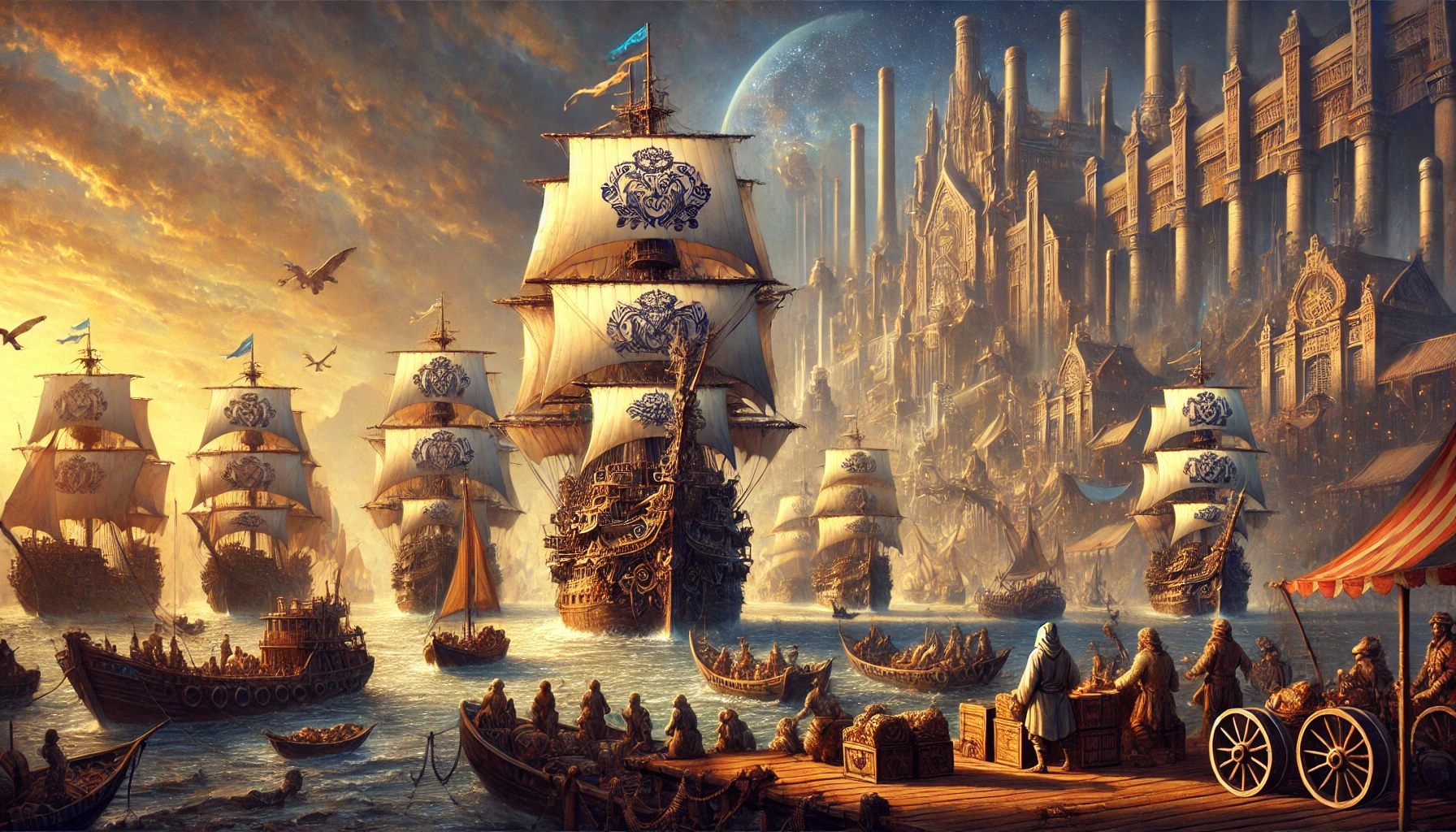
The company also invested heavily in shipbuilding, producing vessels capable of long-range ocean voyages. This allowed it to expand trade routes to distant lands like Isobar, bringing exotic goods and knowledge back to Hangard. Such voyages of exploration and commerce greatly expanded northern influence.
Relations with non-human races were a key aspect of Trading Company diplomacy. The novel mentions ties to the Sommerisi Sea Barons and Dwarven kingdoms. Navigate these complex racial politics required a delicate touch, as missteps could lead to costly trade disputes or even war.
Within its own ranks, the Trading Company appeared to practice a degree of racial integration unusual for the setting. Non-humans like the Wolflord Gerrick could rise to high positions based on merit. This cosmopolitan attitude likely helped the company establish inroads in foreign markets.
Labor practices of the Trading Company were almost certainly exploitative in many regions. The vast wealth flowing into company coffers and noble estates came at the cost of workers toiling in harsh conditions for meager pay. This bred resentment among the lower classes in Hangard and its colonies.
Environmental devastation often followed in the wake of company resource extraction efforts. Forests were likely clearcut, waters polluted, and wildlife exterminated to fuel the endless hunger for profit. The long-term consequences of such practices were probably only beginning to be felt.
The Trading Company's monopolistic practices stifled local economies and entrepreneurship in many areas. Small-scale merchants and artisans found themselves unable to compete with the company's vast resources and political connections. This led to increasing wealth inequality in Hangard.
Culturally, the Trading Company exerted a homogenizing influence across the northern realms. Local customs and traditions were often suppressed or commodified in the name of efficient commerce. This cultural flattening was likely a source of resentment among traditional societies.
Legal autonomy granted to the Trading Company allowed it to often operate outside the bounds of local laws. Company-controlled territories essentially functioned as independent states, with their own courts and system of justice. This could protect company interests while denying legal recourse to those wronged.
Education was another sphere where company influence was strongly felt. Establishment of schools and academies allowed the Trading Company to shape the worldview of Hangard's youth. Critics likely saw this as indoctrination serving commercial interests rather than the public good.
Religiously, the Trading Company paid lip service to Hangard's official doctrines while likely tolerating or secretly encouraging a variety of beliefs. Ties to magic users and foreign cultures exposed company members to diverse philosophies and faiths not always in line with state orthodoxy.
Artistically, patronage from wealthy company elites drove much of Hangard's cultural output. Music, literature, and visual arts celebrating company achievements and ideology were heavily promoted. More subversive works criticizing the mercantile order faced censorship and suppression.
Architecturally, Trading Company influence reshaped the urban landscape of Hangard's cities. Grand markets, exchanges, and countinghouses rose alongside lavish estates for merchant princes. These symbols of commercial might often overshadowed traditional seats of government and religion.
Scientific and medical advancements were spurred by company funding and need. The novel mentions tele-magical communication and advanced healing techniques that were likely developed at least partially through Trading Company resources. The benefits of such research were probably not evenly distributed.
Culinarily, Trading Company vessels brought exotic ingredients and recipes from across the world to northern tables. This gastronomic exchange reshaped local food cultures and dining habits, for better or worse. Access to foreign delicacies became a status symbol among Hangard's elite.
Linguistically, Trade Speak became the dominant language of commerce across the northern realms thanks to company influence. Local tongues and dialects were often suppressed in the name of efficient communication. This linguistic imperialism further eroded traditional cultures.
Fashion trends were heavily shaped by Trading Company imports and tastes. Fine fabrics and jewelry from distant lands adorned Hangard's nobility, while practical company uniforms influenced everyday attire. Clothing became an important marker of social status and company rank.
Ultimately, the Northland Trading Company represented both the soaring ambitions and darkest impulses of Hangard's imperial age. It brought untold wealth and advancement to the northern realms, but at the cost of exploitation, corruption, and cultural upheaval. Its legacy would likely be debated for generations to come.
Technological innovation was another area where the Trading Company excelled. Access to foreign markets and vast resources allowed it to acquire advanced weapons like the Dwarven firearms mentioned in the novel. These likely gave company forces a significant edge in combat.
The company also invested heavily in shipbuilding, producing vessels capable of long-range ocean voyages. This allowed it to expand trade routes to distant lands like Isobar, bringing exotic goods and knowledge back to Hangard. Such voyages of exploration and commerce greatly expanded northern influence.
Relations with non-human races were a key aspect of Trading Company diplomacy. The novel mentions ties to the Sommerisi Sea Barons and Dwarven kingdoms. Navigate these complex racial politics required a delicate touch, as missteps could lead to costly trade disputes or even war.
Within its own ranks, the Trading Company appeared to practice a degree of racial integration unusual for the setting. Non-humans like the Wolflord Gerrick could rise to high positions based on merit. This cosmopolitan attitude likely helped the company establish inroads in foreign markets.
Labor practices of the Trading Company were almost certainly exploitative in many regions. The vast wealth flowing into company coffers and noble estates came at the cost of workers toiling in harsh conditions for meager pay. This bred resentment among the lower classes in Hangard and its colonies.
Environmental devastation often followed in the wake of company resource extraction efforts. Forests were likely clearcut, waters polluted, and wildlife exterminated to fuel the endless hunger for profit. The long-term consequences of such practices were probably only beginning to be felt.
The Trading Company's monopolistic practices stifled local economies and entrepreneurship in many areas. Small-scale merchants and artisans found themselves unable to compete with the company's vast resources and political connections. This led to increasing wealth inequality in Hangard.
Culturally, the Trading Company exerted a homogenizing influence across the northern realms. Local customs and traditions were often suppressed or commodified in the name of efficient commerce. This cultural flattening was likely a source of resentment among traditional societies.
Legal autonomy granted to the Trading Company allowed it to often operate outside the bounds of local laws. Company-controlled territories essentially functioned as independent states, with their own courts and system of justice. This could protect company interests while denying legal recourse to those wronged.
Education was another sphere where company influence was strongly felt. Establishment of schools and academies allowed the Trading Company to shape the worldview of Hangard's youth. Critics likely saw this as indoctrination serving commercial interests rather than the public good.
Religiously, the Trading Company paid lip service to Hangard's official doctrines while likely tolerating or secretly encouraging a variety of beliefs. Ties to magic users and foreign cultures exposed company members to diverse philosophies and faiths not always in line with state orthodoxy.
Artistically, patronage from wealthy company elites drove much of Hangard's cultural output. Music, literature, and visual arts celebrating company achievements and ideology were heavily promoted. More subversive works criticizing the mercantile order faced censorship and suppression.
Architecturally, Trading Company influence reshaped the urban landscape of Hangard's cities. Grand markets, exchanges, and countinghouses rose alongside lavish estates for merchant princes. These symbols of commercial might often overshadowed traditional seats of government and religion.
Scientific and medical advancements were spurred by company funding and need. The novel mentions tele-magical communication and advanced healing techniques that were likely developed at least partially through Trading Company resources. The benefits of such research were probably not evenly distributed.
Culinarily, Trading Company vessels brought exotic ingredients and recipes from across the world to northern tables. This gastronomic exchange reshaped local food cultures and dining habits, for better or worse. Access to foreign delicacies became a status symbol among Hangard's elite.
Linguistically, Trade Speak became the dominant language of commerce across the northern realms thanks to company influence. Local tongues and dialects were often suppressed in the name of efficient communication. This linguistic imperialism further eroded traditional cultures.
Fashion trends were heavily shaped by Trading Company imports and tastes. Fine fabrics and jewelry from distant lands adorned Hangard's nobility, while practical company uniforms influenced everyday attire. Clothing became an important marker of social status and company rank.
Ultimately, the Northland Trading Company represented both the soaring ambitions and darkest impulses of Hangard's imperial age. It brought untold wealth and advancement to the northern realms, but at the cost of exploitation, corruption, and cultural upheaval. Its legacy would likely be debated for generations to come.
Type
Guild, Merchant

Comments