
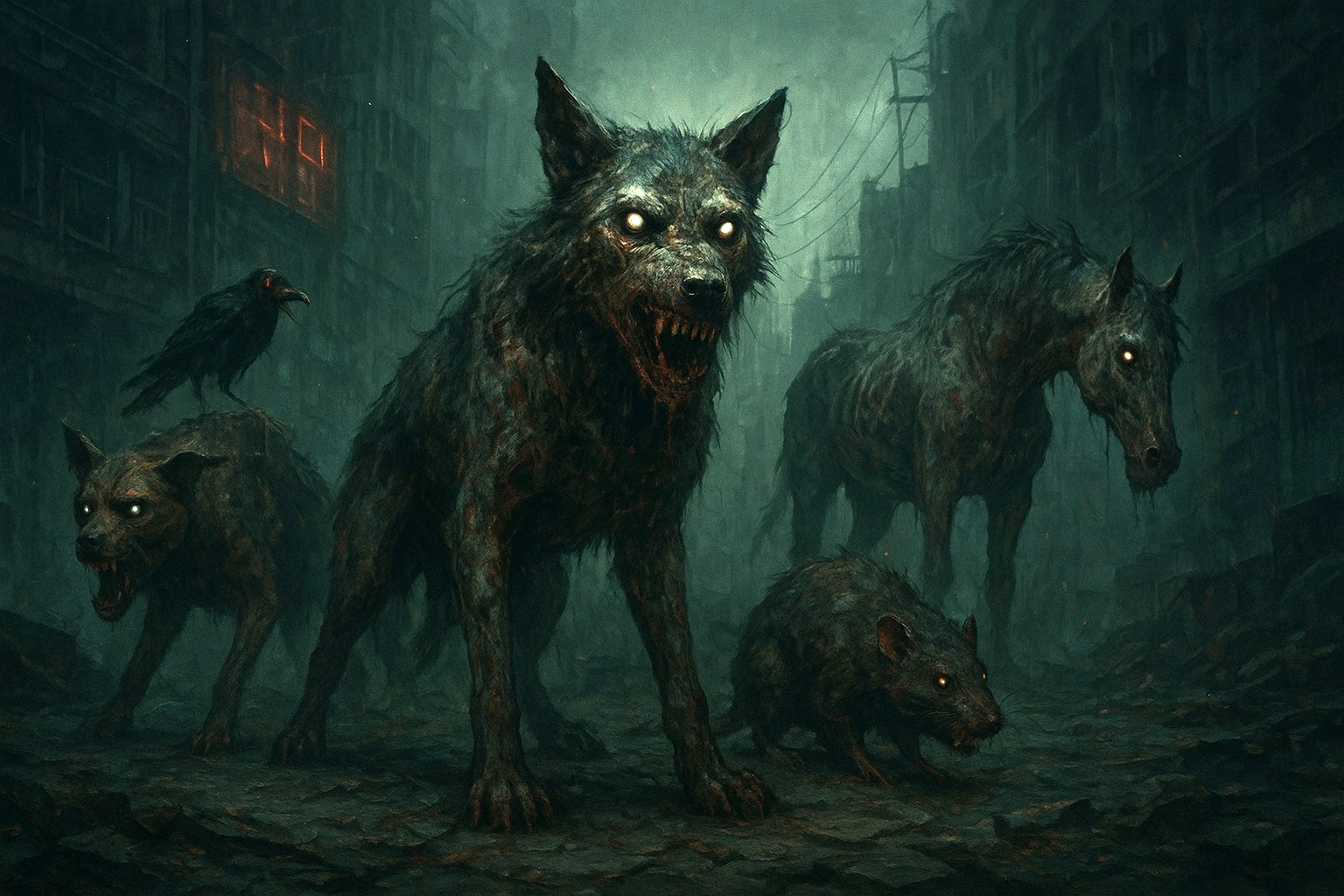
Infected Animal
Transmission in Animals
The Sonohoka virus affects animals in much the same way as humans, spreading primarily through blood-borne exposure. Bites, scratches, or ingestion of infected tissue are the most common vectors. Because many animals rely on fighting, scavenging, or close-contact feeding behaviors, the risk of interspecies transmission is significant.
Unlike humans, animals often lack the ability to protect themselves with clothing or barriers. Packs of predators (wolves, feral dogs, coyotes) are especially vulnerable, as a single infected member can quickly spread the virus to the rest of the group.
Susceptible Species
Not all animals are equally affected. Over a century of observations has shown varying levels of susceptibility:
- Highly Susceptible: Primates, canines, felines, rodents, swine, and most carrion-feeding birds. These animals not only contract the virus easily but are also capable of converting into “zombie-like” forms.
- Moderately Susceptible: Ungulates (deer, cattle, goats, horses), bears, and large birds of prey. These species often succumb to the disease quickly, with only a fraction surviving long enough to convert.
- Low Susceptibility/Carriers: Reptiles, amphibians, and many small birds. They may carry the virus in their systems without showing outward signs of infection, acting as reservoirs that spread the disease through bites, scratches, or contaminated fluids.
Symptoms and Outcomes in Animals
The course of the disease in animals mirrors that of humans but with unique differences:
- Day 0–2: Fatigue, aggression, and loss of appetite.
- Day 3–5: Severe exhaustion, neurological changes, heightened aggression. Some species develop early-stage mutations (elongated teeth, hardened skin, bone ridges).
- Day 6+: Final stage—conversion into a feral, zombie-like state. Like humans, animal eyes shift to pure black upon loss of higher cognition.
While many infected animals simply die, a significant portion (especially among primates, dogs, and scavenging birds) undergo mutation and persist as zombie analogs.
Behavioral Changes
Infected animals display behaviors that exaggerate their natural instincts:
- Dogs & Wolves: Pack-oriented hunting escalates, with increased boldness toward humans.
- Cats & Felines: Stalk-and-pounce strategies become relentless, with little sign of fear or fatigue.
- Rodents: Exhibit swarming behavior, attacking en masse in ways not typical of uninfected populations.
- Birds (crows, ravens, vultures): Congregate unnaturally in large flocks, circling or perching near zombie groups as if drawn to them.
Mutations in Animals
As with humans, mutations are highly variable. Documented cases include:
- Canines: Overdeveloped jaw muscles, protruding fangs, enhanced endurance.
- Ungulates: Bony plates forming across the skull, making charging attacks more dangerous.
- Rodents: Rapid reproduction cycles, possibly accelerated by viral mutation, leading to localized infestations.
- Birds: Enlarged talons or beaks, loss of feathers replaced by keratinous plating.
Ecological Impact
The infection has drastically reshaped ecosystems:
- Apex predators are often overrun by infected counterparts, leading to unstable food chains.
- Zombie animal packs are less efficient hunters than natural ones, often decimating local prey populations and then starving en masse.
- Scavenger species thrive unnaturally, feeding on the remains of zombie kills and carrying the virus further.
- Agricultural animals (cattle, pigs, goats) pose a serious threat when infected, as entire herds can turn feral and overwhelm farmsteads.
Cultural Reception
Survivors often tell stories of infected animals as omens or curses—black-eyed wolves in the treeline, carrion birds that never scatter, or skeletal horses that run tirelessly until they collapse. In Camp Hope and similar settlements, the phrase “the forest walks at night” is sometimes used to describe the eerie, unnatural sounds of infected wildlife moving together in the dark.


Comments