
Elven Culture

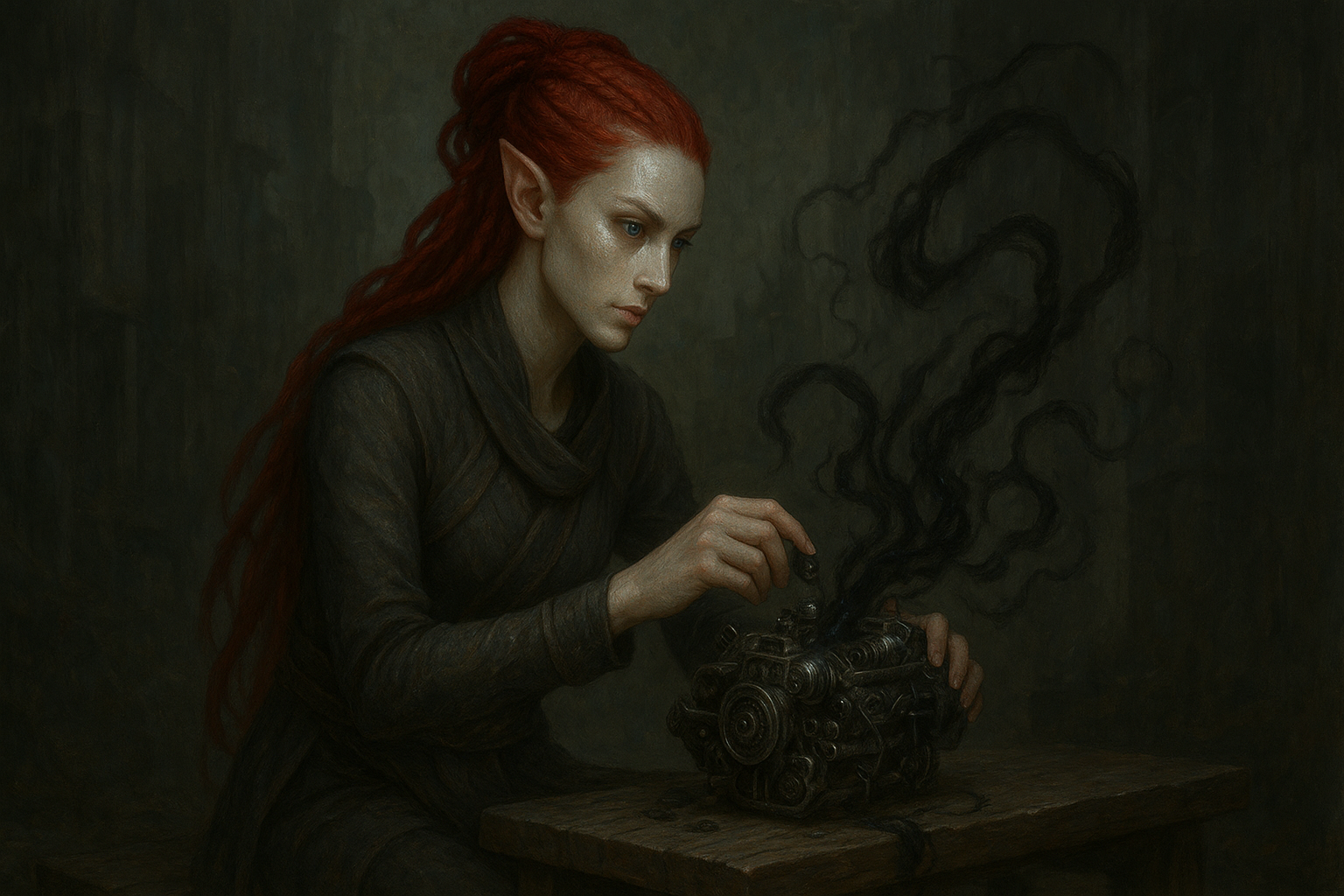
The culture of the Elves of the Dark is anchored in eternity, refinement, and the cycles of the River. Rather than being shaped by place or politics, it emerges from the flow of memory and the rhythms of the Life Stream, creating a society that is meditative, ritualized, and profoundly self-aware. Their lives are devoted to the perfection of craft, art, and thought, with every action, gesture, and creation reflecting centuries of accumulated insight. Relationships, whether with mortals or fellow Elves, are guided by harmony and stewardship rather than equality or urgency. Morality is measured in continuity, balance, and the preservation of beauty, not in the fleeting concerns of ephemeral beings. Music, visual art, meditation, and ritual weave through daily life, making their culture both alien and mesmerizing, a reflection of beings who perceive existence not as a series of moments but as an eternal, living pattern.
Naming Traditions
Elves choose names as reflections of their essence, mastery, or resonance with the world rather than through birthright, gender, or familial ties. Names are musical, flowing, and symbolic, often describing qualities, elemental affinities, or skills honed over lifetimes. As immortal beings who reincarnate from the Dark, an Elf’s name may persist across incarnations or evolve to reflect accumulated experience and their current place within the Life Stream. Naming is a private and deliberate act, sometimes performed in ritual attunement with the River, ensuring the name harmonizes with their eternal identity and the collective memory of other Elves. Mortals may invent shorthand or nicknames for convenience, but the true name carries profound metaphysical significance, embodying the Elf’s connection to perfection, continuity, and the flow of the Dark.
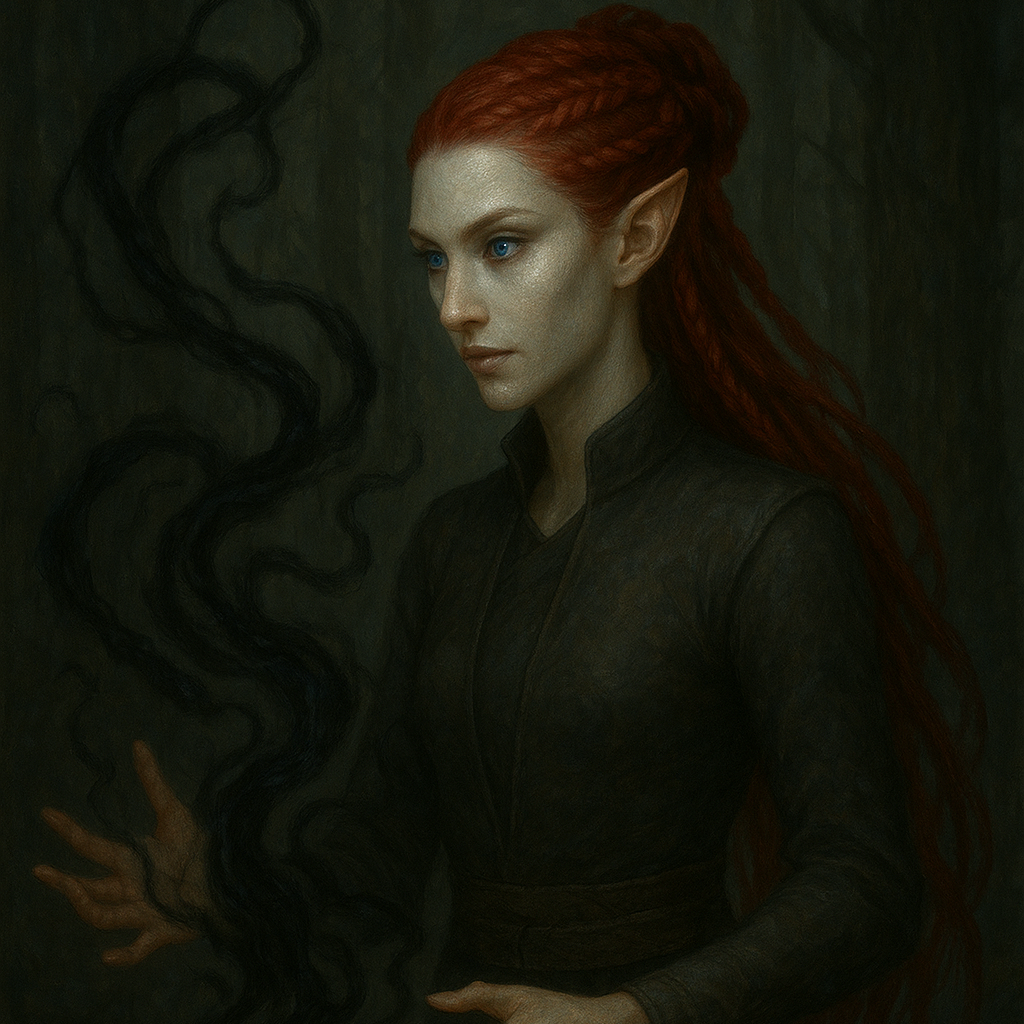
- Auralith Whisperbranch – “One whose presence resonates like wind through the trees, carrying knowledge softly yet persistently.”
- Sablethorn Luminveil – “A being of shadowed strength and subtle illumination, guiding growth and refinement.”
- Eversong Mireveil – “A life in perpetual harmony, whose actions and mastery echo eternally in the Life Stream.”
Culture and cultural heritage
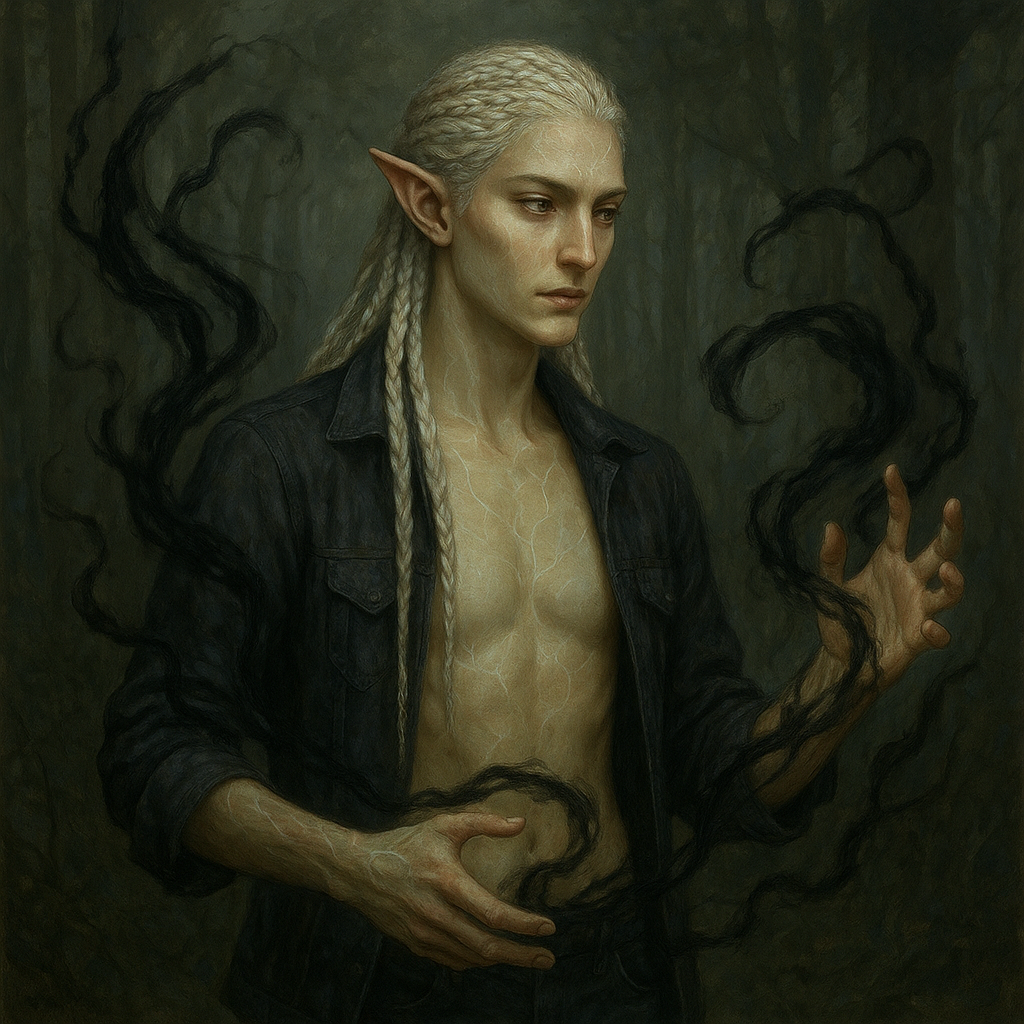
Their culture is cyclical and memory-driven, with each Elf carrying echoes of previous lives that influence art, craft, and philosophy. Cultural heritage is preserved through practice and mentorship rather than static records. Knowledge of skills, ritual, and the River is continually refined, not merely remembered, producing a living tradition that is both ancient and constantly renewed.
Shared customary codes and values
Elves of the Dark prize continuity, refinement, and equilibrium above all else. Their codes are unwritten but universally recognized: one must act in ways that preserve harmony, avoid unnecessary destruction, and honor the flow of time. Perfection in craft, thought, and ritual is a moral imperative, while impulsiveness, waste, or discord is subtly but firmly disfavored. Loyalty is less personal than structural—loyalty to patterns, cycles, and enduring beauty outweighs attachment to individuals.

Common Etiquette rules
Politeness is a matter of restraint, observation, and attunement. Elves rarely interrupt or demand attention, speaking with deliberate calm and waiting for the proper moment to act. Gestures are measured; excess or flamboyance is frowned upon. Among themselves, subtle glances, the alignment of posture, and shared ritual actions communicate respect and understanding, often without words.
Common Dress code
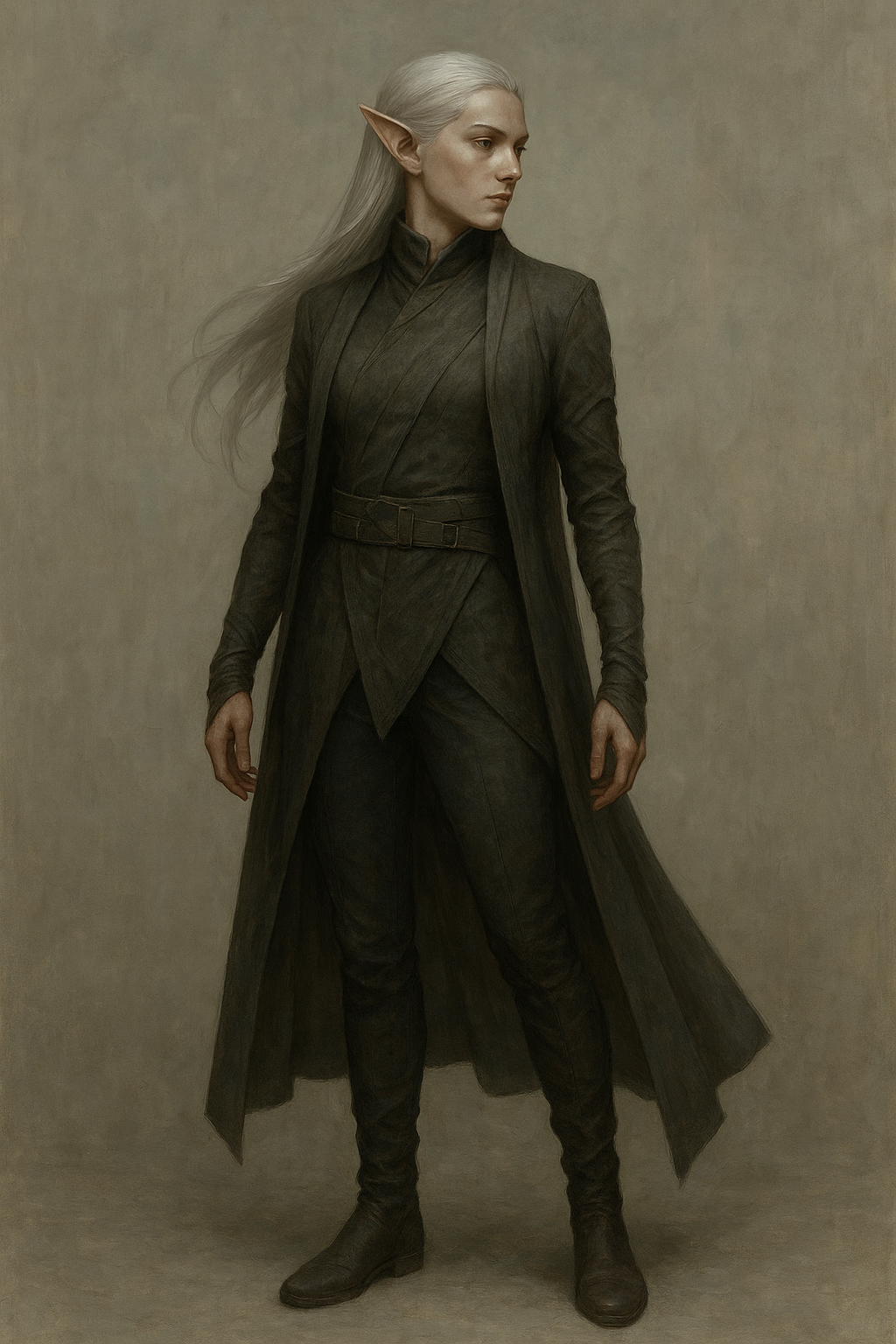
Clothing is functional yet elegant, favoring flowing lines and muted, natural tones that echo light and shadow. Fabrics are meticulously chosenfor texture, durability, and movement, often dyed with rare pigments or woven with patterns that signify lineage or skill. Ornamentation is minimal but symbolic, reflecting mastery, age, or achievements rather than vanity.
Art & Architecture
Elven art and architecture are sublimely refined and meditative, favoring forms that suggest eternal flow, balance, and understated grandeur. Buildings curve like rivers or echo fractal patterns found in nature, while their art emphasizes rhythm, repetition, and harmony rather than spectacle. A single sculpture or painting may take centuries to complete, designed to age gracefully with light and shadow.
Common Customs, traditions and rituals
Daily life is ritualized: crafting, study, meditation, and communion with the Dark are intertwined. Ceremonies mark cycles of renewal, the emergence of new Elves, and the honing of skills. Long periods of silence or reflection are respected as essential for balance, and gifts of perfected craft are preferred over material wealth.


Foods & Cuisine
Elves prioritize flavors and textures in balance rather than novelty or indulgence. Meals are often vegetarian or drawn from sustainable natural sources, prepared with precision to preserve inherent qualities. Food is eaten mindfully, often as part of ritual or contemplation, with an emphasis on moderation and subtlety of taste over extravagance.
Birth & Baptismal Rites
Since Elves are remembered into being, emergence is itself a sacred event—but they do not gather physically at the location of the new Elf’s arrival. Instead, they perceive the Elf’s emergence through the River, feeling the pulse of the Dark as it heralds the rebirth. From their own places, they welcome and celebrate the coming of the Elf, offering tokens, chants, or crafted objects in harmony with the River. These acts guide the emerging Elf toward mastery, equilibrium, and continuity, linking them to the eternal flow even before they take form.

Common Rites
Formal rites are less about age and more about attainment. An Elf may undergo tests of skill, endurance, or artistic refinement to mark the mastery of a discipline or the deepening of understanding. The ritual emphasizes self-realization and harmony with the River, rather than competition or social recognition.
Common Taboos
Waste, wanton destruction, and the disruption of balance are deeply taboo. Acts that introduce chaos, corruption, or disorder—whether in craft, thought, or environment—are frowned upon. Directly harming mortals without purpose is unusual, not from moral guilt but because it breaks the harmony of existence.
Common Myths and Legends
Elven mythology is less narrative-driven and more symbolic, centering on the River, cycles of being, and the Dark as the source of eternal flow. Tales often describe the transcendence of time, perfection of craft, or merging with enduring forms, with moral lessons emphasizing refinement, patience, and the preservation of beauty rather than heroism or conquest.
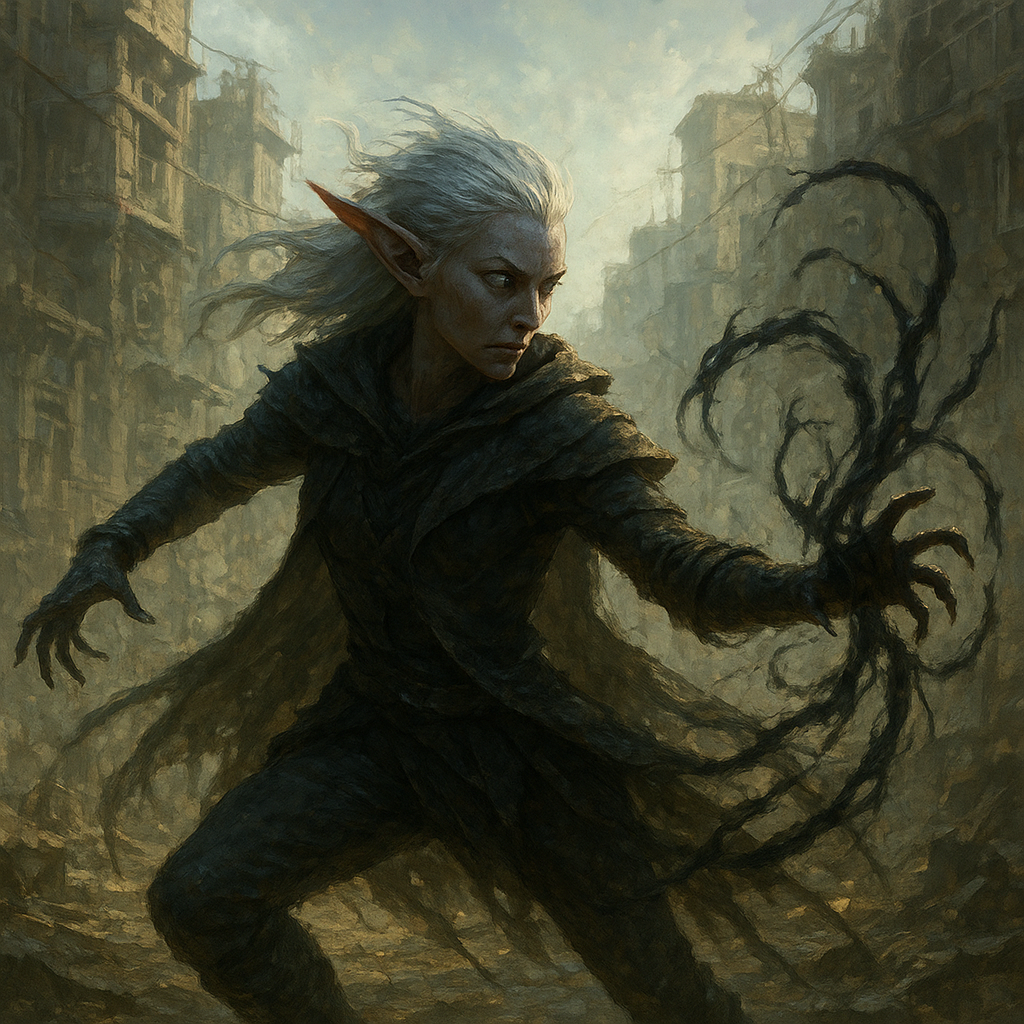

The human merchant had been speaking quickly, his hands fluttering over bolts of cloth and scraps of metal as though speed itself might charm the elf into a bargain. The elf, however, stood perfectly still, tall and calm, his silver-tinged eyes fixed on the human’s face rather than the wares. He did not interrupt, nor did he hurry to speak; instead, he let silence press in, as though weighing every word the man spoke against some deeper measure. When at last he spoke, his voice was quiet, deliberate, carrying with it the unshakable cadence of one accustomed to patience and precision. “This cloth will fray within a season, and the alloy will bend before its purpose is served. What you ask in trade is steep. What you offer in truth is fleeting.”
Instead of rejecting the man outright, the elf lifted one of the bolts of fabric and ran it between his fingers, his expression unreadable but softened with an almost ceremonial grace. He began to speak of the weave, its pattern reminding him of a river that once cut through stone in his people’s homeland, a place long drowned by the Dark. He did not bargain in terms of coin or measure but in the memory of durability, of work done not for haste but for legacy. The merchant, unused to being answered with philosophy, grew uneasy under the weight of the elf’s steady presence, realizing that in this exchange he was not selling cloth but being tested for sincerity.
When the elf finally agreed to a trade, it was not for the strongest fabric nor the finest tool, but for the one that would last, the one worthy of craft and ritual use. His gestures as he handed over the counter-gift were deliberate, as though even the act of exchange was a sacred thing. To the human, it seemed strange—needlessly slow, even eccentric. Yet as he left, the elf’s composure lingered in the air, and the human merchant felt he had witnessed something beyond transaction: a people for whom beauty and purpose were bound, for whom every choice carried the weight of centuries, and for whom patience itself was a weapon sharper than steel.


Comments