
Dennis Birk Hawking
Lieutenant Dennis Birk Hawking (a.k.a. Hawk)
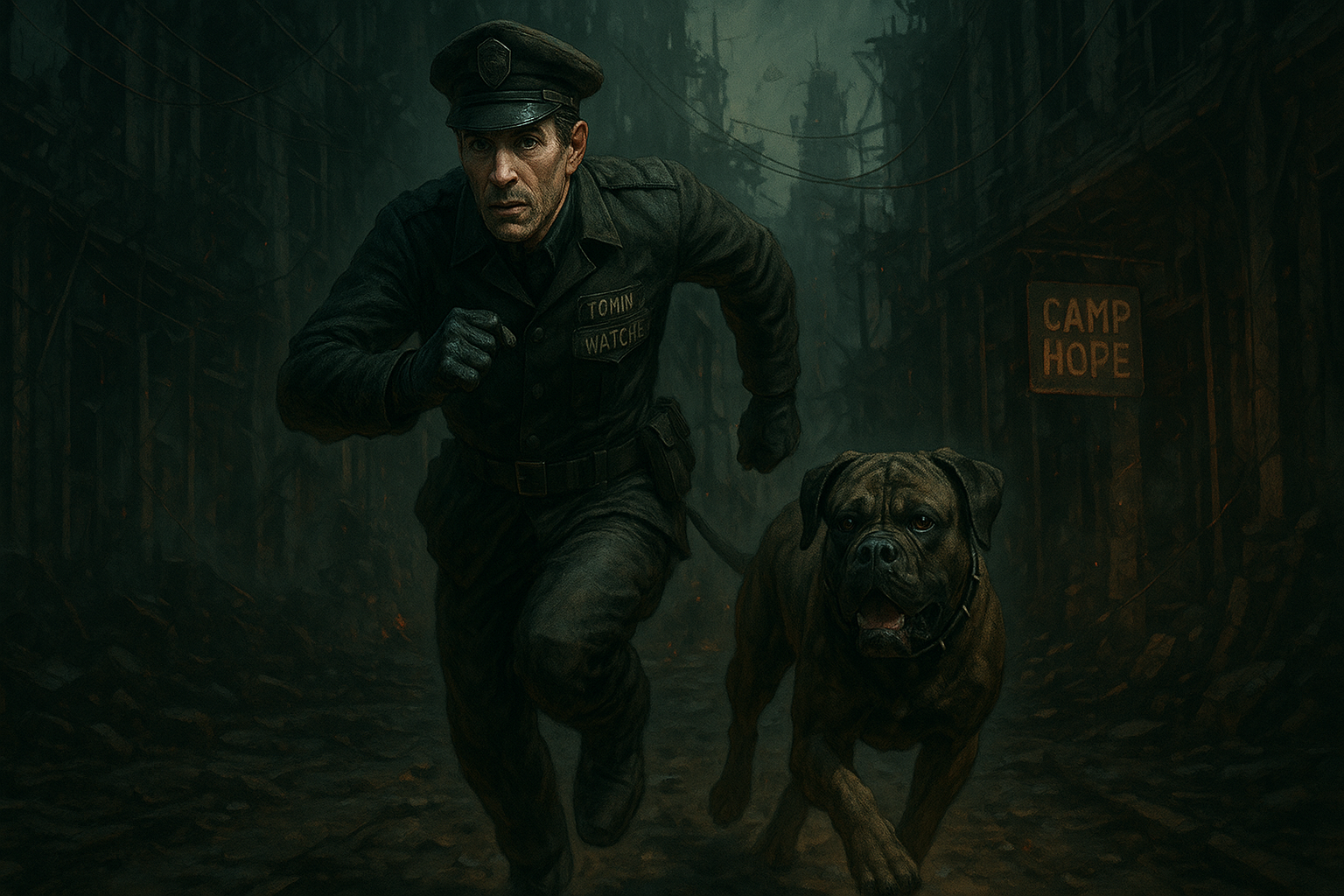
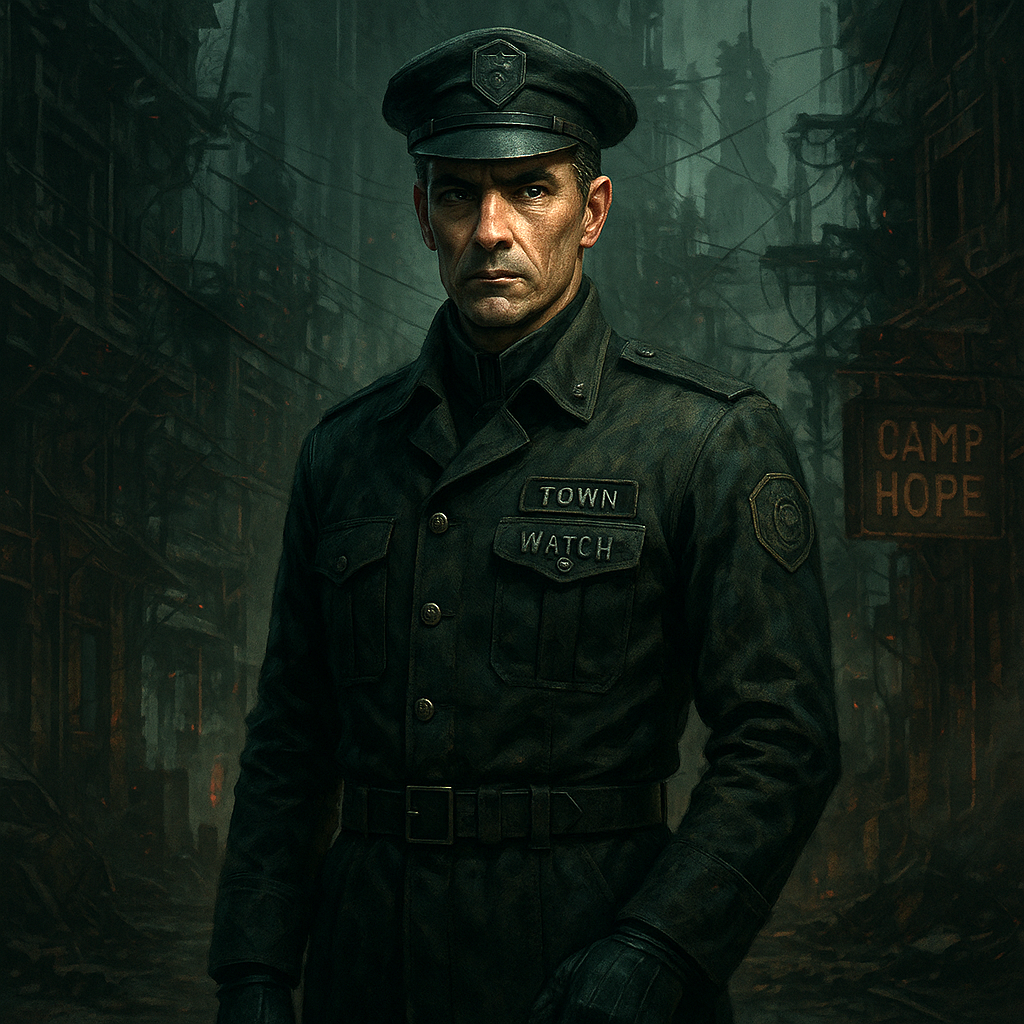
Lieutenant Dennis Birk Hawking—known across Camp Hope as Hawk—is the kind of man who can bring silence to a room without ever raising his voice. Everything about him—his posture, his tone, his deliberate precision—speaks of control. He is a man who has learned, painfully, that panic kills faster than bullets, and that chaos spreads like fire if not contained by discipline and reason. In the Town Watch, where command often means blood on your hands, Hawking has made himself into a steadying force: not beloved by all, but respected by everyone.
He is calculating, confident, and reserved, with a knack for masking concern behind the dry wit of a man who’s seen too much. Hawking doesn’t waste words or gestures; when he speaks, people listen, and when he acts, others follow. Beneath the crisp uniform and the commanding tone lies something quieter—a man who carries more ghosts than he admits.
His positive bias lies with those who remain calm when everything falls apart. He respects composure and precision, the rare souls who don’t let fear dictate their actions. Those who can hold the line under pressure earn his respect immediately. His negative bias, however, burns hot against idealists and zealots—particularly those from the Church of Hope. He’s seen what blind faith can do when it’s placed above reason or planning. “You can’t pray a riot into order,” he once said, and he’s never changed his mind.
Hawking’s greatest talent is tactical clarity. In the blur of chaos—gunfire, shouting, smoke—he can see the shape of the fight as if it were a map unfolding in real time. He finds order in confusion, reading the angles, predicting outcomes, and giving the kind of commands that pull men back from disaster. In the worst moments, when others lose their heads, Hawking simply narrows his eyes, adjusts his gloves, and starts thinking. That small gesture—tightening the leather at his wrist—is his tell. The Watch jokes that the tighter his gloves, the worse the situation is about to get.
His mannerisms betray his burden. He often stares into the distance when decisions weigh on him, not to escape, but to measure the cost. Behind that neutral gaze is guilt—faces remembered, names unspoken. He doesn’t let it show, but it’s always there. When others drink to forget, Hawking simply works harder, adding more weight to an already heavy sense of duty.
With others, he’s formal—disciplined to a fault—but not unkind. He mentors the young members of the Watch with the sort of tough love that only a soldier of his generation understands. He expects competence, and when he doesn’t see it, he builds it from the ground up. To those who earn his trust, his humor emerges—dry, understated, and often deployed at exactly the moment it’s needed most. He doesn’t coddle, but he cares, quietly and consistently.
Hawking lives by a clear ideal:
Order must be upheld, but not at the expense of the people we serve. Strategy without heart is tyranny.
That belief has guided him since the early days of Camp Hope’s founding, when the streets burned and the walls barely stood. He lost friends then—too many—and every plan he draws now carries the echo of their absence. His bond is with the Watch itself, and through it, the camp. He sees the Town Watch not as an organization, but as the last defense between order and collapse. Every recruit he trains, every patrol he sends, is part of his quiet vow: never again.
But that same commitment is also his flaw. In the name of composure, he buries everything that might break him—his guilt, his grief, his doubts. He carries the pain of every life lost under his command and hides it behind a mask of control. Some say it’s what makes him strong. Others think it’s what will one day kill him.
What few people know—what he never advertises—is the other side of Hawk: the mentor and protector of Camp Hope’s orphans. When a child loses their parents, when a teenager runs from a broken home, it’s often Hawking who finds them. He gives them food, structure, a bunk, and rules—always rules. He doesn’t believe in softness, but he believes in giving them purpose. “Structure saves people,” he’s said more than once. “Even if they hate you for it at first.” Many of the Watch’s best recruits started that way—lost kids molded by his discipline into something steadier, something stronger. He doesn’t call it charity. To him, it’s prevention—saving others from the kind of chaos that took his friends long ago.
In the quiet hours, when the Watch shifts change and the walls fall silent, Hawking sometimes lingers near the training yard. He’ll stand there, gloves folded behind his back, watching the recruits practice. His eyes follow their movements—not critically, but with a faint, guarded pride. He won’t say it out loud, but in those moments, he almost allows himself to believe that maybe he’s done some good after all.


Comments