
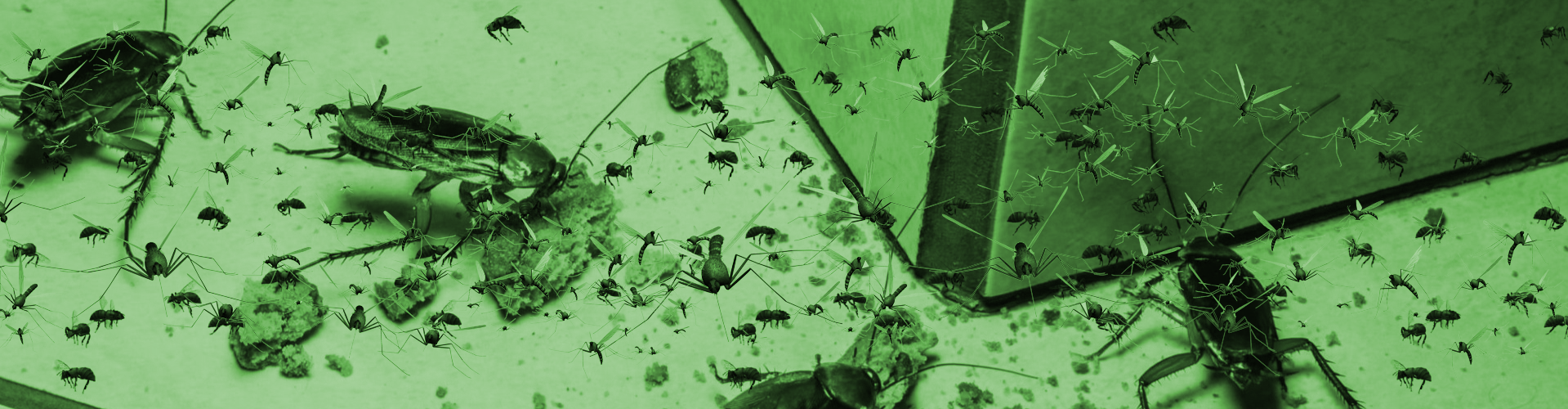
Pests
When I finally came out from the storm shelter, every living thing around me was stripped down to the bone. Whole herds of cows were obliterated by those... things. I saw some stragglers still picking at what was left of the barn cat. Shot at the little shits with my old hunting rifle... Just thinking about Gina and the kids... I shouldn't be here now, they should've been in my place...
All lesser demons can be placed somewhere on a relatively simple spectrum; large powerful solitary demons and small weak swarming demons. On one end exists demons such as the legion or drallmamoth, great monstrous beasts capable of obliterating entire cities with minimal effort. Even one of these demons would necessitate a modern army or a nuclear warhead to wear down. Such demons are what many expect when imagining a demonic incursion; creatures as big as mountains rampaging across countries.
On the opposite end of the spectrum sits the lowly pest. As the name implies, these demons are tiny flying creatures that pose more of an annoyance than a threat alone. Each individual pest is unique in appearance as the anatomy of this species consists of a mishmash of insect, rodent, and human body parts. The only consistency among them is the presence of at least one pair of functioning wings which they constantly use as they possess nearly unlimited energy. This is because, like other lesser demons, they rely on a very small amount of suffering from mortal worlds to remain sustained.
Another way in which these demons have earned their name is the ravenous and reckless behaviors they exhibit. Even when alone, a pest will immediately attack any living thing they come in contact with. This includes other demons as well, most of which end poorly for the instigator. The small size and frail body of the pest make it a very easy demon to slay even in small groups. An unharmed adult person could easily defeat a small swarm of pests, and a few armed fighters could wipe out a swarm of over a hundred individuals.
Small in Size, Vast in Numbers
Unfortunately, these more manageable swarms are quite rare for pests. Because the individual demon lacks the capabilities to protect itself, they have developed a tendency to swarm in extreme numbers. Swarms within the hundreds or thousands are considered miniscule, with a typical pest swarm averaging in the billions to hundreds of billions. Swarms of trillions and even tens of trillions of the little demons have also been noted, though only a handful of individuals have witnessed such events and survived to report them.
While a single pest can be neutralized without even a simple weapon and tiny swarms can be handled by simple weaponry, a typical swarm of pests is a force of nature. When gather in such great numbers, the ravenous and reckless behaviors of this species become a significant threat to the creatures around them. When introduced to a mortal world, often because a more powerful demon is feeling bored or peckish, these swarms tear through living things with ease as millions of biting critters launch themselves at everything they can get their mouths around. One swarm can mow down an entire forest within hours and pick every bit of flesh from the animals that once resided within it. Their lust for wanton destruction is best fed when they encounter sentient species. Human settlements, even developed urban areas, crumble with disturbing ease under the might of half a trillion tiny rat-bug-human hybrids as they ravage the entire planet.
Within the demon world, pests are somehow even more common than they are in invaded mortal worlds. While the maximum sent out of the demon world is believed to be under a hundred trillion, swarms within their world are hypothesized to range from hundreds of trillions to tens of quadrillions. Such large swarms become nothing but easy targets for other demons, especially gargantuan beasts like the dreaded continent eater. A drallmamoth can consume pests in the same way a baleen whale on Earth consumes krill; it opens its gaping maw and the food gets sucked in.
A fortunate note is that the large numbers pest swarms boast have encouraged some far less helpful behaviors in the species. With such large numbers, many millions are often lost within a single location alone. Many of these casualties are caused by pure incompetence on the part of the demons. Hundreds of them may splat when they slam into solid structures and thousands more will follow along. Once the swarm has passed through many stragglers remain as well, making them easy pickings for more capable hunters.
Warp-Nests
For the unfortunate pests left behind by the ravenous swarm, there is only one way to survive in a world designed to kill them; warp-nests.
Another unusual trait possessed by the pest is the ability to create abnormal structures which warp the fabric of reality. These bizarre nests are built into any solid object and house anywhere from a hundred to a thousand pests at once. An object turned into a warp-nest can be compared to a hornet's nest grown onto the side of a building. Any abandoned pests will be drawn to one of these nests where they will hide and wait for either the rest of the swarm or small prey to ambush.
Often they kill or paralyze a single creature without eating it to lure in other prey. Due to this unusual hunting strategy, warp-nests can also be identified by the piles of bones paired with a number of untouched carcasses. Once enough prey have been captured, the warp-nest will begin to rumble and several new pests will emerge to seek out prey. As this leads to the corruption of a mortal world, warp-nests have also earned the nickname "demon tumors".
Ultimately, the easiest way to get rid of a warp-nest is to douse it in a highly flammable material and setting it ablaze. Most, if not all, of the pests within perish from the heat and the rest will be too weakened to pose a threat. When the nest is fully destroyed, it is beneficial to wash the warped object with Holy Water.
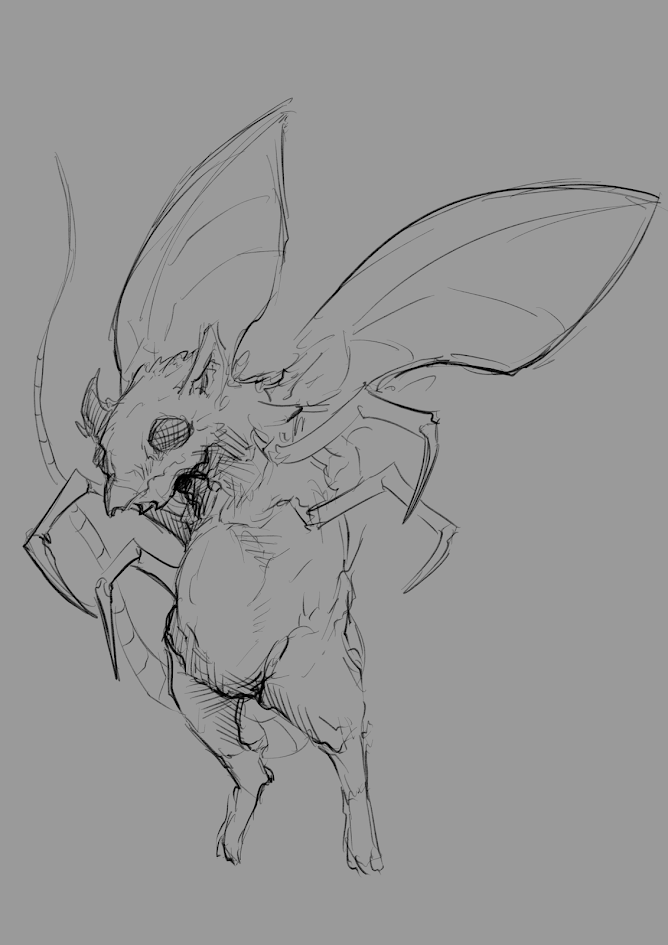
Sketch of a pest produced by Patrick Graham.

Comments