

The Celestial System
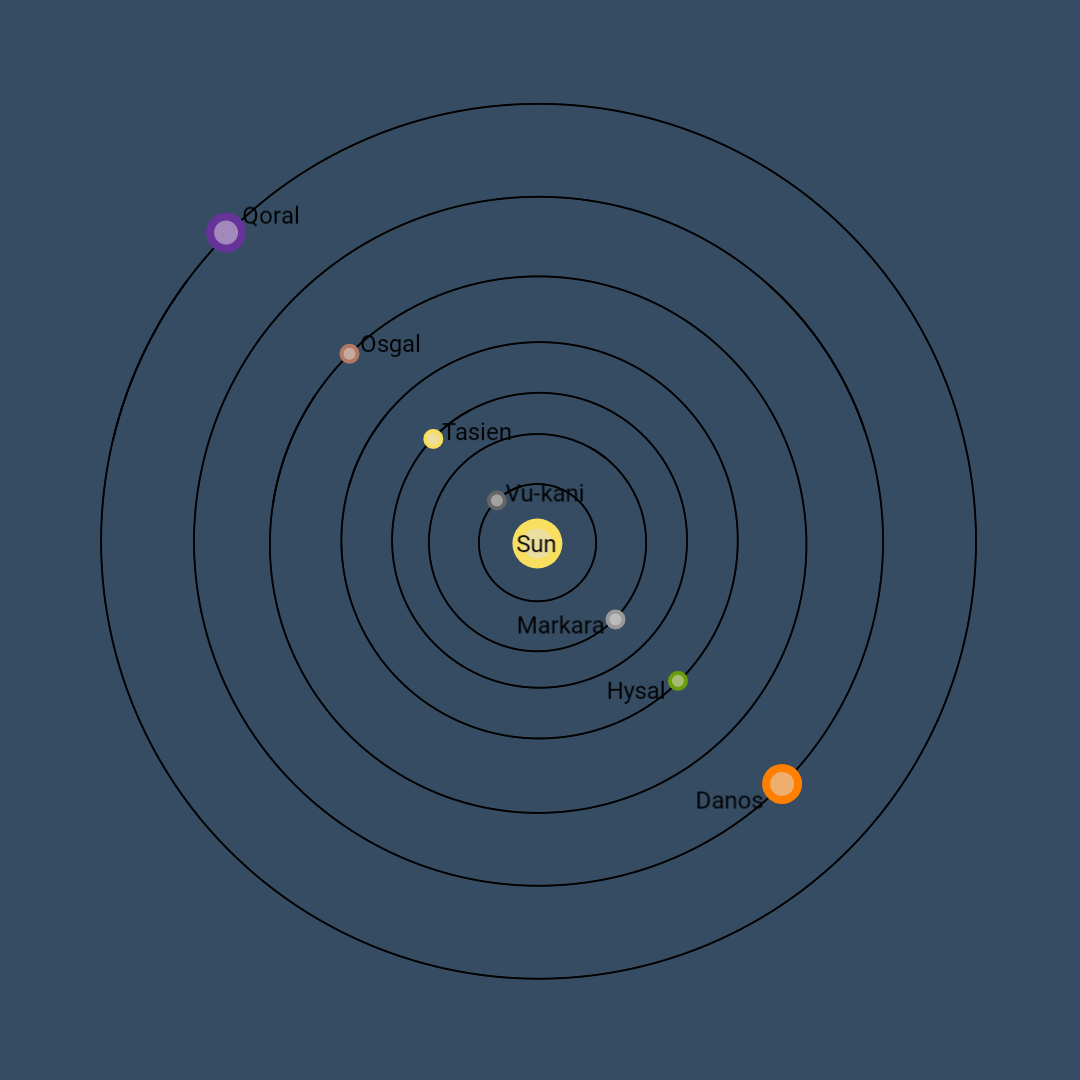
"You see that bright yellow dot here? That's Tasien, the 3rd planet from the sun!"Celestial Scholars, also called astrologists have been studying the skies above Hysal for many thousands of years. Throughout that time, they have been able to map and understand the so-called Celestial System with what they believe to be great accuracy.
Geography
Vu-Kani
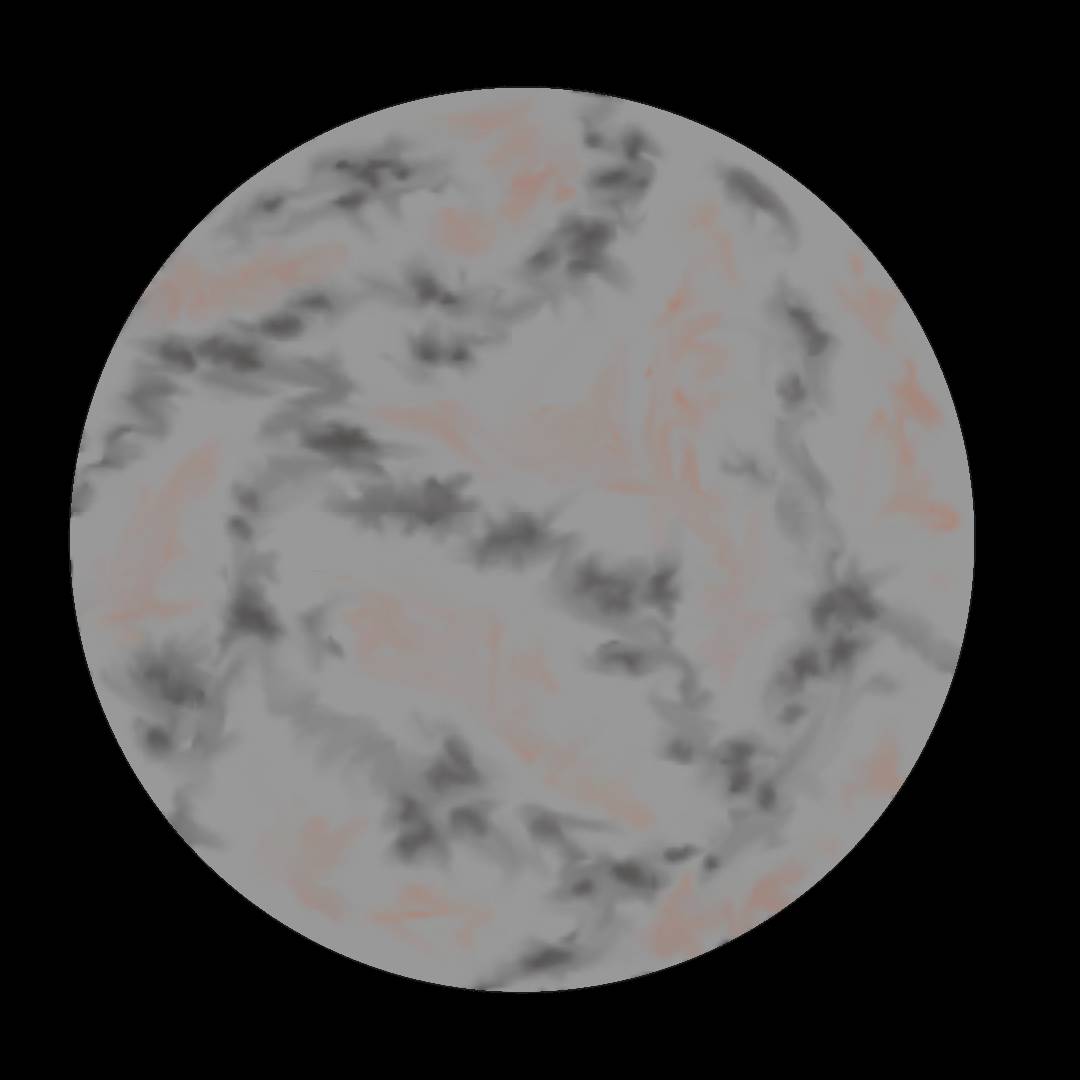
Vu-kani is the closest planet to the sun. Its surface is rough and very dark. Pale, red fissures and spots cover large parts of its surface.
This planet is the fastest in the Celestial system, as it orbits around the sun in only about 41 Hysalian days. Vu-Kani does not have any known moons orbiting around it.
Tasien
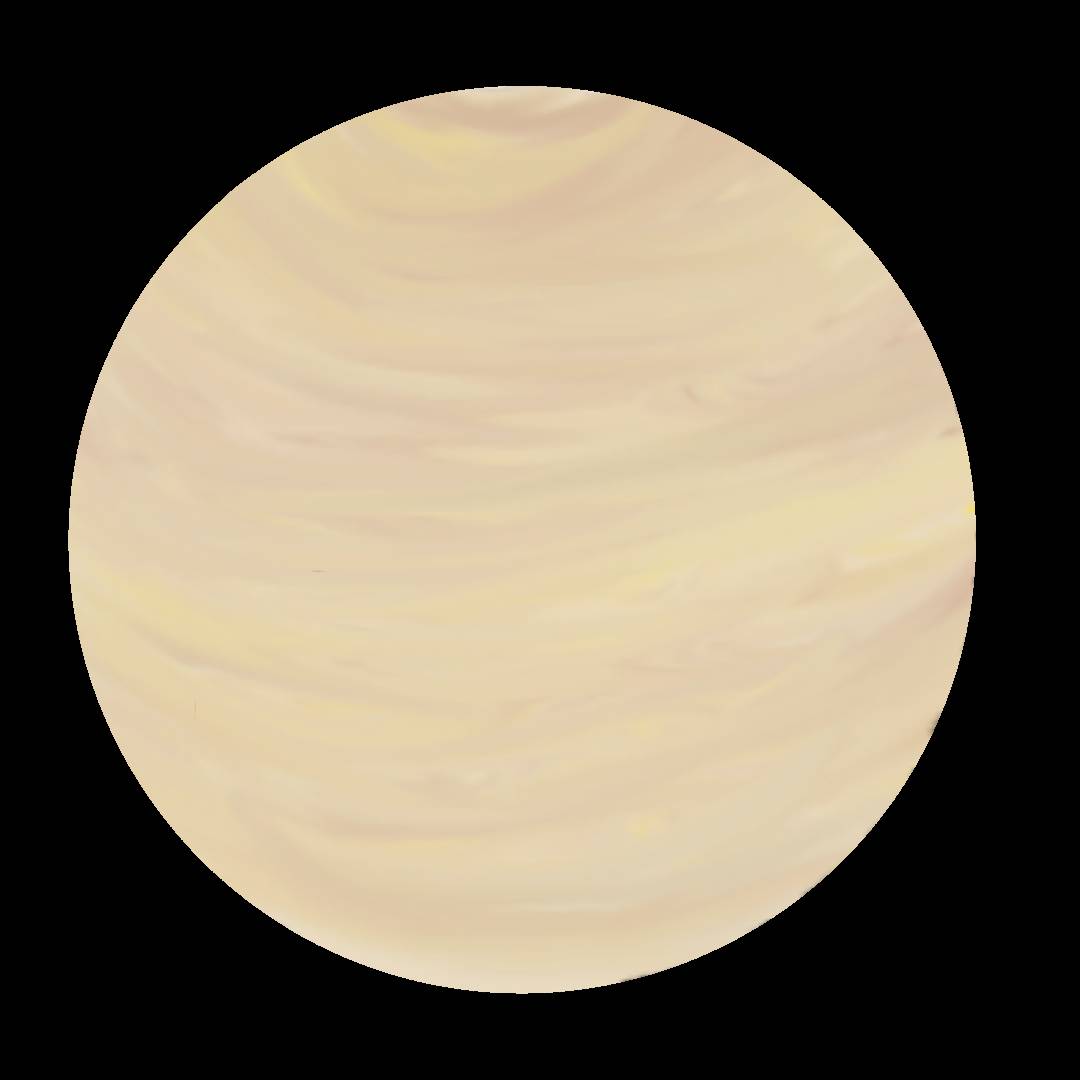
Tasien is the third from the sun, and it is covered in a thick atmosphere of bright white, beige and yellow clouds. All of these pale clouds reflect a lot of sunlight, making the planet the second brightest object in the night sky, after Veos.
One unique fact about this planet is that it orbits the sun in the opposite direction of most other planets. It does so in about 200 hysalian days. The planet has one moon, which has a dark and patchy surface, riddled with craters.
Danos
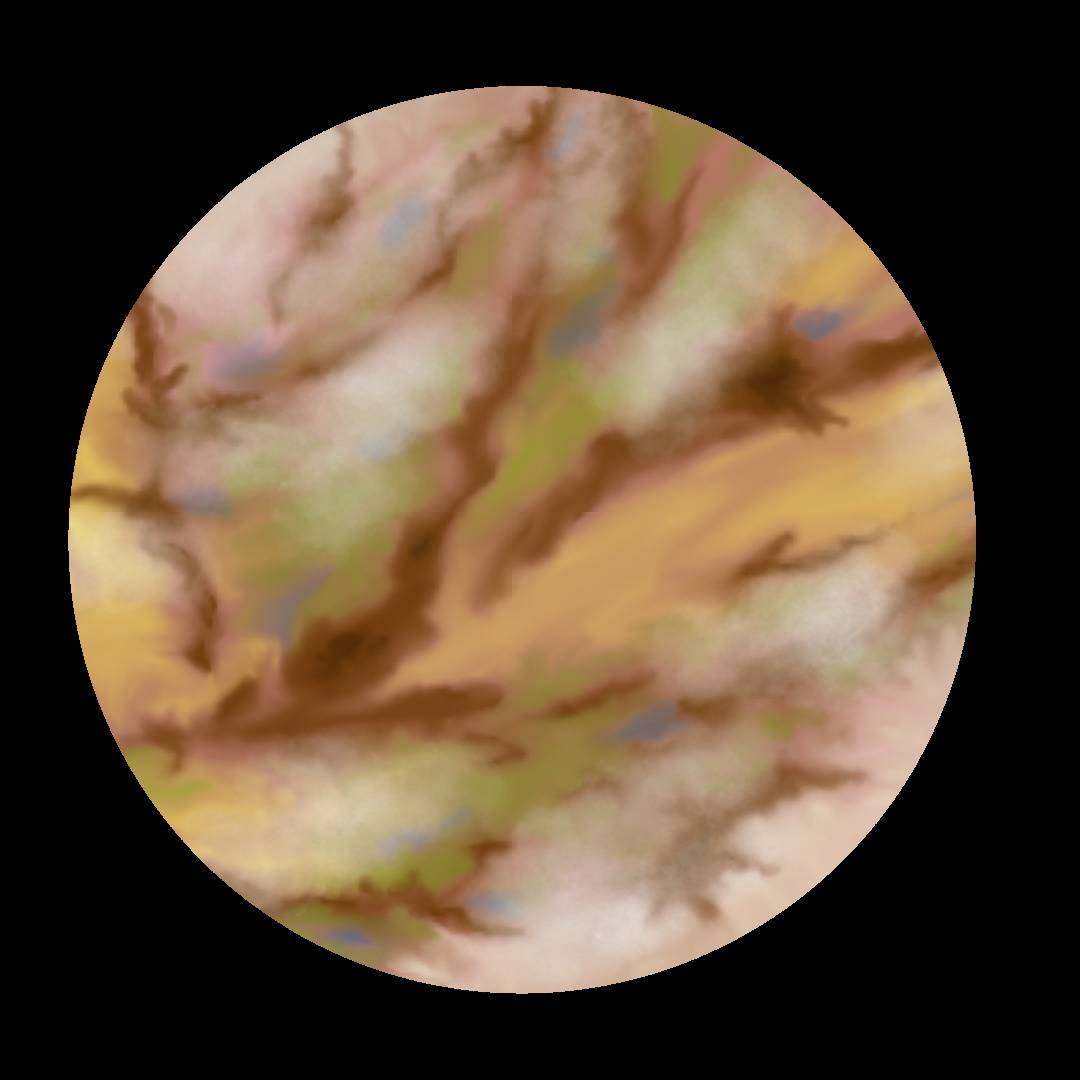
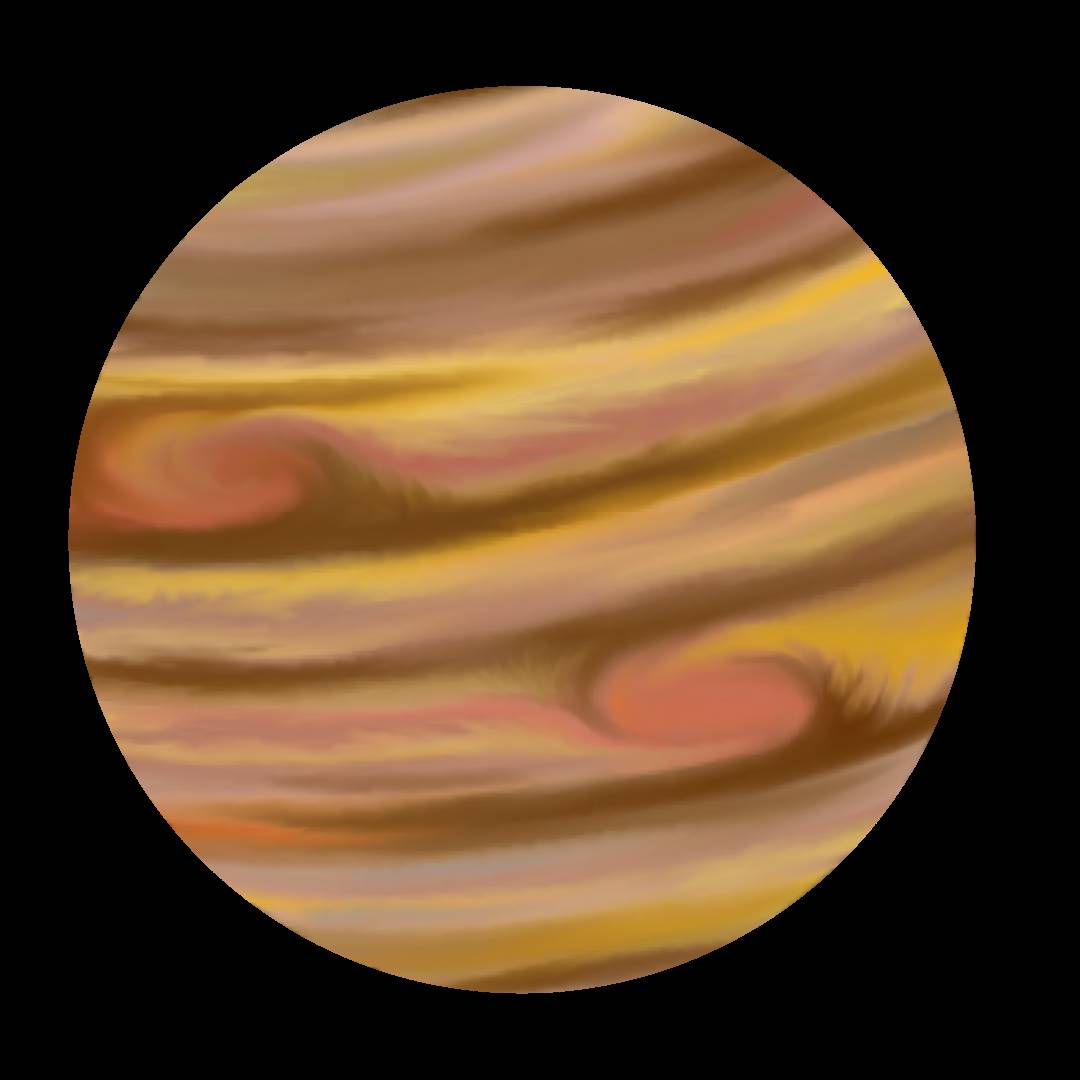
Danos is a distant planet covered in ribbons of multicoloured clouds that spin around it, with large red and brown spirals between them. It take a bit more than 13 hysalian years to orbit around the sun. Numerous moons, at least 8 of them, have been discovered over the past centuries, with the latest one being discovered only a few decades ago thanks to more advanced telescopes being invented.
Markara
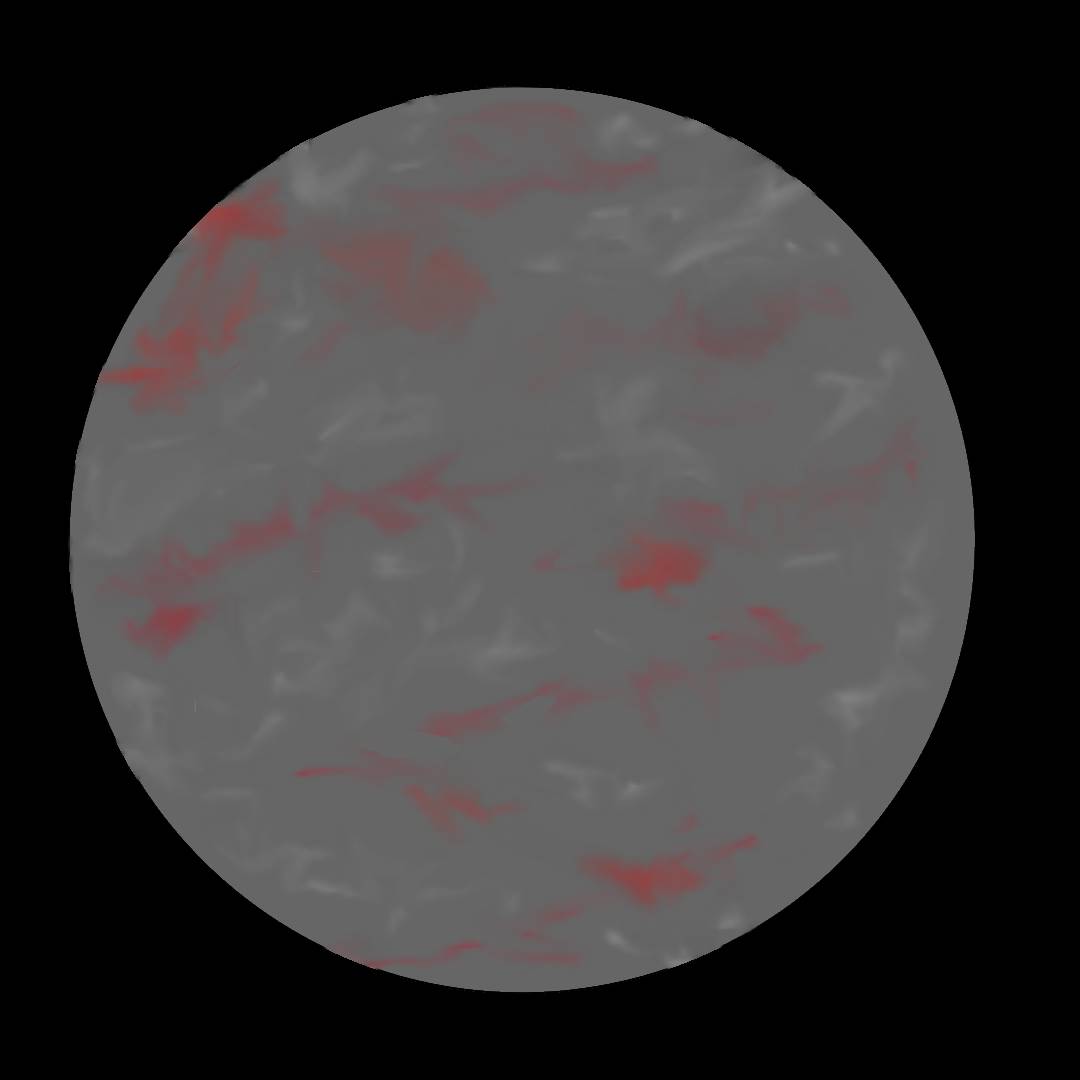
Markara is though to be a slightly bigger planet than Vu-Kani. It has a grey surface littered with a large number of craters and deep valleys.
It orbits the sun in 73 days and does not possess any moons.
Osgal
Osgal is the 5th planet from the sun. It has a surface covered in patches of brown, yellow, blue, and even some areas of green and white, particularly near its poles. Many mountain chains, deep valleys and even deep valleys are visible on its surface.
The planet appears to have seasons. The white polar regions are speculated by some scholars/Astronomers to be ice sheets. They can be observed retreating north and advancing south every year.
Osgal orbits the sun in 409 days, and it has to moons, the smallest one is a pale grey colour, and the other an oily black colour.
Qoral
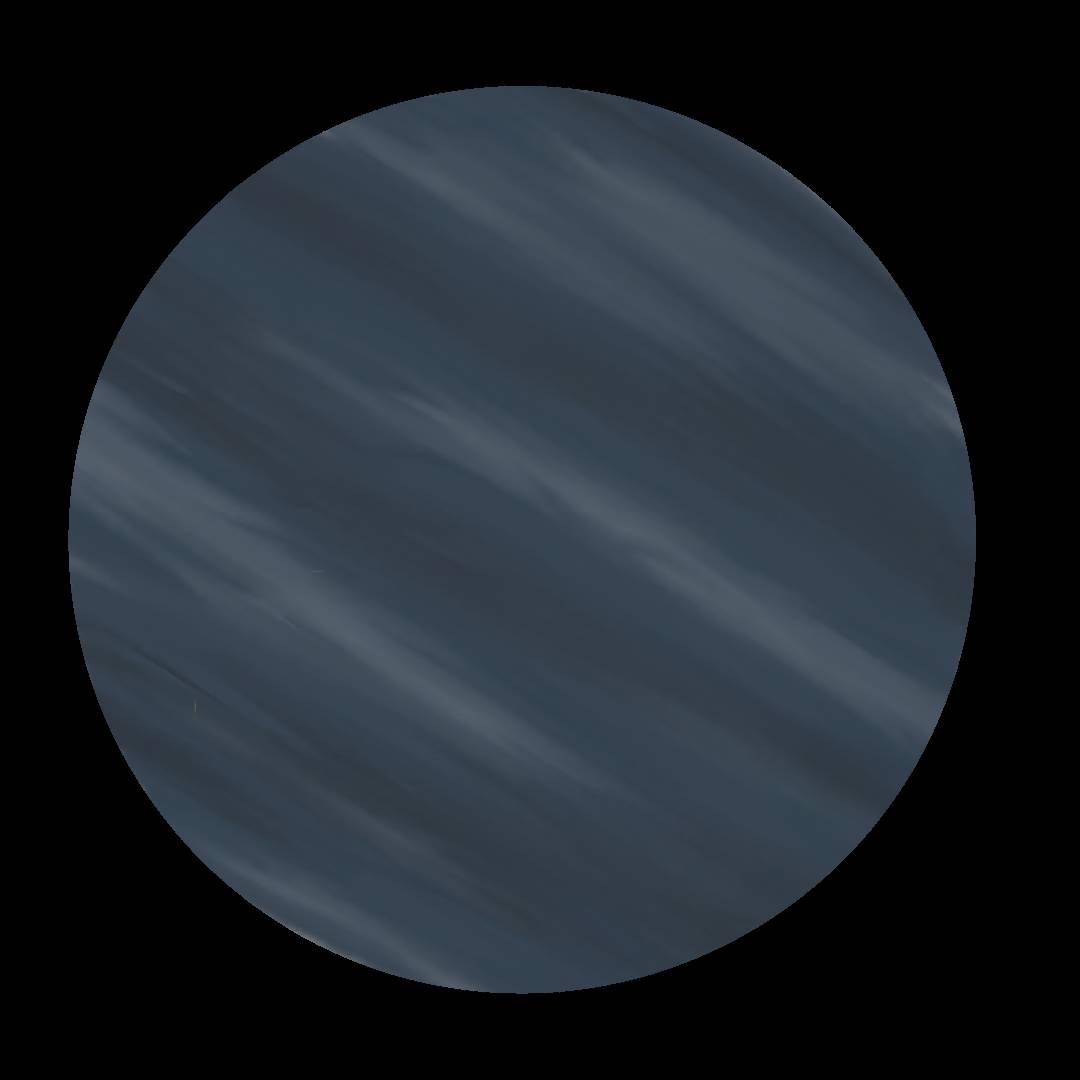
Qoral is the furthest planet from the sun. Much like Danos, it is covered in a cloudy atmosphere, composed of a dark blue and grey. Just like Tasien, Qoral orbits in the opposite direction of most other planets.
Qoral is notorious among astronomers for one reason: It disappeared for centuries, beginning during the Long Winter, and ending in the late Second Age, 600 years ago.
History
First Age
It is unknown when the first planets were first discovered, as many First Age cultures, such as the Taonese, Njadi, Darnians, and Khartians knew of the same few planets under different names. Markata, Tasien, Osgal, Danosi, and even Qoral were all observed and studied to some degree during the First Age. Some of those same cultures came to the conclusion that these celestial bodies, as well as Veos, Hoben and the sun itself, all rotated around Hysal. Many considered them to be either gods, like the Darnians with the Sun, or physical representation of their gods, like Markata and Danosi for the Khartians.
The Long Winter
The Long Winter represents a long period of time were little to no celestial observation and study were made thanks to ash and soot blocking the skies completely or partially at the time, as well as the lack of funds by various governments.
Second Age
In the Second Age, no new planets were discovered, but various moons were found orbiting around other planets. This would be the first nail in the coffin of the geocentric model from the First Age, as it demonstrated that moons weren't unique to Hysal, and that other planets could also have celestial objects rotating around them. The most famous of those newly found moons was Aris, orbiting Osgal. New models were invented to try and demonstrate the shape of the celestial plane. Taonese and Syrkanian astronomers both independently discovered that the sun, not Hysal, was in fact the center of the celestial place, and that all planets, including Hysal, orbited around it.
Third Age
In the third Age, with advancements to Telescope technology, one new planet was discovered, as well as a few other moons. Located closest to the sun, Vu-Kani, a name meaning "Daughter of the Flame" in Tomboraani, was discovered in 69 Ac. 3 new moons were also discovered orbiting around Danosi, adding to the 5 already previously recorded.
A Planet playing hide and seekBy the end of the First Age, Qoral, the furthest planet from the sun, had been discovered for many centuries already. However, it, along with most other celestial bodies couldn't be observed thanks to the smoky skies during the Long Winter. When the Second Age began and the other planets could be observed again, Qoral was nowhere to be found. The planet had seemingly disappeared from the sky. This lead many scholars to speculate wildly about its whereabouts. One claimed it had left the Celestial plane all together, while another even concluded that it had crashed into Hysal, provoking the Long Winter. This would go on for more than 1000 years, until it would be accidently rediscovered in 308 bc, by a Caratheen Astronomer studying the clouds of Danosi. At first, he was doubtful, but when he asked his colleagues at the university of Syrasca, they all realised that they had rediscovered Qoral. In the following weeks, other astronomers would observe the planet as well. With the help of archives and drawings from First Age astronomers, the planet was confirmed without a doubt to be Qoral, the lost planet, found again.


I love the art! they look *incredible*!! I think Osgal is my favourite planet :D
Thank you! Coming from you(a wonderful artist), it really means a lot! (and Osgal is also my favorite lol)