
~Haemelaura~ Qabarat's Elf-Farthing
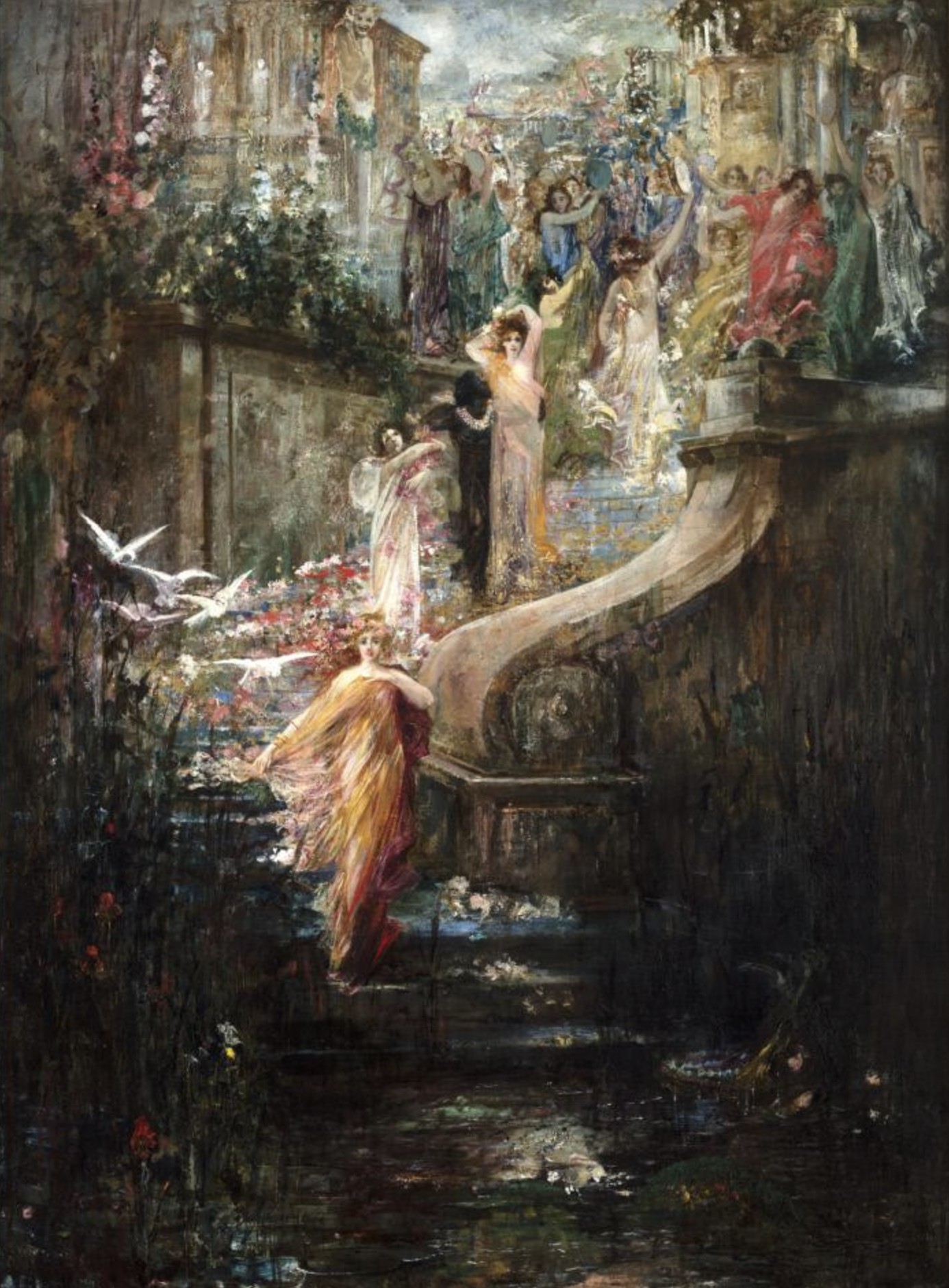
Qabarat's Elf-Farthing shines distinct, and not only in its Elven architecture that looks almost like a neighborhood in Sovyrian, but almost as a city within a city. Fifty thousand Elves dwell in Qabarat, out of a population of 250,000, making it not only the largest Lashunta city in the world, but also the largest Elven settlement beyond Sovyrian. One out of every five people is an Elf. Most of them live within the ~Haemelaura~ (/ha:e.me.lɔːra./; common: elf-farthing; elven quarter), which stands as one of the city’s most central districts, between Ship’s End and the Acropolis. Some Qabarat - and not just Elves - believe the Elf-Farthing represents the heart of the city, although others believe it represents something far older, since the Elves settled here first, long before the Lashunta.
Yet the Elf-Farthing also has a distinction as not being under Sovyrian’s control (although it is still closely linked by the aiudara elfgate atop the Stormshield). As such, it is a haven for Elven free-thinkers, seeking freedom from the Sova’s and the Winter Council’s controls. Even with the millennia of tradition the Elves of Qabarat uphold, they practice an enlightened opposition to El’s dominion, and so become a haven to dissidents from the Elven continent, and also for some Lashunta, too.
Qabarat’s Elf-Farthing is a remnant of a city not even named Qabarat (which was originally the Lashunta name of the Stormshield peak on whose landward side much of the city perches), instead known as Mir Annuigaer. Originally, the Lashunta had never settled Qabarat, which was a bottomless lake hidden against the Stormshield amid the Yaro River’s delta marshes. The Warrior-Queens had defeated and slaughtered an army of Moqeva there in the Second Millennium. Perhaps because of that smirch, and also because of the Akiton Worldgate sitting atop the peak, they had left the area to be colonized by the Azlanti (~Aslanta~), who delved through the Stormshield to turn the lake into a harbor. When they fled after Earthfall, the Azlanti ghost town became held as common land by the local Lashunt clans and near cities, until the Elves arrived in the Sixth Millennium with the intent of building an elfgate hub. Their unexpected colony began the ~Reielari~ - Elfwars - for the next forty years, which did not end until the first aiudara connected back to Sovyrian and and brought an endless supply of reinforcements. For the next four thousand years, Mir Annuigaer existed, as a prosperous trade community, completely Elven and mostly at peace with its Lashunta Neighbors.
Then the Formian Conquest brought refugees from the Colonies to Qabarat’s wharves, both Elves and Lashunta from Lost Valmaea. Soon afterward the Thief-Queens conquered the Yaro Valley, first demanding tribute from the Elves, but then took more forceful control. This resulted in rebellion by both Elves and Lashunta. As Qabarat became the center of resistance against the Thief-Queens, its growing Lashunta population slowly overtook the Elves and changed the city indelibly, although not before Elven culture had a huge impact on customs, art, and language.
With the Elven Withdrawal / Return to Kyonin in the Twenty-first Millennium, the Elf-Farthing had largely become as it stands today as the center of Elven society, since the districts now known as the Templefarthing, Highfarthing, and Ship’s End had come under joint Lashunta-Elven control (although some Elves still live there even today). Yet what has changed is the all but complete erosion of a rural Elven population, including farmers, and hunters. Thus the Elves of Qabarat have become wholly dependent on Lashunta agriculture to supplement what they cannot provide from their blossomyards and orchards within the city.
The Elf-Farthing also maintains a certain amount of political independence from the rest of Qabarat. ~Elaura nola osra elaurrya,~ - “Elves deem Elven things,” is a common saying among the Lashunta, illustrating how Elves maintain their own traditions and society (which is frustratingly, complexly androgynous by Lashunta standards). This independence in turns spreads among some of the Elves Lashunta neighbors. Both within and near the Elf-Farthing one may find ~Valazelaura~ - elf-lovers: Lashunta who idealize or emulate Elven culture, whether one art or aspect, or more. Some even take it to a hole other level. The ~Damaelauras~ - Damaya-Elves try as much as possible to pretend to be Elves, whereof some say they can even fool the real Elves.
- Qabarat: largest Lashunta city-state on the planet Castrovel
- Castrovel: second planat in the Mataras-Golarion System
- Sovyrian: continent on Castrovel inhabited by Elves
- Ship's End: major market district in Qabarat
- Sova: Sovyrian's rulling council
- El: Capital of Sovyrian
- Mir Annuigar: Shining Jewel of the Western Sea; Elven name for Qabarat
- Yaro River: major watershed in Northwestern Asana
- Moqeva: ancient ophidian species once on Castrovel
- Akiton: fourth planet in the Matara-Golarion System
- Azlanti: ancient human empire on Golarion
- Golarion: third planet in the Mataras-Golarion System
- Aslanta (com): Azlanti/Humans
- Reielari: Elfwars; ancient conflict between Elves & Lashunta
- Lost Valmaea: ancient Lashunta city in the Colonies that fell to the Formians
- Kyonin: Elven nation on Golarion
- Elaura (com): Elves
- Nola (3rd-com): it/they deem; judge
- Osra (com acc): thing(s matter(s)
- Elaurrya (com poss): Elven; of Elves
- Valazelaura (com): elf-lover; aficionado of Elven culture
- Damaelauras (masc): Damaya-Elf; a male Lashunta Damaya passing as an Elf

Comments