Sleeping bag
Besides a good Tent, the most important item for camping is probably a decent sleeping bag. We all know how important it is to be able to sleep well. A sleeping bag that allows you to move around easily, is not too warm or too cold, and is not too noisy, plays a crucial role. However, just like with tents, the choice on the market is endless, so we would like to offer you a little assistance with our guide to help you find the right sleeping bag for your needs.
What to take into consideration
There are only few things you have to take into consideration, when choosing a new sleeping bag.
- Purpose
- Weather conditions
Let's dive deeper into those differentiating factors.
1. Purpose
Ask yourself what you want to do with the sleeping back. Are you driving somewhere, set up the tent and then stay there for a while? Or are you taking a bike or are even walking? Depending on this, you will probably want to choose a different type of sleeping bag, as the three most common versions all have different pack sizes.
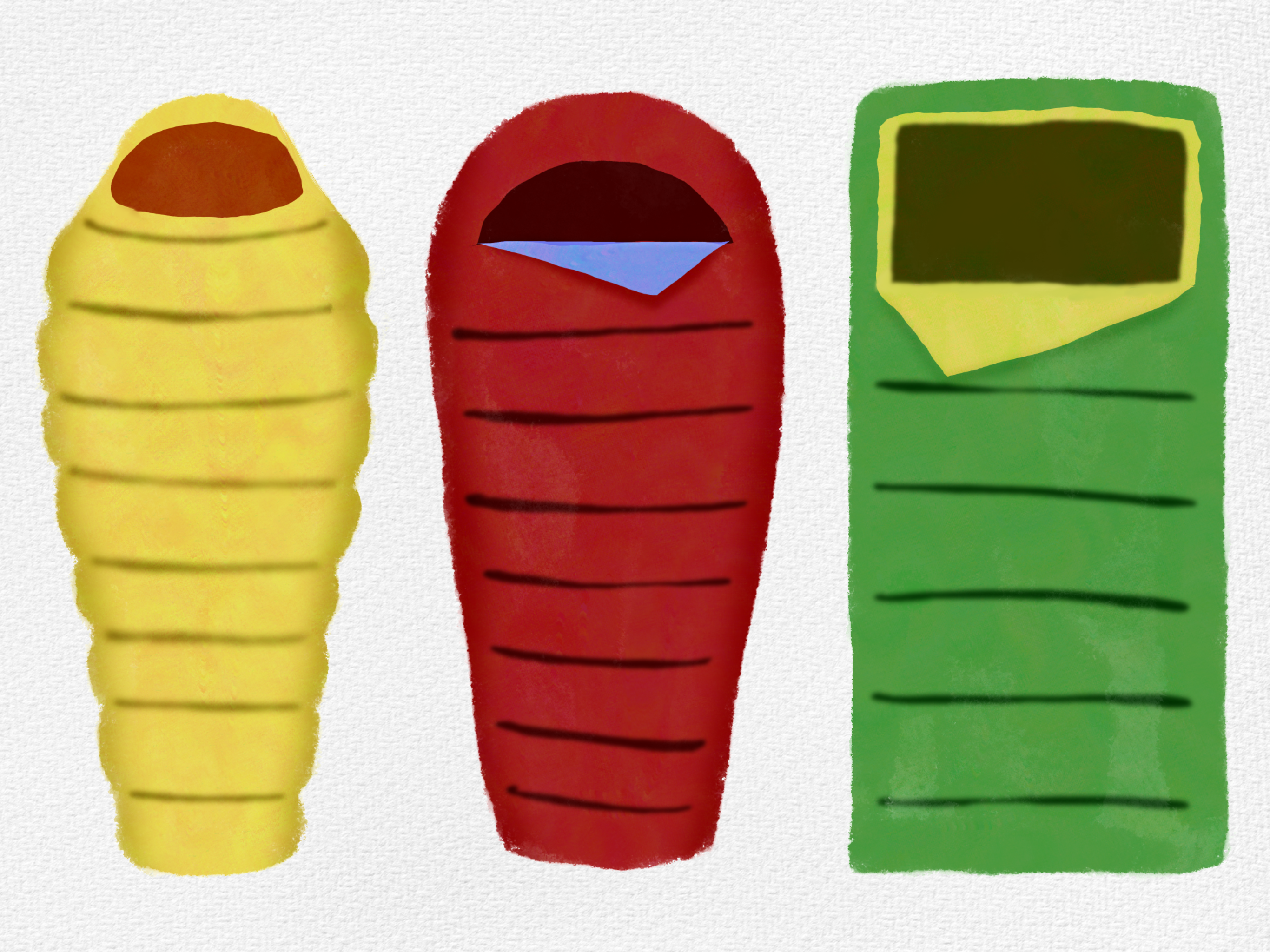
Mummy sleeping bags
The mummy sleeping bag fits more snugly around the body. This means there is less air in the sleeping bag, which leads to better insulation. The mummy sleeping bag also has a hood, which is preventing heat loss even further, so you stay warmer in this type of sleeping bag. Pack size and weight are usually lowest here, making it the ideal companion for cyclists and backpackers. However, especially at the beginning, it takes some getting used to the limited freedom of movement.
Rectangular sleeping bags
As the name already says, the form is a rectangle. They are relatively spacious, but this means that they also use more material. This inevitably leads to more space being required in your luggage and more weight. However, many people find them more comfortable to sleep in, and if weight and pack size are not important for your intended use, this sleeping bag is highly recommended. For example if you planing to sleep in a car, a heated tent or a cabin.
Semi-rectangular sleeping bags
There is also an intermediate stage between the two forms already mentioned: the semi-rectangular sleeping bag. It also has a hood, but like the rest of the sleeping bag, it is cut slightly wider. Those who like to pull their legs up while sleeping will probably prefer this type of sleeping bag. As expected, the weight and pack size are in the middle range.
2. Weather conditions
Sleeping bags always come with a seasonal recommendation. This is intended to help you choose the right sleeping bag more easily. Generally speaking, there are three types:
- Summer sleeping bags: Those are only for temperatures above 10°C, so depending on where you are camping, they might only be appropriate in summer, but might as well be good in late spring or early autumn as well.
- Winter sleeping bags: They are built for temperatures below 0°C and can keep you really cozy during freezing nights.
- 3-season sleeping bags: This classification enables comfortable sleeping across a wide temperature range, as they can generally be used between 0°C and 20°C.
In addition to these two main decision-making factors, it is also important to consider the filling material when choosing a sleeping bag. Here, we mainly distinguish between down and synthetic fibre fillings, even though wool is increasingly being used as a filling material. Here is a concise summary of the advantages and disadvantages of the two most common fillings:
| Material | + | - |
|---|---|---|
| down | lower weight smaller pack size longlasting |
expensive poor insulation when wet |
| synthetic fibre | copes well with moisture cheaper |
heavy larger pack size not as longlasting |
Last but not least, it is also important to consider the recommended temperature range of a sleeping bag. This can be somewhat complicated, as sleeping bags always come with (at least) two temperature specifications.
- Comfort rating: This is the temperature range where its most comfort to sleep at. For women the lower limit of it is often at a higher temperature, as they tend to freeze earlier.
- Extreme rating: This is basically the ‘survival temperature’. Using the sleeping bag below this temperature is dangerous, if not life-threatening.
Mummy sleeping bags
+ Generally lower weight
+ Good insulation
- Little freedom of movement
Semi-rectangular sleeping bags
+ good space
- more of a compromise
Rectangular bags
- large pack size
- on the heavier side
I love the sketches you are creating for this world :) It never occured to me there are as many as three variations of sleeping bags tbh. I always had one like the red in the middle of your image :) Btw, we are not getting a photo for the stickerbook with this one?
I can't give you a sticker with every article. That would be kind of boring, wouldn't it?
You are probably right xD I just love seeing collection like that grow and got excited, I am sure more stickers are coming :)