
Tieflings
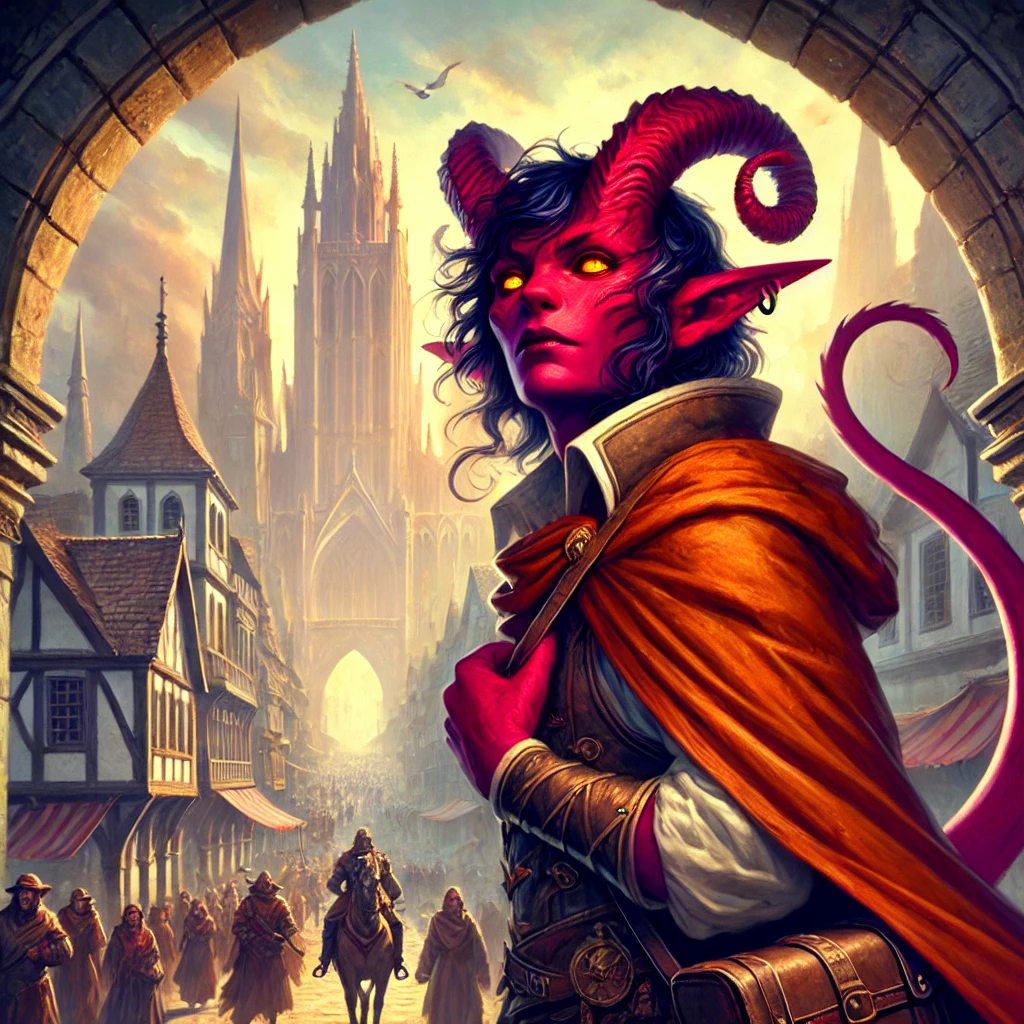
Tieflings are a species marked by their heritage, their lives shaped as much by how they are perceived as by who they are. Born with traits that betray a distant connection to the Lower Planes, they stand out among mortals, with forked tails, curling horns, glowing eyes, and skin in shades ranging from deep crimson to ashen gray or pale lavender. Despite their infernal appearance, tieflings are no more predisposed to evil than any other species, though prejudice and superstition often make their lives more challenging.
Physical Traits
- Lifespan: Tieflings live slightly longer than humans, often reaching 100–120 years, with some rare individuals extending their lives through planar magic.
- Appearance: Beyond their horns and tails, tieflings often bear subtle traits linked to their infernal heritage, such as unnaturally sharp teeth, faintly glowing veins, or an aura of heat or chill. Their hair and eyes may be colors not found in other species—fiery orange, icy blue, or shadowy black. Skin tones tend to be mostly hues of red, though purple and blue are sometimes seen.
- Planar Resonance: Some tieflings exhibit minor abilities tied to their ancestry, such as resistance to fire, darkvision, or the ability to cast minor magical spells.
Cultural Traits
1. Burden of Perception
The most defining aspect of a tiefling’s life is how others see them. In superstitious or rural areas, they are often blamed for misfortunes or ostracized entirely. However, in cosmopolitan centers like Barrensburg, tieflings are more likely to find acceptance, especially if they prove their worth through trade, scholarship, or heroism.
2. Resilience
Tieflings develop a thick skin early in life, whether due to being left in temples or having to fend for themselves. This resilience makes them resourceful and fiercely determined, unwilling to let others define them.
3. Mixed Legacy
Many tieflings struggle with their identity, caught between the mortal world they inhabit and the infernal bloodline they represent. Some embrace their heritage, finding strength in it, while others distance themselves from any connection to the Lower Planes.
4. Natural Charisma
Despite their struggles, tieflings often possess an otherworldly charm, using their unique appearance and cleverness to navigate social situations. This charisma makes them excellent diplomats, performers, and rogues.
Cultural Diversity
1. Urban Tieflings (Barrensburg and Other Cities)
- Overview: Tieflings in urban areas are more likely to be seen as individuals rather than symbols of their ancestry.
- Values: They value self-reliance and proving their worth through talent or hard work.
- Notable Features: Urban tieflings often adopt styles that emphasize their individuality, from elaborate horn adornments to dyed tails or jewelry.
- Challenges: While acceptance is higher in cities, prejudice is not entirely absent.
2. Temple-Fostered Tieflings
- Overview: Many abandoned tieflings are raised in temples or religious institutions.
- Values: They often develop strong moral codes, seeking to counteract the stigma of their heritage.
- Notable Features: Temple tieflings are highly disciplined and often trained in combat or healing arts.
- Challenges: They may struggle with feelings of inadequacy, constantly seeking to "redeem" themselves in the eyes of others.
3. Wanderers and Outcasts
- Overview: Some tieflings, rejected by their families or communities, grow up in the wilds or on the fringes of society.
- Values: Survival and independence; they rely on their wits and magic to carve out a life.
- Notable Features: These tieflings often have a rugged appearance, with scars or makeshift clothing reflecting their harsh upbringing.
- Challenges: They are more likely to embrace their infernal heritage as a source of strength, which can alienate them further.
- The First Infernal Pact: A tale of a mortal who traded their soul for power, forever cursing their bloodline with infernal traits.
- The Crimson Guardian: A legend of a tiefling warrior who protected a village from raiders, earning respect despite their heritage.
- The Horned Redeemer: A story of a tiefling cleric who brokered peace between rival factions, proving that ancestry does not define destiny.
Civilization and Culture
Common Myths and Legends
- The First Infernal Pact: A tale of a mortal who traded their soul for power, forever cursing their bloodline with infernal traits.
- The Crimson Guardian: A legend of a tiefling warrior who protected a village from raiders, earning respect despite their heritage.
- The Horned Redeemer: A story of a tiefling cleric who brokered peace between rival factions, proving that ancestry does not define destiny.
Interspecies Relations and Assumptions
- Humans: Humans are the most varied in their treatment of tieflings, ranging from fear to admiration.
- Elves: Elves view tieflings with caution, recognizing their heritage but often withholding judgment until proven otherwise.
- Dwarves: Dwarves tend to judge tieflings by their actions, respecting those who display loyalty and skill.
- Halflings: Halflings are more accepting, valuing kindness and hard work over appearance.
- Planar Beings: Infernal entities may see tieflings as potential allies or pawns, while celestial beings may seek to "guide" them toward redemption.
Remove these ads. Join the Worldbuilders Guild





Comments