

Switchboard Worlds
Quantum Entanglement is a concept where manipulating a particle can affect a seemingly unrelated particle across a vast distance of space. The Vusinor species has figured out how to use this quirk of quantum mechanics to communicate instantly across vast distances.
Communication through quantum entanglement is one of the only true faster than light communications possible. While Tachyon transmission is also faster than light, Quantum entangled transmissions are so fast it is nearly instant, slowed only by the speed of the electronics in a ship's system. While it is the only instant form of communication in the Galaxy, it does have several issues.
Energy requirements
In order to allow for practical communication, large amounts of energy are required to manipulate an entangled particle in a meaningful way so it can be reliably measured on the other particle. In between these pulses of energy, the particles must be kept nearly frozen to within a few trillionths of a degree of absolute zero so random fluctuations are mostly removed, preventing false measurements from occurring.
Low Bandwidth
With current Vusinor technology, Two entangled particles have a maximum transfer speed of only 250 bits per second. but due to limitations, the realistic data transfer for each entangled particle is 125 bits per seconds. Larger ships have enough entangled particles to allow an 8KB transfer speed per second, just enough for two-way voice communication to be discernible (The Starship Void Chaser has the system installed, but is small and only allows 1.5KB per second. It can do two-way text communication but not voice). This might not seem like a lot, but these particles can't be hacked, they leave no signal, and the transmission is nearly instant.
Quantum Switchboards
Every single entangled particle has a unique ID and can only transmit data to its entangled particle. In order to allow for the rapid transfer of information, a switchboard has to be set up to allow one set of entangled particles to communicate with another. Due to the size of the Vusinor Empire, these switchboards have to be planetary in scale...
The Vusinor have around a dozen "Switchboard Worlds" where ships and distant outposts send their information, that is then stored and transmitted around the network using more conventional means, before it is transmitted to its final destination through entangled particles again.
These switchboard worlds are planetary scale hexagonal lattices built in the upper atmospheres of ice giants. The Vusinor take advantage of the exotic forms of ice in the cores of these ice giants as fuel for fusion reactors, and they use the chemical elements found in the atmosphere as cooling agents to keep the entangled particles near absolute zero. A single switchboard world can contain trillions of servers recording information from and sending information to various entangled particles.
Ice Giants
An Ice Giant is defined as a giant gas planet that primarily contains elements and molecules heavier than hydrogen and helium, such as water, methane, ammonia, and others. The Vusinor look for additional factors in the types of ice giants they use such as distance from its star, surface temperature, magnetic field strength, orbital stability, and more.
Due to the various required factors to build a quantum switchboard world, the total number of planets in the entire galaxy that the Vusinor can convert numbers less than a hundred thousand. Across all Vusinor controlled/influenced space, there are less than a hundred suitable worlds. They are constantly looking for more suitable ice giants to convert.
TRA060
TRA060.1
-RESTRICTED-

TRA060 - Switchboard Research
This is actually my second visit to this sytem. The first visit was about five hundred years earlier when we visited a people who call their world Gaia. We designated this world Helios-3 originally, but have since made contact with a new people who call their star Sol. We went with Sol for designating other oblects in the system but will still refer to Helios-3 as Gaia.
Now we're back to do feasibility studies on the system's outer gas giants, designated Sol-7 and Sol-8. So far the results look promising. Sol-7's 90 degree tilt will make one hemisphere slightly warmer than what is optimal for a switchboard world, but is otherwise perfect. Sol-8 appears to have some pretty nasty weather at times, which means we'll need to reinforce the harvester columns, but the outer hexial lattice should be unharmed.
Adding both worlds to the switchboard network, once fully operational, will increase capacity by 2.85% and increase the total number of switchboard worlds in Vusinor possession to 72.
TRA060.1 - Visiting Gaia again
Back on Gaia, things have changed quite a bit. Since out last visit, the Hellenes were conquered by the Romans, who now own a pretty large chunk of the world. This civilization is approaching the size where either they collpase or they continue to develop their technology. If it becomes the latter, then we'll be allowed to elevate them to the space age and have them join the Galactic Council in a matter of centuries.
These Romans were not as friendly as the Hellenes were, so I instead went to the far eastern edge of the continent to a group of islands. The people of these islands were considerably more socially refined but somehow far more primitive with their technology. Just like my last visit, I took blood samples from the local population and once again there was that strange DNA anomaly, showing it matching DNA samples from across the galaxy.
My superiors got a little annoyed at all the questions I was asking so I decided to stand down for now but, Going against the Research Corps is suicide, but, this isn't over yet!
- Zilda Marn
-Restricted Access-
Research Log

- Zilda Marn
(Credit to Stormbril for the CSS for the spoiler tabs)

The Planet Halana is the Seventh planet from the star Fevaultar in the The Delvi Star System. While this system is Regalti controlled space, they gave the world and all of its moons over to the Vusinor to convert into a switchboard world. In return the Regalti got 25% of the bandwidth of the planet, which is far more than their young civilization needs currently but in a few thousand years won't be anywhere near enough.
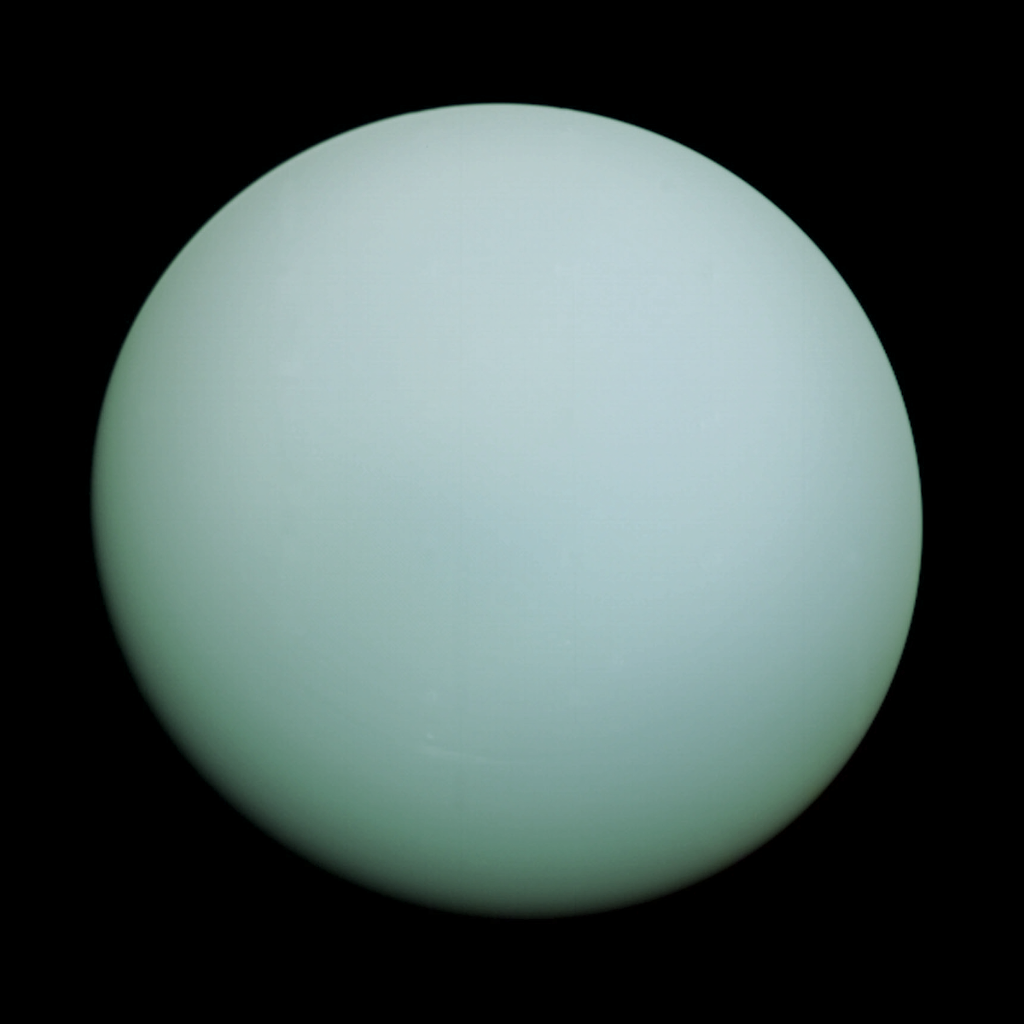
Uranus by NASA (Taken by Voyager 2)
The Planet Uranus is the seventh planet from the Sun in the Solar System. This planet has its axis tilted at 90 degrees and its weather is somewhat calmer compared to other ice giant worlds. Its distance from its star is also sufficient and it has a relatively weak magnetic field. If the Vusinor ever wanted to, Uranus would be an excellent candidate to convert into a switchboard world.

Neptune by NASA (taken by voyager 2)
The Planet Neptune is the eighth planet from the Sun in the Solar System. This planet has a high concentration of heavy elements and is exactly the type of planet the Vusinor are looking for. Like the Solar System's other ice giant it is sufficiently far from the sun and has a relatively weak magnetic field, making It another great candidate for conversion into a switchboard world.

Comments
Author's Notes