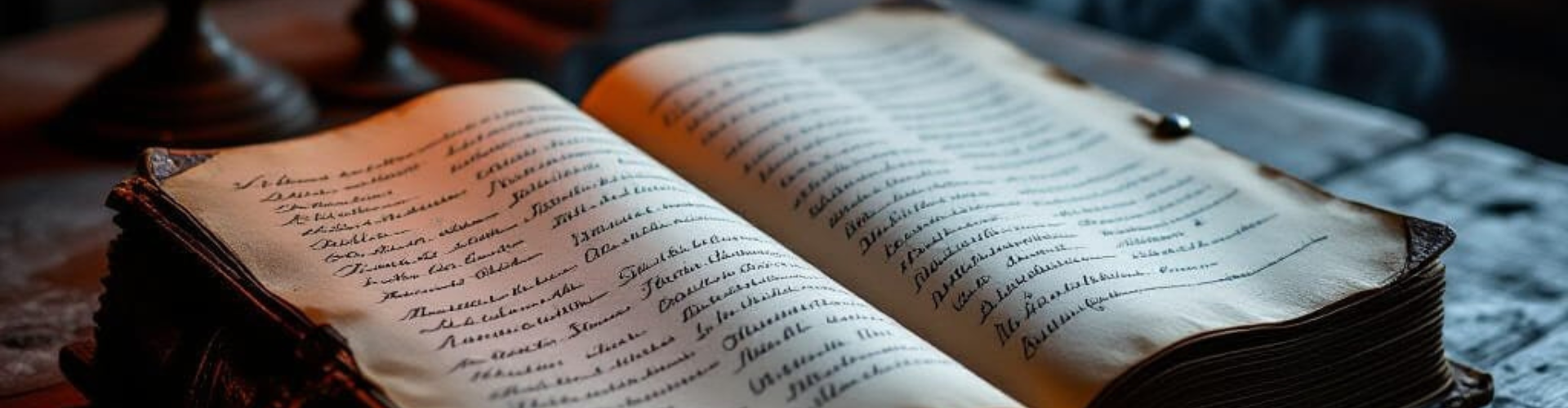
The Red Ledger
Mechanics & Inner Workings
To most, the Red Ledger is “just a book” that:
- Lists each ruling noble family of Seres
- Records key marriages, inheritances, and abdications
- Marks the official line of succession
To the few who know better, it behaves like a ritual-bound contract between the land, the Baron, and the people:
- Ink never fully dries in the older entries, giving them a faint, reddish sheen in dim light.
- New entries written by anyone other than the Baron/Baroness, Steward, or a designated scribe tend to fade, blur, or vanish entirely by the next sunrise.
- Certain lines update themselves with small notations (“died with no issue,” “line broken,” “married into House X”) without any known hand present.
The working theory among Seres’ more pragmatic scholars is that the Ledger was created with a mixture of:
- Blood-oath rituals
- Oaths sworn by the first barons and freeholders
- Symbolic binding of the mountain communities that founded Seres
No one now living fully understands how it functions. The Baron does not have to; they only need to respect it.
Manufacturing process
Now lost.
Fragmentary stories suggest:
- The first Baron gathered leaders of each mountain community to swear fealty over a blank book.
- Their blood, ash, and grain from their lands were mixed into the inks.
- The book was sealed in the castle for a full cycle of seasons, taken out only during rites of harvest and war.
- When opened again, the first entries already existed, written in a hand none recognized.
No attempt to “make another” has ever succeeded. Lesser ledgers remain inert.
History

Early Founding: Commissioned (or created) shortly after 5 Verdantia 36 AE, when Seres unified under its first Baron. Its earliest pages hold short, stark entries with almost no embellishment.
Era of Raids: Additional pages were added to record emergency regencies, child-heirs, and oaths sworn in wartime. Some entries are visibly smudged, as if written in haste with shaking hands.
Trade and Prosperity: Later entries add marginalia noting the rise of key guilds, influential freeholders, and notable Knights of Seres.
Quiet Erasures: At least two noble lines are known only by rumor because their names were entirely obliterated, leaving ragged gouges in the parchment where their entries once were.
Today, the Red Ledger is brought out only on:
- Coronation days
- Oath-taking ceremonies for knights and key officials
- Times of succession crisis or serious dispute
When it is opened, everyone present falls silent. Even those who do not believe in its mystical properties feel the weight of centuries resting on its pages.
Significance

The Red Ledger is politically, culturally, and symbolically vital to Seres.
- It functions as the official genealogical spine of the barony.
- It legitimizes each new Baron/Baroness by listing them in continuity with the founders.
- It supports the feudal structure by reminding nobles and freeholders that they stand in a line of duty, not just privilege.
If destroyed or lost:
- Succession disputes would multiply.
- Rival families could contest the throne without a definitive arbiter.
- The Council of Elders would lose their single most sacred reference.
- Many in Seres would take it as a sign that the barony’s covenant with the land and its people has been broken.
In short, it is not merely a book; it is Seres’ memory of itself.
Table of Contents
One-of-a-kind.
There have been imitations and partial copies, but the Red Ledger itself is unique. Only the ruling house and their closest advisors may handle or even see it. Most common folk know of it only through rumor and stories.
Width: ~ 30 cm
Thickness: ~ 10 cm, metal-cornered and densely bound
Effectively priceless. No Realistic market value; its worth is political and spiritual, not economic.
Thick mountain-calf vellum pages, slightly yellowed
Dark red leather cover, embossed with the crest of Seres
Iron corner brackets and spine studs to protect the binding
Black iron clasp with an inner bloodstone shard set in its lock
Inks made with iron gall, ash, and trace mineral pigments
If one tried to replicate it (and failed to capture its power), they would need:
- High-quality vellum or parchment
- Leatherworking tools for binding
- Metalworking tools for the clasps and corners
- Quills, nibs, inkstones
The original, however, appears to have been partially crafted with ritual tools: blood-prickers, oath-knives, and sigil stamps used during the swearing of fealty.
The Council of Elders during succession debates
The Steward, when verifying noble claims, oaths, and bloodlines


Comments