

The Zarethylans
“Zarethyl? A jewel locked in stone. They would watch the world burn, so long as the smoke did not stain their veils.”
The People of Zarethyl
A hidden and self-contained kingdom, sealed off by ancient magics, Zarethyl thrives in splendid isolation. Its people wield a rare fusion of nature-magic and energy-magic that shields their lands from the corruption of wild Aether. Yet behind the perfection of their crystalline cities and flourishing groves lies a culture bound by arrogance, rigid traditions, and gendered imbalance.

The Zarethylans see themselves as the chosen guardians of perfection - preserved when the rest of the Northern Continent was scarred by wild magic. They define themselves through resonance with their homeland, believing their gemstone cities are living embodiments of their people’s virtues. Their identity is insular, proud, and fragile; everything revolves around preservation of harmony, even at the cost of freedom.
The Zarethylans believe themselves the last guardians of harmony, preserved from the chaos of wild magic by their Great Weave. Their culture prizes beauty, resonance, and protection above all. To them, men and women are complementary halves: men as guardians and leaders, women as blossoms to be sheltered and nurtured.
While women are revered, this reverence restricts them. The belief that they must be protected has become an excuse to limit their education, curtail their magical potential, and assign them roles defined by fragility rather than freedom.
Naming Traditions
- Children are given two names: a Nature Name (after a plant, river, stone, or celestial feature tied to the family’s line) and a Lineage Name (derived from their father’s ancestral house).
- Example: Liraen Mossveil (Liraen from a flower that bloomed at her birth, Mossveil from her father’s house).
- Women rarely inherit their mother’s names; their heritage is absorbed into their husband’s line upon marriage.

Gender Ideals
- Men: Leaders, scholars, warriors, and ward-weavers. They inherit the kingdom’s gemstone virtues (moonstone purity, malachite strength, amethyst wisdom, lapis wealth).
- Women: The “guarded blossoms” of Zarethyl. Valued as precious, graceful, and essential to harmony. They are not servants but are sheltered from danger, denied advanced magical training, and expected to focus on beauty, artistry, and devotion. Their resonance is bound by tradition; they are confined to weaving ornaments, maintaining beauty, and embodying household honour. Their magical suppression is ritualised in the Veil of Devotion.
- Perception: Men often genuinely revere women - but this reverence keeps them in constrained roles. Women who yearn for more may find their lives suffocating, despite being outwardly comfortable.
Family Life & Gender Roles Structure
- Families are strongly patrilineal. Children inherit their father’s Lineage Name, and men remain within their ancestral households, while women move into their husband’s family home after marriage.
- Women: Valued as precious blossoms, women are considered the heart of the household. They manage the domestic sphere — running estates, guiding children, arranging artistry, and participating in choirs. While respected, they are gently but firmly excluded from governance, ward-weaving, and military service.
- Men: Tasked with “carrying the stem” - being protectors, providers, and ward-weavers. They are expected to pursue scholarship, politics, or military careers, with failure reflecting poorly on their whole family line. Childhood: Boys and girls grow up together until about twelve. After this, boys enter Resonant schooling while girls remain at home or enter Houses of Grace - academies where they learn artistry, etiquette, and spiritual devotion.
Beauty Ideals
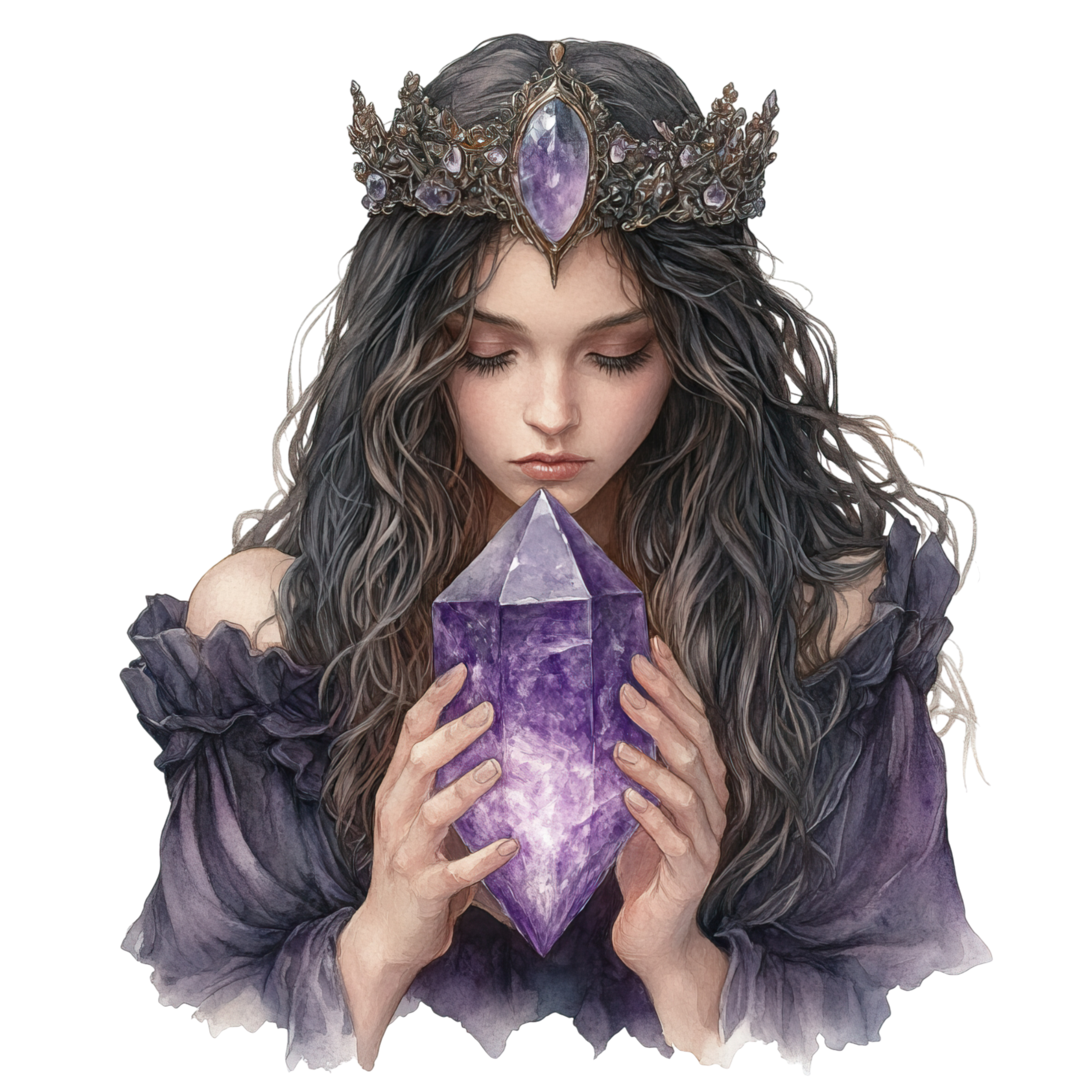
- Men: Admired for glowing resonance markings (veins of light across skin), broad shoulders, and command of resonance circles. In Lunareth, refinement is prized; in Sylorin, martial strength; in Nimael, calm spiritual poise; in Caelwyn, wealth displayed through ornamentation.
- Women: Grace, composure, and elegance. Long hair (often decorated with flowers or crystals), luminous skin, and artistic skill are admired.
Education
For Men:
- Academies of Resonance (especially in Nimael and Sylorin) teach resonance patterns, ward-craft, combat, and governance.
- Noble sons may apprentice with Resonant Magisters or serve as wardens before taking political roles.
For Women:
- Home-based learning in artistry, song, household management, history, and simple resonance.
- Music and embroidery are particularly important - women’s choirs sustain resonance wards through songbinding, and embroidery wards are used in clothing, banners, and veils.
- A few noble women quietly push boundaries, excelling in resonance theory disguised as artistry, though this is rare.
Marriage & Bonding
The Veil of Devotion:
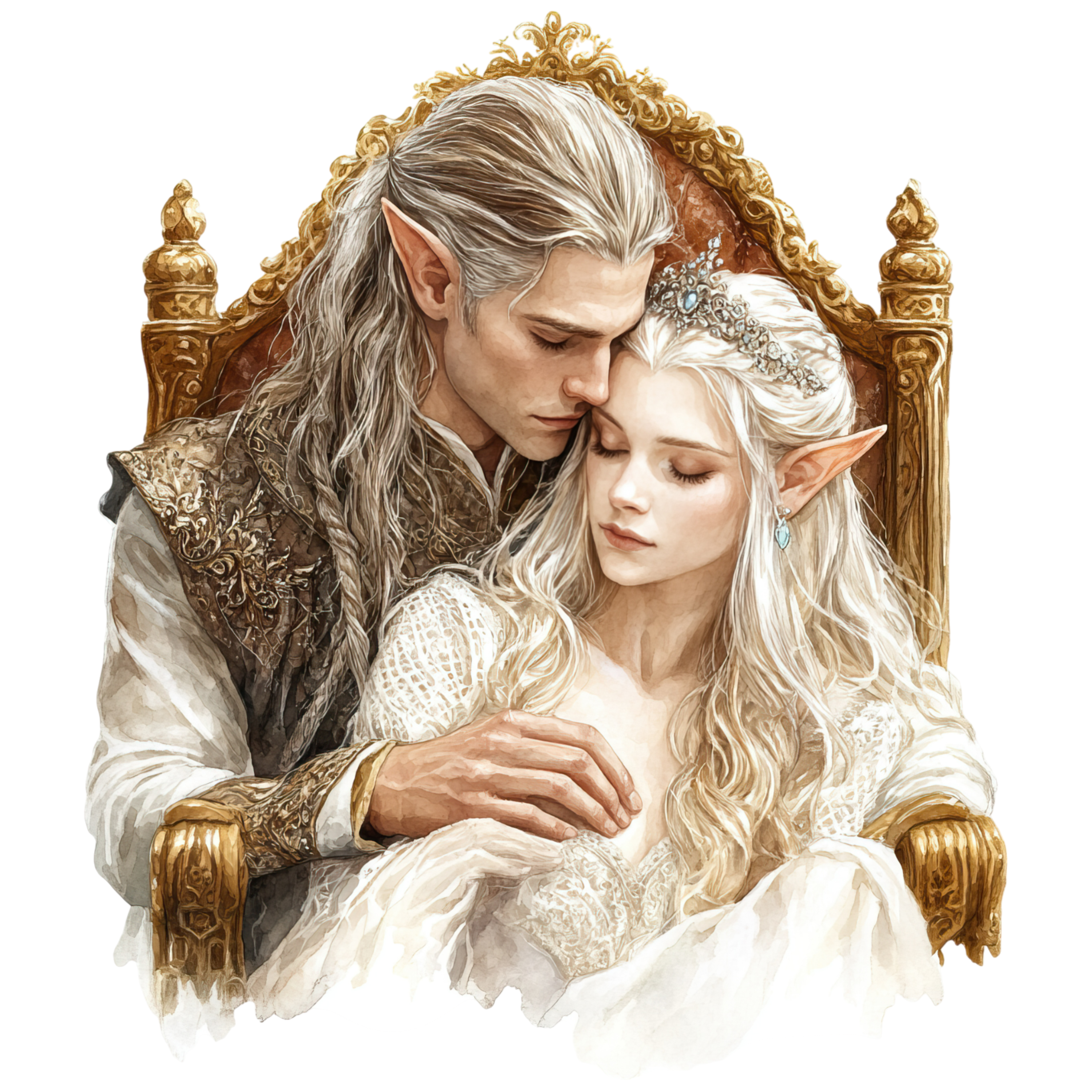
- Central to womanhood, this rite elevates marriage into a soul-bond.
- He swears to protect her in body, mind, and spirit. Her pain, sorrow, or fear will be felt by him until he restores her peace.
- She swears to obey his guidance and honour his guardianship. His word becomes her command.
- Young girls see this as romantic and secure, believing they will be cherished forever. Older, wiser women sometimes see it as a gilded leash.
“If she weeps, I am undone. If she laughs, I am whole again.”
Social View:
- Men who fail to protect their wives are publicly shamed and considered dishonourable.
- Women who resist obedience are seen as discordant, but rarely punished harshly - instead, they are “re-guided” through re-ritualisation.
“The bond is woven for life. But what if the thread strangles?”
Art, Music, & Design
Design
Aesthetic Philosophy
- The Circle: All Zarethylan art is rooted in circles and spirals, representing harmony, eternity, and the Weave. Angles are rare - seen as harsh and discordant.
- Balance & Symmetry: Every piece of design strives to reflect inner harmony. A robe must flow evenly, a building’s arches must mirror one another, a song must resolve in perfect chords.
- Living Beauty: Art is often “grown” rather than made - vines woven into patterns, crystals coaxed into shapes through resonance, fabrics embroidered with living flowers that stay fresh for weeks.
Filigree Work
- A signature artform: delicate spirals and vines etched into jewellery, embroidery, architecture, and even skin (as luminous tattoos).
- Filigree is more than ornament: when patterned correctly, it channels resonance energy, strengthening wards or stabilising spells.
- Wealthier houses commission living filigree: moss, crystal threads, or glowing vines trained into permanent spirals across walls and garments.
Architecture
Each gemstone city has its own artistic flavour, reflecting its stone:
[br[
- Lunareth (Moonstone): White and silver structures glowing faintly under moonlight. Towers and arches are smooth, seamless, and symmetrical. Courtyards form perfect circles, often with fountains of luminous water.
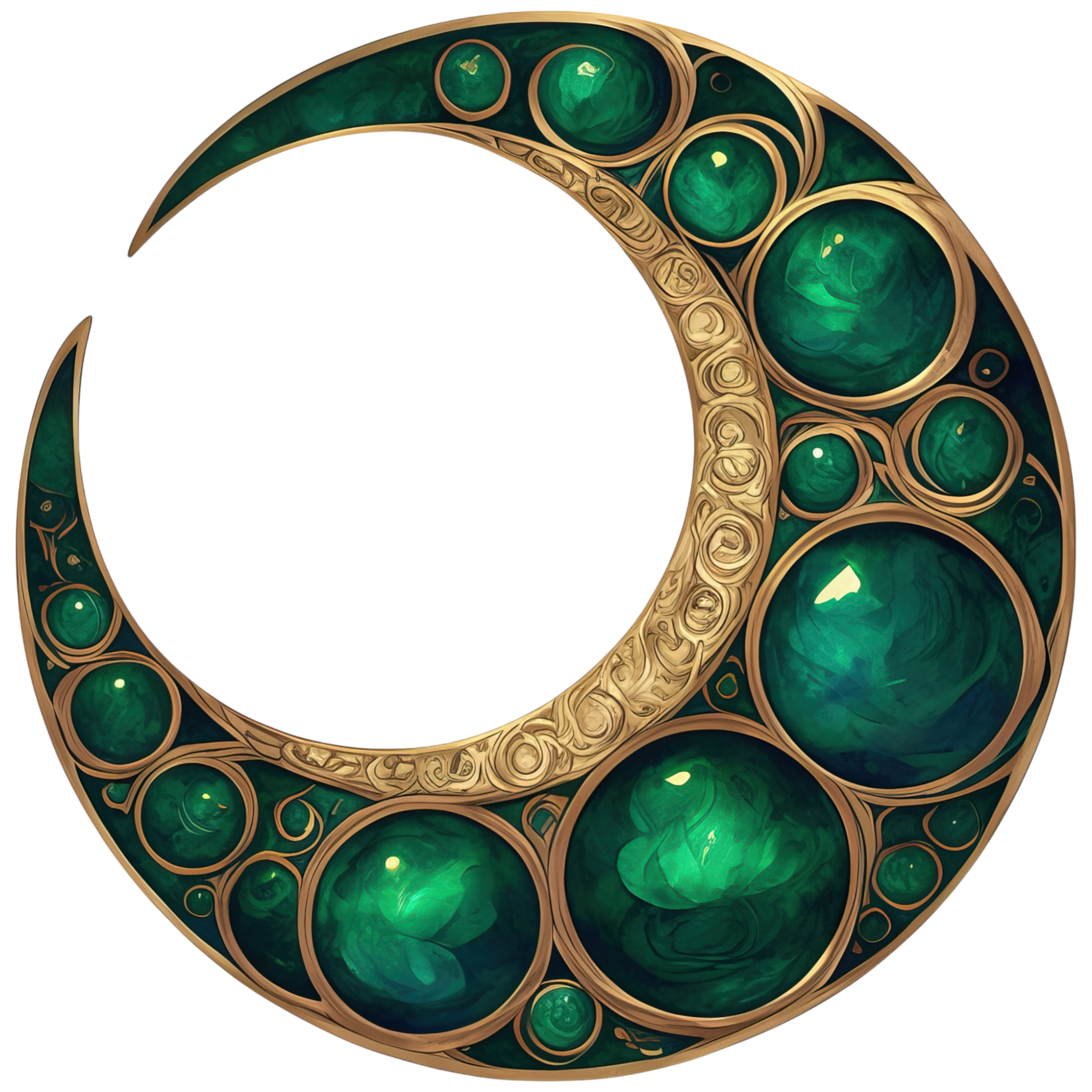
- Sylorin (Malachite): Strong, earthy design. Buildings fuse with living trees and vines. Patterns emphasise resilience: interlocking spirals, vine-wrapped walls, malachite striations inlaid with crystal veins.
- Nimael (Amethyst): Resonant halls shaped to amplify sound. Walls are carved into spirals that reflect songbinding. Chambers sparkle with violet light, refracted through crystalline vaults.
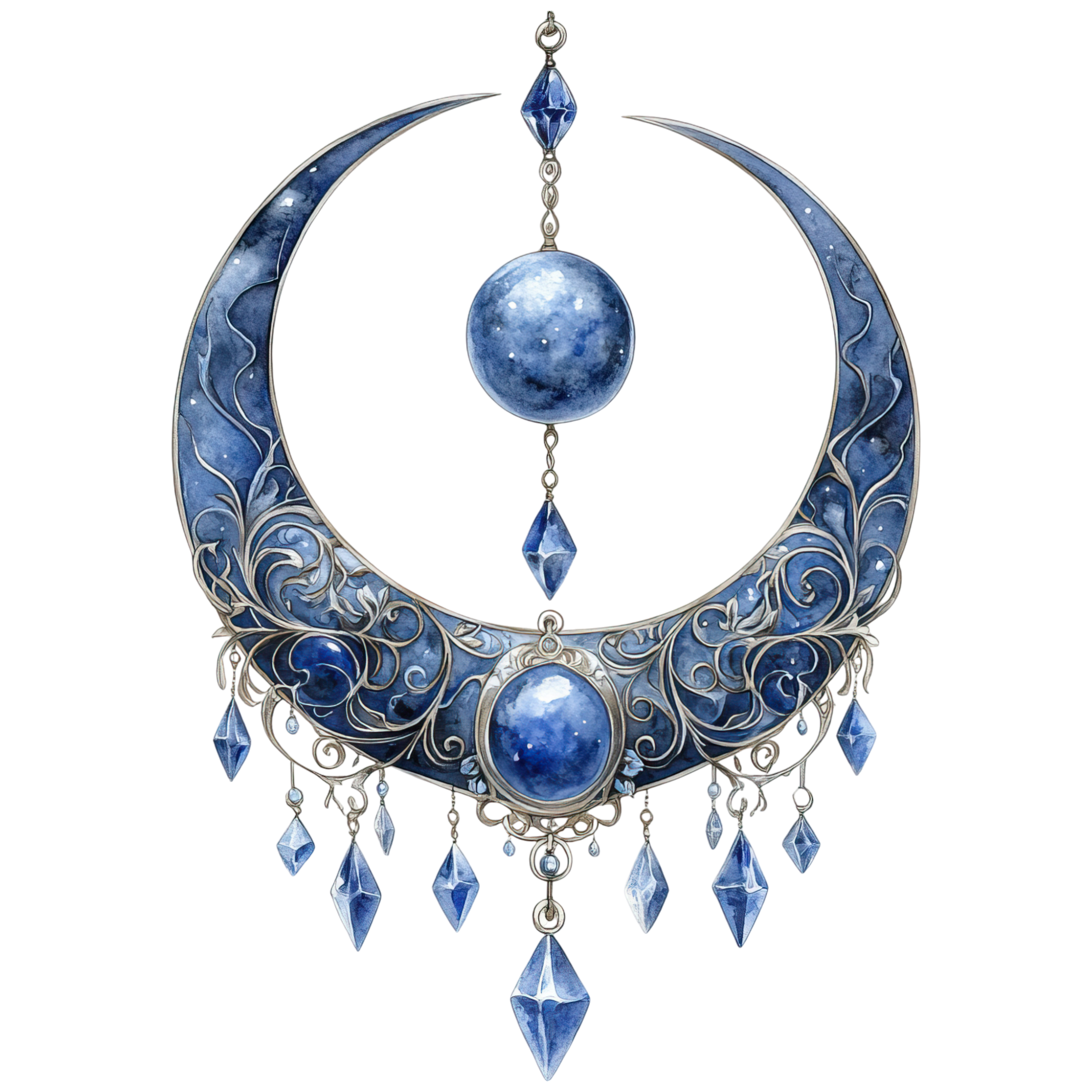
- Caelwyn (Lapis Lazuli): Luxurious, jewel-like. Floors inlaid with golden filigree on deep blue stone. Vaulted ceilings studded with gems so they glitter like starfields.
Music
Songbinding
- Music is not just art - it is magic. Resonance spells are often sustained through choirs, their harmonics weaving with the Weave itself.
- Women’s voices are prized for their clarity, said to “soften the wards” and calm the resonance.
- Men often lead choirs, but women carry their strength.
- In Nimael, entire choirs gather weekly to maintain city-wide harmonics.
Instruments
- Crystal Harps: Strung with threads of silver or enchanted silk. Notes resonate for long seconds, blending into chords.
- Moonflutes: Made of pale stone or enchanted bone, producing breathy, haunting tones.
- Resonant Drums: Carved from hollow crystal, struck with padded mallets. Low vibrations amplify resonance spells.
- Vine-lyres: Living plants shaped to hold taut threads, plucked to produce soft harmonic tones.
Styles of Music
- Formal: Layered choral harmonies, slow and stately, always resolving into circular motifs. These are sung during ceremonies, law readings, and ward renewals.
- Domestic: Lullabies, soft love songs, and weaving chants, often sung by women while working with embroidery or tending gardens.
- Festival: Faster and more joyful, though still structured. Spirals of dancers weave in circles while choirs sing alternating harmonies.
Themes in Music
- Blossoms, stems, circles, threads, weaving, and light.
- Songs often metaphorically reinforce gender ideals: men as guardians, women as blossoms, both needed for harmony.
- Subversive songs sometimes circulate quietly - laments of women who feel caged, or men who feel crushed by the burden of protection.
Other Art Forms
Embroidery & Textile Arts
- Women’s embroidery is highly prized: filigree spirals, floral blooms, and gemstone-thread woven into gowns and banners.
- Embroidery wards exist: stitched filigree that hums faintly and reinforces harmony within the home.
Sculpture & Carving
- Crystal sculptures hum faintly with resonance when touched. Many are arranged in spirals within city plazas.
- Statues often show idealised couples: men upright, steady and protective, women blooming in graceful arcs beside them.
Painting & Illumination
- Painted works are usually miniature or decorative, focusing on symmetry and floral detail.
- Illuminated manuscripts (laws, hymns, poems) are written in spirals, inked in metallic golds and silvers.

Atmosphere of Art in Daily Life
Homes are decorated with embroidered hangings and living floral arrangements shaped into spirals. Every city hums with background songbinding, like faint choral music on the air. Even the simplest object - a spoon, a cloak pin, a child’s toy - will often be adorned with some tiny filigree flourish.
To live in Zarethyl is to live inside a work of art - dazzling, harmonious, and meticulously ordered.
Etiquette & Social Codes of Zarethyl
Speech & Conduct
“A discordant note shames the whole choir.”
Tone of Voice:
- Men are expected to speak with calm resonance, steady and commanding without being harsh.
- Women are encouraged to speak lyrically and gracefully, as if each word were a note in a song.
- Indirectness: Direct speech is often considered crude. Metaphors, imagery, and layered phrasing are favoured. For example: Outsider bluntness: “You have offended me.” Zarethylan phrasing: “The harmony between us is unsettled.”
- Interrupting: Considered deeply disrespectful. To speak before another has finished is like “cutting through the weave.”

Greetings
All greetings are meant to reflect harmony and resonance. Abrupt or dismissive gestures are seen as discordant. Hierarchy is always respected: nobles are greeted more formally than kin, elders more formally than youth. Physical contact is restrained, seen as intimate. Gestures are flowing, deliberate, and symmetrical.
Greetings Between Men
- Peers: Clasp forearms, exchanging a subtle pulse of resonance (like a hum in the skin).
- Formal (to nobles, elders, or superiors): A bow with the right hand pressed over the heart, sometimes accompanied by a low resonance note.
- Close kin/friends: A two-handed clasp or shoulder touch, accompanied by a smile.

Greetings between Women
- Peers: A soft smile and a graceful inclination of the head, hands briefly folded at the waist. This is considered a sign of equality and poise.
- Formal (to nobles, elders, or superiors): A deeper inclination, hands crossed lightly over the chest.
- Close kin/friends: A cheek-to-cheek touch or brief embrace (private settings), often accompanied by an exchange of flowers, crystals, or embroidered tokens.
Between Men & Women Formal (not kin)
- Man to Woman: A respectful bow of the head, eyes lowered briefly in acknowledgment of her grace.
- Woman to Man: A soft inclination of the head, eyes lowered briefly in acknowledgment of his guardianship.
- Kin (siblings, cousins): A clasp of both hands, brief and familial, sometimes paired with a smile.
- Husband & Wife (public): A brief touch of hands is acceptable. Anything more (like embraces) is saved for private.
- Lovers or betrothed (semi-public): A hand brush or exchange of small tokens (flowers, filigree charms).
Farewells
General Phrases
- “May your thread stay unbroken.”
- “Walk in harmony.”
- “Until our circles cross again.”

- Between Men - A firm clasp of forearms, then a sharp release - symbolising strength without lingering. Sometimes accompanied by the phrase: “Guard well.”
- Between Women A small bow with a soft smile, sometimes accompanied by the phrase: “Bloom in peace.”
- Between Men & Women Formal (non-kin): Both bow their heads slightly, each with hands at the heart.
- Kin: Parents often cup a child’s cheek briefly; siblings may touch foreheads or exchange tokens.
- Husband & Wife: A brief clasp of hands or whispered resonance blessing. In private, more intimate farewells are common.
This is a work in progress!
(all images used throughout the articles of this world have been purchased from Etsy and permissions have been given to use on websites. Images used that are not purchased will have artist recognition)
Comments