
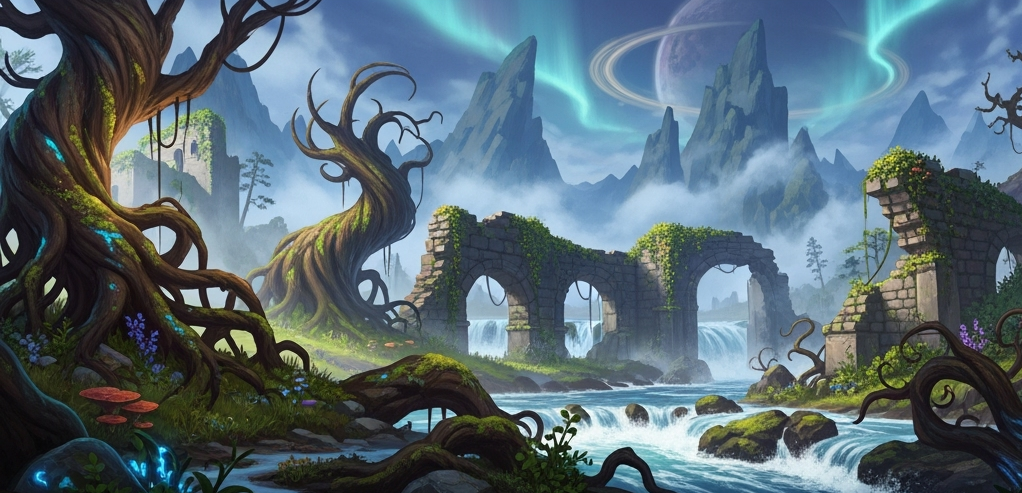
The Process of Wildkeeping
In the mirrored sands of Glassmarch, nothing stays still. The dunes shift, reflections blur, and even one’s own face seems to grow impatient with repetition. From that restless horizon, the Process of Wildkeeping emerged—a covenant that chaos must have its share of the world. The glass miners and mask-makers of Glassmarch learned early that what cannot change will eventually shatter. Their Process was not a hymn to disorder but a pact with it: a recognition that life needs friction to stay alive.
Wildkeeping is the law of unpredictability—the quiet defense of the untamed. It holds that creation must always risk becoming something unplanned, that the unexpected is not corruption but evolution. The Process does not reject order; it ensures that order never hardens into a cage. It is the heartbeat under civilization’s rhythm, the stray note that keeps the melody honest. When honored, Wildkeeping brings renewal: forests regrow after flame, minds break open to new invention, hearts find courage in uncertainty.
When ignored, the world begins to fossilize. Innovation fades into repetition, rulers mistake stagnation for peace, and the wild retreats until nothing remembers how to grow. The air thickens, the soil loses its will to seed, and thought itself turns dull. The Process-keepers of Glassmarch say that when the Wildkeep falters, even dreams forget how to wander.
To follow the Wildkeep is to accept that uncertainty is sacred. It demands faith in the untamed currents beneath reality’s surface—the belief that not every outcome should be known, not every creature should be owned, not every future should be mapped. Wildkeeping is the living pulse of change, the reminder that the world’s perfection is its ability to surprise itself.
Comments