
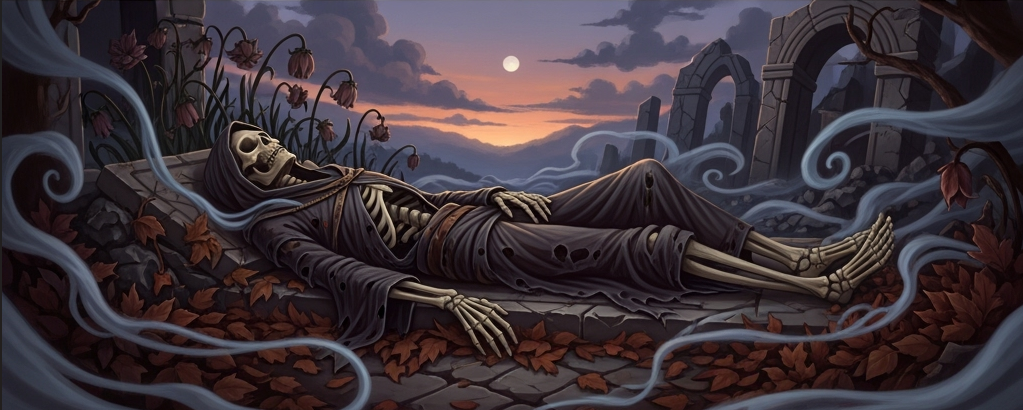
The Process of Rest
At the storm edges of Orrin Cape, the world is a perpetual ending. The sea there does not calm; it erases. Ships drift out and never return, their names scraped away by salt and time. It was from that inevitability that the Process of Rest was born—not as surrender, but as salvation. The people of Orrin learned that endless struggle is another kind of drowning. To stop, to yield, to let something be finished—that was the truest form of mercy.
Rest is not sleep and not death, but the recognition that completion is sacred. It teaches that every effort, no matter how noble, must know when to end, that life without conclusion decays into obsession. The Process defines the boundary between endurance and peace, between preservation and release. It is the unseen law that allows the world to shed its weight. Without it, time itself would clog, histories would blur into one another, and nothing would ever be allowed to become memory.
The Rest keeps death from leaking backward into life and keeps creation from consuming itself. It is the world’s closing gesture—the hand that sets down the tool, the tide that retreats, the silence after the song. To ignore it is to deny the balance that gives meaning to effort. When the Rest falters, the living grow weary without knowing why, spirits wander in search of unfinished farewells, and even the land forgets how to lie fallow. The Process-keepers of Orrin say that when Rest is broken, even the stars refuse to set, and dawn begins to arrive exhausted.
In its purest sense, the Rest is grace. It is the world’s permission to stop holding on, to lay down burden and form alike. To practice it is to trust that what has been completed does not need to be defended, only remembered. The Rest is the hush that lets existence breathe again, the moment between heartbeats when the universe, finally, forgives itself.
Comments