
The Great War
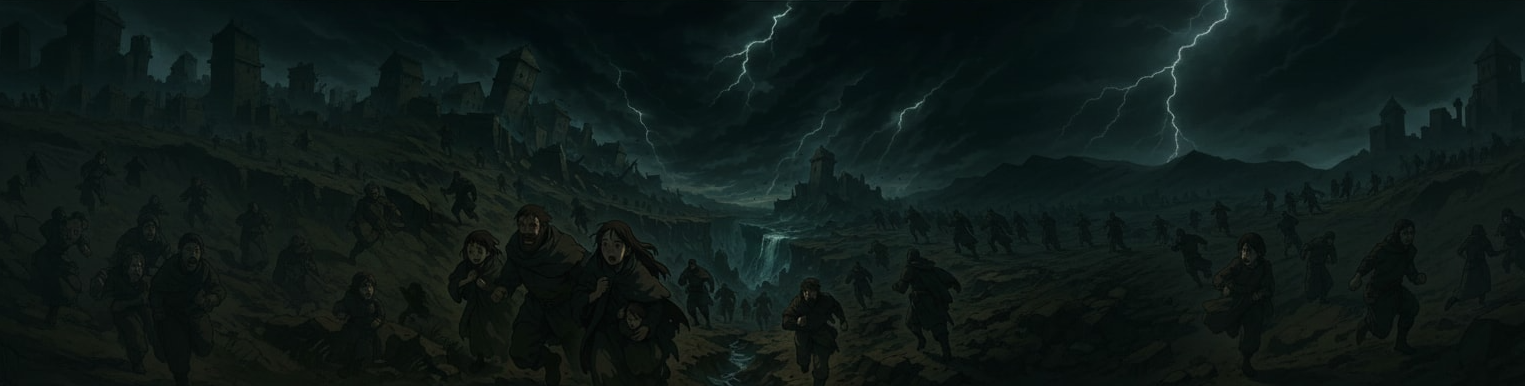
The Great War is remembered as the moment Aureth’s people attempted to fight back against a world losing its own coherence. It wasn’t sparked by greed or ambition, but by a profound terror that seeped into every home and every border. This terror grew from a truth no one wanted to acknowledge: the world was beginning to unmake itself again while they were still living in it.
Fields stopped producing not because of drought but because crops seemed tired of existing. Entire villages vanished cleanly, as though a careless hand had erased them from a map that everyone relied on. Families went to sleep with four members and woke with three, unable to explain the absence except through panicked whispers about people becoming “Unbound.” Even the air carried a choking, volcanic ash despite no mountains burning; the sky looked bruised for entire seasons.
Each territory reacted differently, but all carried the same emotion-fear-and fear sharpened into hatred. Territories blamed one another for the vanishing places. Rumors insisted someone must be causing the Dissolution, because the alternative-that the world itself was failing-was too unbearable to face.
The Conflict
Prelude
To the High Seat and the Council of Edges,
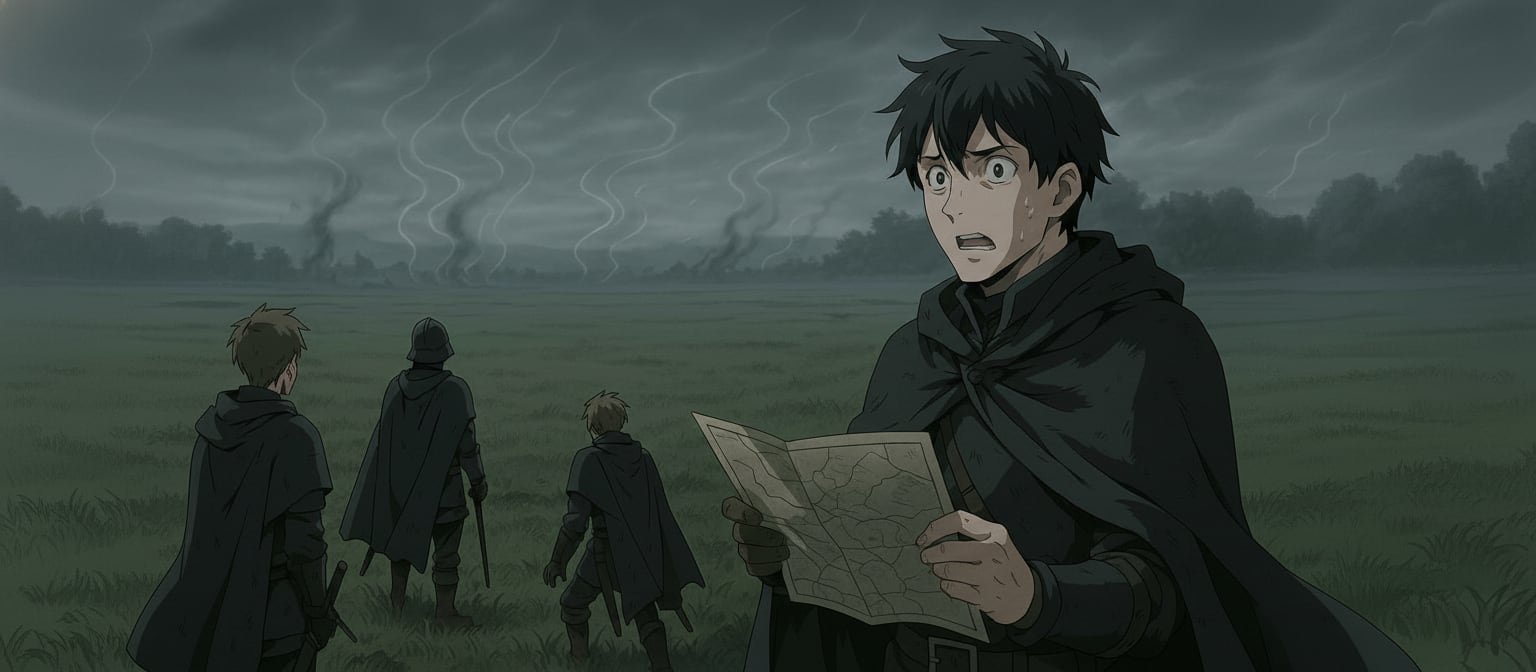
I am writing while my hands still remember the shape of letters. I cannot promise they will by dawn. The world feels thinner tonight, like stretched leather ready to tear. Three days ago, Halvern’s Reach stood exactly where your maps place it on the southern edge, just past the boundary wards. A tired little village, half wheat, half stubbornness. We used to stop there for fresh water on patrol. Yesterday morning, my outriders returned pale and shaking, insisting the village had never existed. They stood in an open field with dew still settling on the grass, the earth showing no wound, no ruin, no sign of habitation at all.
But I remember Halvern’s Reach. I remember Captain Tress buying honey-cakes there on his nameday. The scouts look at me with pity now, as if I am the one inventing ghost stories. Midmere claims we stole the village and have scooped it from the earth with forbidden boundary rites. Their emissary accused us of slicing the land too sharply, of drawing Threshold so tight it cut Halvern’s Reach clean out of the world. He raised his voice at me as if rage might force the missing ground to confess its secrets. I nearly struck him for the insult, though I know too well the fear beneath his words. They are starving on the far terraces. Their fields crumble into gray dust. When a people are hungry long enough, they will believe anything that lets them blame someone with a face. But I swear by my own name-may it never slip from the world’s tongue-that Brightcoast did nothing. The village vanished on its own.
Rumors spread faster than the ash winds. Soldiers whisper about the Unbound, about people caught wandering near the disappearance site with their shadows missing or their voices echoing out of sync. One boy nearly cut his own arm to prove he still bled. Another begged me to write his name on his skin so the world wouldn’t lose track of him. I tried to calm them, but even I feel the edges of myself fraying. Twice today I forgot the color of my mother’s hair, though I carried that memory like a carved stone all my life. What other pieces might I lose before I notice they’re gone?
Midmere blames us. High Crown blames Stonewake. Stonewake blames the air, the ash, the Dissolution—anything but themselves. Every report that reaches my camp smells of fear disguised as certainty. Your council must understand that no territory will accept the randomness of this catastrophe. Someone must be held responsible, and we are all sharpening our accusations into weapons.
I have increased patrols along the border, though patrol routes warp beneath our boots. Yesterday’s path led us north; today it bent south though we took the same steps. One of my captains insists Midmere saboteurs are rewriting the land, that they are preparing a strike. He demands we answer first, to show strength. His voice is persuasive because his fear is honest. I do not know how long we can hold our people back.
My counsel is this: prepare for war, not because the enemy gathers steel, but because panic already has. The continent is a tinderbox of vanished homes and starving families, and all it will take is one more disappearance-one more Halvern’s Reach-for blades to be drawn without hesitation. If that happens, the first spear will fly on a battlefield that cannot remember itself. I will send another report when the air clears enough for my lungs to work.
If you do not hear from me, it is because the world mislaid me.
Deployment
Armies assembled under skies the color of bruises. Soldiers marched wearing talismans etched with their own names, terrified of fading mid-stride. Commanders mapped routes across landscapes that changed shape between morning and afternoon. Every troop movement felt like a declaration of both defense and accusation.
Midmere deployed first, attempting to stabilize trade roads that kept rewriting their endpoints. Brightcoast sealed its borders with ritual lines of salt and ink, provoking outrage from every neighbor. Stonewake’s river warriors used waterways to ferry frightened civilians, insisting motion was the only defense against unbinding.
The entire continent trembled with mistrust, and deployment became the first undeniable sign that the Great War had begun.
Battlefield
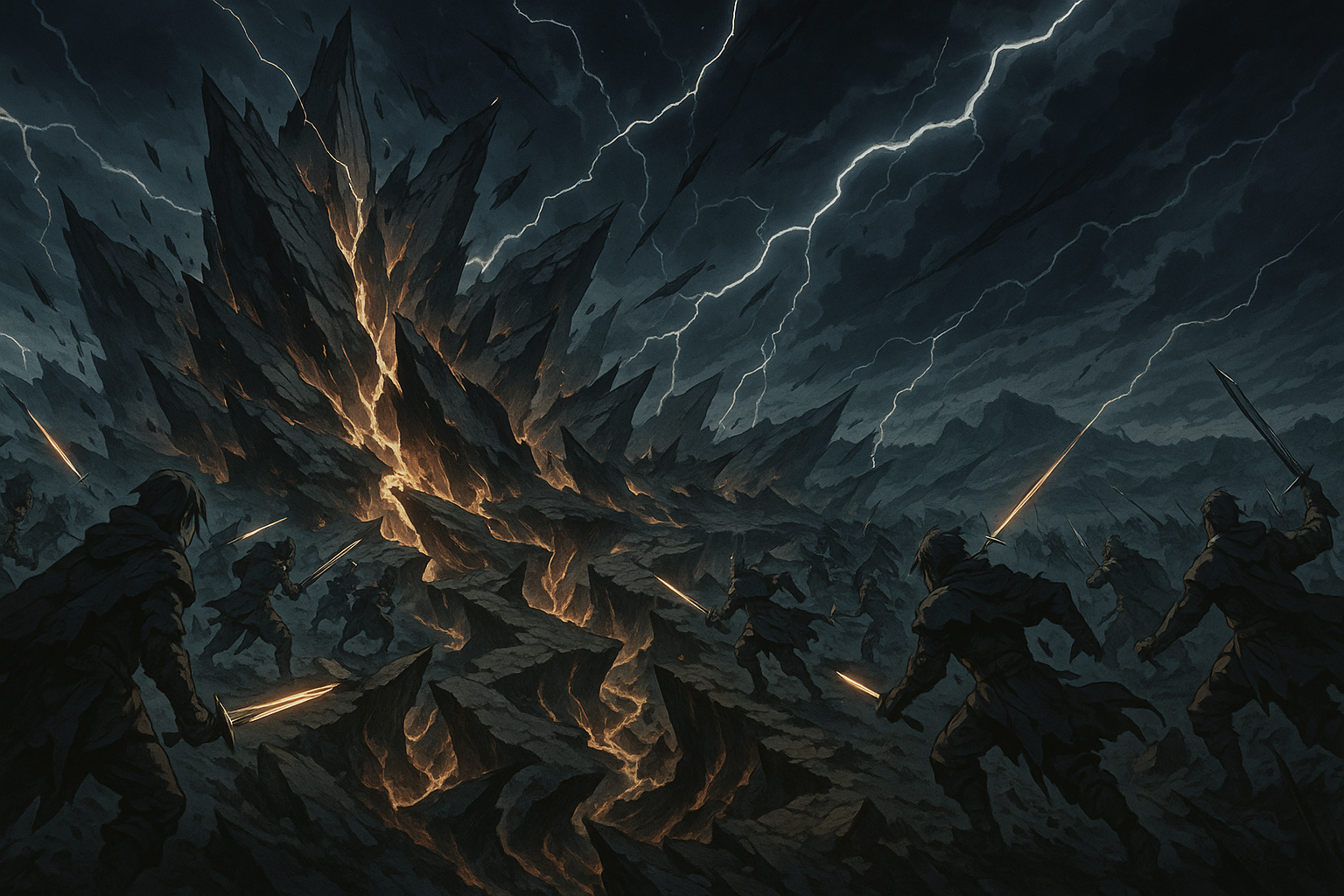
No battlefield stayed loyal to its own shape. Cliffs sank overnight. Roads split into duplicate versions of themselves. Skirmishes were fought on ground that buckled, stretched, or forgot it was supposed to be solid. Commanders described the terrain as “moody,” “resentful,” and “eager to be elsewhere.” Fighters swore they saw their enemies blur into memory-smear, as though the world couldn’t decide whether the combatants should be present at all. Sound arrived late and color drained slowly from the horizon, like stepping into a painting that wanted to erase you for walking on it.
Conditions
The ash-laden air burned lungs and blurred vision. Seasons misfired. Cold days arrived in midsummer, and heat crackled along the edges of winter nights. Hunger gnawed not from scarcity but from meals losing flavor, then substance, then reality. Morale became a battlefield in itself. Soldiers clung to shared memories, telling stories in unison so their pasts would not slip into holes where villages used to be. Political unrest churned behind every marching column: accusations, protests, food riots, and the endless whisper that someone, somewhere, was responsible for all this. And if someone was responsible, then war was justified.
The Engagement
Battles erupted as misunderstandings layered on old grudges. A patrol disappearing suddenly was blamed on enemy sabotage. A Brightcoast ward line dissolving overnight was seen as Midmere retaliation. Every vanished soldier became a symbol, every erased landmark a casus belli.
Armies clashed in fits of desperation rather than strategy. Some fights ended because the ground beneath both forces ceased to exist. Others raged until one side realized they were swinging at enemies who had already been unmade.
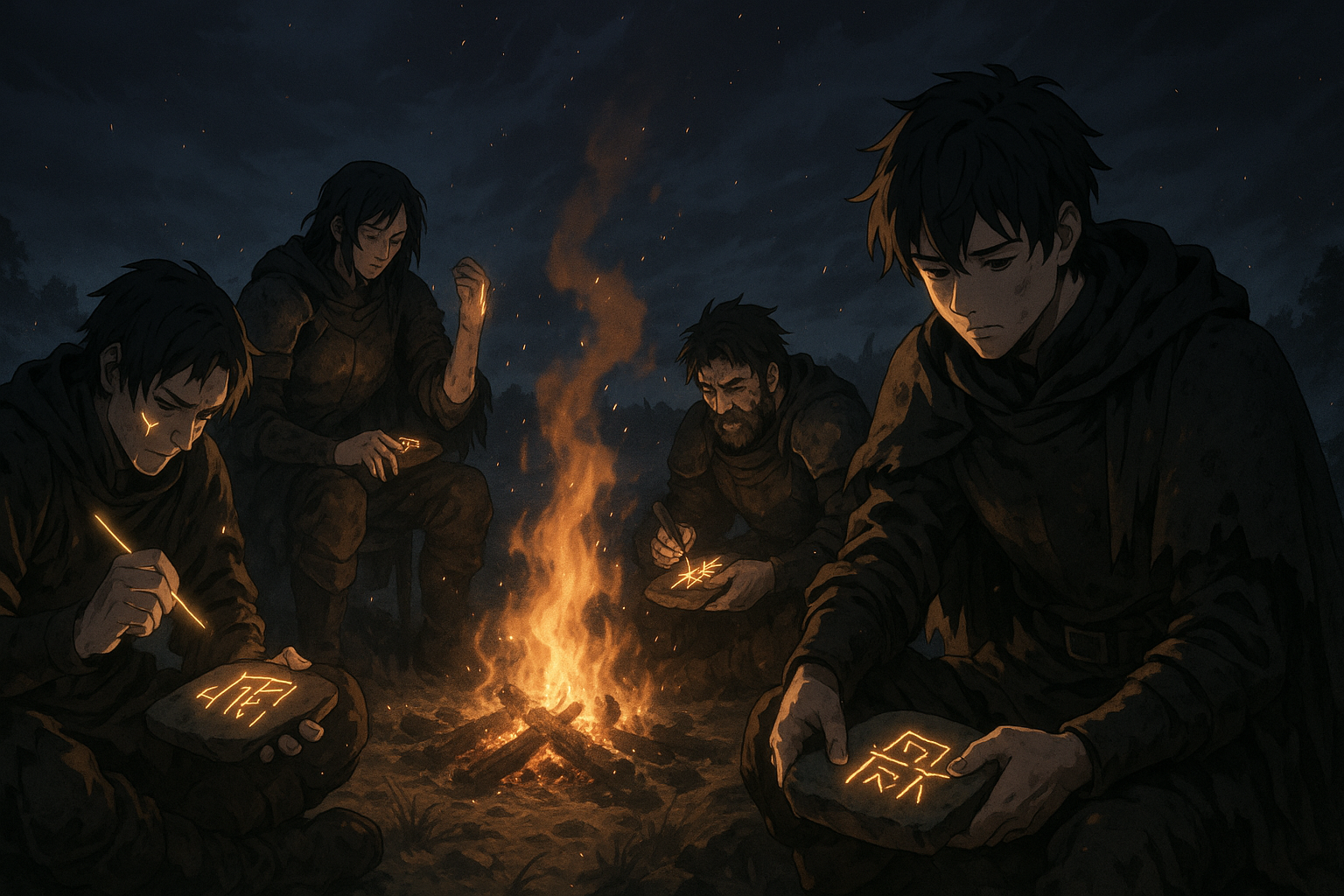
Throughout the conflict, the proto-Processes emerged from instinct and necessity. Hearth gatherings saved entire platoons from slipping. Witness scribes kept real-time accounts so units wouldn’t forget themselves. Threshold wardens carved boundaries against the creeping dark. River scouts moved constantly, believing motion kept them anchored.
The war became a storm of terror, hope, superstition, and violence.
Outcome
The war did not end with treaties or surrender. It ended because Aureth itself broke. In 2864 BTS, the sea between High Crown and Orrin Cape tore open like a wound revealing dark water beneath. Coastlines sank without splash. Cities cracked along invisible seams. What had once been a narrow channel became The Birth of Stillwake Gulf, where compasses refuse to turn and where reality seems to hesitate before deciding what shape to take. The collapse ended the fighting almost instantly. Soldiers on all sides threw down weapons to flee the rising waters and the groaning, splitting earth. The war’s momentum died in a single continental gasp.
No one claimed victory. Everyone claimed loss.
Aftermath
The Great War etched trauma into every territory. The disappearances, the ash seasons, the famine, the vanishing names—nothing faded cleanly from memory. The people of Aureth emerged convinced of one truth: survival required shared meaning.
The fractured customs that had appeared during the war solidified slowly into The Sanctioned Processes of Aureth, not yet divine but recognized as the only tools that had saved humanity from dissolving entirely.
The Stillwake Gulf became the continent’s scar, the dividing line between the age of fear and the age of structure. The war that began with vanished villages ended with a vanished coastline large enough to reorder the world.
And across Aureth, in whispered recollection, people still say:
The world unmade itself because we fought each other, when we should have been fighting to stay real.
Historical Significance
Chroniclers describe this period as fragile, panicked, and starving. The world was thinning, pulling away like frayed cloth. Farmers burned incense and wept over empty soil that would not even accept seed. Traders reported roads forgetting where they led. Families began reciting their own names before bed, afraid of slipping like dust between cracks in memory.
What little literature survives from this era trembles with desperation. Many accounts contradict each other entirely, not from deceit, but because the events themselves refused to stay fixed. A battle recorded in one archive appears in another as a migration, and in a third as a winter festival that never ended.
Despite the contradictions, every source echoes the same feeling: the world was fraying, people were breaking, and anger needed somewhere to land.
In Literature
Texts from this era read like fevered dreams. Pages rearrange sentences when copied. Margins swallow paragraphs. Diaries end mid-line, not from drama, but because the ink simply refused to continue referencing itself. Bards sing of disappearances that happened while mid-song. Archivists argue whether some poems were ever written at all. The most prized works are those that feel anchored; rare documents that survived the Dissolution without distortion, treated as sacred objects rather than mere stories.
Comments