

Mandelic-Scontewi-Torwickel dominant gene modifications
Mandelic-Scontewi-Torwickel (MST) Gene Sequence
Origin: Ares Prime Bio-Research Facility, Mars (Sector 4)
Classification: Germline Genetic Augmentation / Class-A Evolution
Status: Ubiquitous (Chendiurian Population)
"We did not set out to play God. We set out to build a better engine. It just so happened that the chassis was human."
The Mars Initiative Project "Iron Lung"
Before the first colony ship broke orbit for Chendiuria, the Martian corporate consortiums faced a fatal calculation: the human body was too soft, too oxygen-hungry, and too fragile for the gravity and atmospheric variances of the proposed colony world. Terraforming would take centuries; genetic adaptation would take one generation.
Three preeminent geneticists were pulled from the University of Olympus Mons and given an unlimited budget and zero ethical oversight.
Dr. Aris Mandelic (Genetics): The architect. He cracked the code on stabilizing foreign DNA within the human double helix without triggering oncogenic (cancerous) cascading.
Dr. Elena Scontewi (Virology/Delivery): The engineer. She designed the retroviral vector that would overwrite the reproductive germ-line cells of the original colonists.
Dr. Kael Torwickel (Physiology): The builder. He mapped the structural requirements—how to attach denser muscle to bone without snapping the skeleton.
The Tardigrade Key Utilizing Hypsibius dujardini
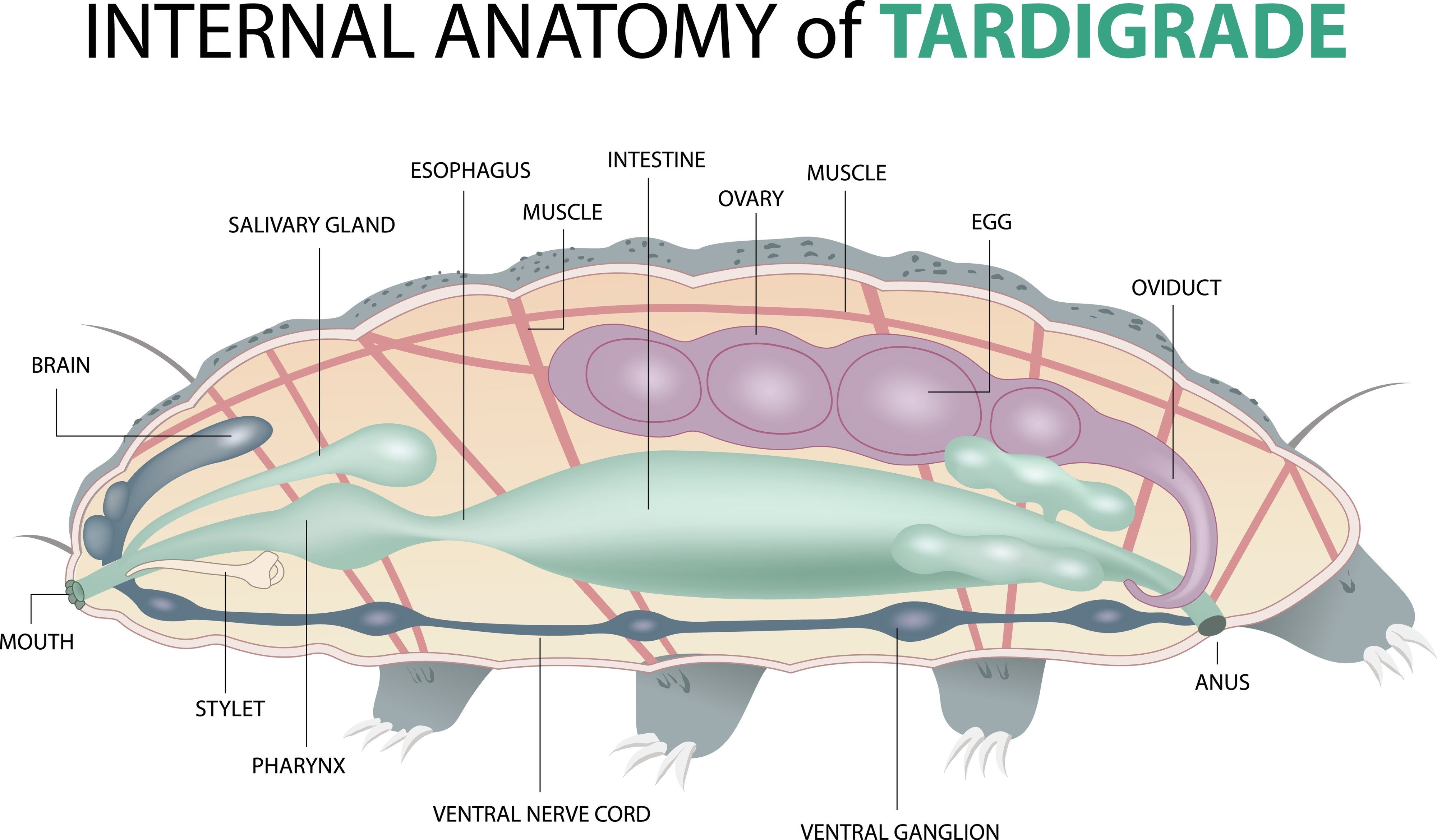
By splicing the Dsup protein and tardigrade cryptobiosis triggers into the human genome, they didn't just make humans tougher; they fundamentally altered the cellular response to stress.
Physiological Alterations The "MST" Phenotype
The modification is dominant. If one parent carries the MST sequence, the child is born a Chendiurian. The changes manifest during puberty, resulting in the "Frontier Physiology" seen today:
- Osseous Reinforcement (Torwickel’s Contribution): Bones are not just calcium; they are laced with a biological carbon-fiber lattice. A Chendiurian femur can withstand three times the torque of a baseline human (Earth-standard).
- The "Dual-Core" Cardio System: The heart is 20% larger, with thickened ventricular walls. The lungs are expanded, possessing a higher density of alveoli for maximum oxygen extraction in thin atmospheres.
- Myostatin Inhibition: Muscles are denser, not necessarily bulkier. The gene splice removes the natural "brakes" on muscle efficiency, allowing for explosive power output.
- Synaptic Myelination: Reflexes are sharpened by increasing the speed of electrical signals along the nerve fibers. This was an accidental side effect of the tardigrade DNA interaction—the nervous system is "shielded" and operates at a higher frequency.
The Exodus Protocol
The original colonists, the so-called "First Wave" did not possess these adaptations themselves. They were merely the vessels.
In a controversial procedure known as the "Exodus Injection," the original 7,500 colonists were infected with Scontewi’s retrovirus. It didn't change their bodies; it rewrote their reproductive code. They remained baseline humans, suffering the hardships of the new world, knowing that their children would be the ones born to conquer it.
Archival Note: This created a massive cultural divide in the early years of Chendiuria. The frail, Earth-born parents (the Architects) were physically inferior to their own children (the Ascendants), leading to the generational tension that still underpins Chendiurian society today.
Current Status
On Chendiuria, a "Baseline Human" is now considered a medical disability. The MST sequence is no longer viewed as an augmentation; it is the standard. However, because of the tardigrade DNA, Chendiurians possess a high metabolic requirement; they run hot and they run fast.
Chendiurian Metabolic Protocol (Class-A Augmentation)
"A Chendiurian engine doesn't idle. It burns. If you don't feed the furnace, the furnace eats the house. We lose more recruits to starvation during basic training than we do to accidents."
Archival Note: Baseline human consumption of Chendiurian rations is toxic.
The "Furnace" Metabolism (Caloric Baseline)
Because the MST sequence forces the body to maintain denser muscle fiber, a carbon-reinforced bone lattice, and a hyper-active nervous system, the resting metabolic rate of an average Chendiurian is 3.5x that of a Baseline human.
- Daily Caloric Floor: 6,500 kcal (Sedentary/Light Duty)
- Active Duty / Combat Load: 10,000 – 12,000 kcal per day
The consequence is that standard food is inefficient. A Chendiurian attempting to survive on traditional "Old Earth crops" (wheat, corn, soy, etc.) would need to spend 16 hours a day eating just to stay alive. This caused the invention of Hyper-Dense Rations (HDRs).
Essential Nutrient Trehalose (The "Gold Sugar")
The key to the tardigrade's survival and now the Chendiurian's is trehalose, a unique disaccharide sugar capable of stabilizing protein structures and cell membranes under extreme stress.
- Function: Unlike glucose, which provides a quick spike, trehalose provides a stable, long-burn energy source that protects the Chendiurian's cells from the oxidative stress of their own high metabolism.
- The "Sugar Sickness": Baseline humans lack the enzyme trehalase in sufficient quantities to break this down efficiently. If a Baseline eats Chendiurian food which is rich in trehalose, they suffer severe gastrointestinal distress, dehydration, and eventual osmotic shock.
- Street Slang: Chendiurian rations are often called "gold bars" or "tre-chews" because of the golden hue of crystallized trehalose.
The "Concrete" Diet (Osseous Maintenance)
To keep their bones from becoming brittle under the strain of their own muscle torque, Chendiurians require massive amounts of mineral input. Their diet must be supplemented with a slurry of:
- Bio-Available Carbon: To maintain the carbon-fiber lattice in the bone.
- Strontium and Magnesium: Standard calcium is insufficient. These elements are imported as Chendiuria lacks these minerals.
- Result: "calc-paste." A gritty, chalk-like gray tube food item that is a staple in every Chendiurian household. It tastes like wet cement and peppermint. Skipping a week of calc-paste results in "glass-bones" micro-fractures caused by simply walking or running.
Thermoregulation and Hydration
The most dangerous side effect of the MST gene is hyperthermia. The Chendiurian body runs hot; roughly 38.3°C is normal. Under stress, they can spike to temperatures that would cook a baseline human brain.
- Coolant flushes: Chendiurians consume high volumes of electrolyte-rich fluids containing endo-salts chemical compounds designed to trigger a mild endothermic reaction in the gut to cool the core temperature from the inside out.
- Water dependency: They require roughly 8-10 liters of water daily.
Standard Issue Maintenance Drugs
While the genes provide the potential, the body fights the changes. Some adult first generation Chendiurians are on a regimen of "Stabilizers" to prevent their biology from tearing itself apart.
Archival Note: MST 2.0, slightly altered and improved, removed this fault. Second generation and later Chendiurians do not require these drugs, although some still use them.
- Myo-Lock Muscle Inhibitors: without this, Chendiurian muscles can contract with enough force to snap their own tendons or dislocate joints during sleep or panic. Myo-Lock "softens" the firing signals to safe levels for daily life.
- Combat Use: Soldiers "drop the lock" before battle, flushing the drug from their system to access 100% of their strength, usually followed by several hours of recovery.
- Neural-Sheath Dsup Boosters: Supplements the production of the tardigrade "Dsup" protein to protect neurons from frying under the high voltage signal speed of their enhanced reflexes.
- Metabolic Down-Regulators "Sleepers": Purpose: Chendiurians often struggle to sleep because their metabolism keeps them alert. "Sleepers" forcefully crash the metabolic rate to allow for REM cycles.
Cultural Impact: " The Feast of Giants"
Because food is fuel, eating is rarely a leisure activity for the working class; it is a chore. However, the wealthy have turned this into a status symbol. "High-Density Cuisine" involves chemically compressing a 12-ounce steak's worth of protein into a single, flavorful bite. A Chendiurian dinner party might look sparse to an outsider who is unfamiliar with the common small cubes and gels but represents 20,000 calories on a single table.

Comments