

Ivory Gar
Ivory Gar
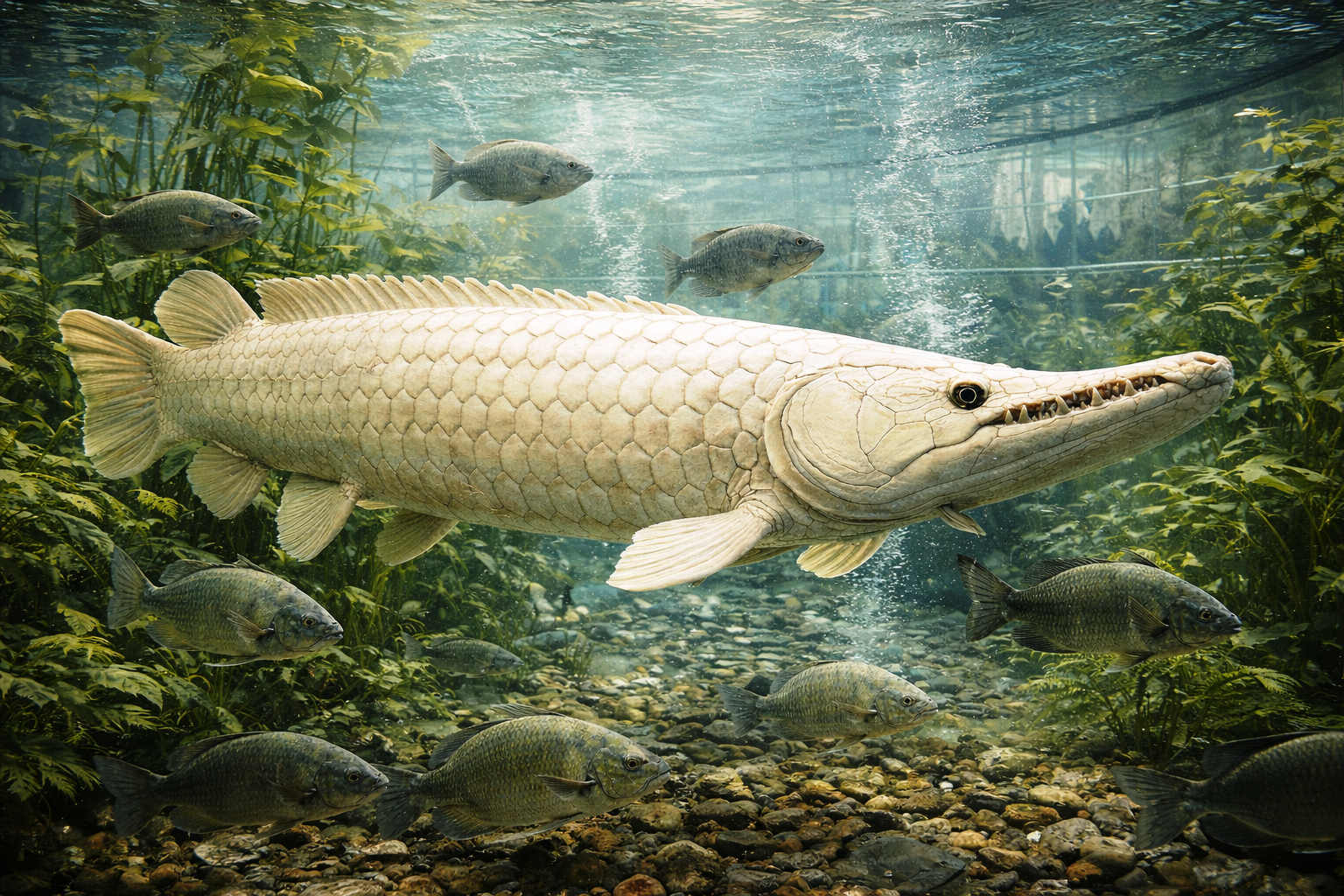
Ivory gar are a sterile, gene-modified freshwater apex fish derived primarily from alligator gar stock, with additional stabilizing sequences introduced to control aggression, growth rate, and remove reproductive capability. They are not ornamental animals. They are a managed predator species deliberately integrated into large aquaponic ecosystems.
In Cydonia, ivory gar serve three simultaneous roles: fish population control, high-density protein production, and material harvest. Ivory gar regulate jade perch and tilapia populations, stabilize nutrient cycling, and provide both protein and materials. Soy-based vat-grown feed and pelletized protein are deliberately supplied to ivory gar to reduce predation pressure, ensuring population balance rather than collapse. Ivory gar represent discipline, control, and post-war pragmatism.
Ecological Role
Ivory gar act as biological regulators.
Without them, jade perch and tilapia populations spike rapidly, leading to:
• oxygen depletion
• increased disease transmission
• excessive waste accumulation
• destabilized nutrient cycling
With ivory gar present, the ecosystem stabilizes. Feed efficiency improves. Disease outbreaks drop sharply. Water clarity improves despite higher biomass.
The system is considered one of the most successful closed-loop aquaponic predator integrations ever deployed.
Food Value
Ivory gar meat is dense, mild, and extremely high in protein. It is not a daily staple. It is a premium product.
Common preparations:
• slow-braised gar ribs
• smoked gar loin
• pressure-cooked marrow sections
• thin-cut fried cartilage
Gar meat is rarely exported whole. Most is processed on site and shipped as preserved cuts to other Martian arcologies and select off-world markets.
The head and jaw sections are typically removed intact for secondary processing.
Material Value
Ivory gar scales are one of the most valuable non-metal biological materials produced in the dome.
Uses include:
• ornamental armor in ceremonial clothing
• inlays for luxury tools and weapons
• architectural accents
• protective scale mail for animals
• art objects
Gar teeth are particularly prized. Polished ivory gar teeth are commonly strung into necklaces, bracelets, and prayer beads. Among some Martian subcultures, wearing a full gar-tooth collar signifies wealth, patience, and a connection to pre-war survival traditions.
Older teeth taken from larger specimens are exponentially more valuable.
Physical Characteristics Relevant to Aquaponics
Ivory gar typically range from three to six meters in length at maturity. Their defining feature is their ganoid scale armor: thick, interlocking, off-white to ivory plates that are nearly impervious to casual cutting and resist most bacterial and parasitic colonization.
Additional traits relevant to pond management:
• slow metabolism relative to size
• high tolerance of variable oxygen levels
• strong but predictable predatory behavior
• minimal schooling instinct
• low stress response when properly spaced
The gar are sterile by design. All population levels are human-controlled.
Labor and Handling
Ivory gar are not handled casually.
Maintenance crews are specially trained and heavily insured. Most interaction is indirect, using:
• automated netting systems
• hydraulic barriers
• sedation pulses through water chemistry
Direct physical handling only occurs after euthanasia.
Several fatal accidents occurred during early post-war experiments. Modern safety protocols are strict and non-negotiable.
Cultural and Political Significance
Ivory gar ponds are a point of pride for Cydonia.
They represent:
• biological mastery without excess cruelty
• sustainable predator-prey engineering
• continuity after the City State War
• Martian independence from synthetic food chains
President Geraint Izaäk is known to bring foreign dignitaries to view the ponds. He rarely speaks during these visits, letting the fish speak for themselves.
Economic Value
Ivory gar generate consistent, predictable economic output.
Their value comes from:
• meat production
• scale harvesting
• tooth and bone materials
• ecosystem efficiency improvements
Every part of an ivory gar has a defined market. Even waste products are processed and used as agricultural fertilizer. The gar ponds operate on long timelines and yield steady returns.
Material Culture
Ivory gar materials are worn, used, and displayed.
Gar teeth necklaces, scale inlays, and armor accents signify:
• wealth earned over time
• patience
• proximity to agricultural power
• old Martian values
Gar materials show endurance and pragmatism.
Cultural Perception
Ivory gar are respected, not loved.
They are spoken about in practical terms. Farmers, engineers, and guild members admire them the way one admires a well-designed machine that happens to be alive.
Children are taught to keep their distance.
Social Access
Ivory gar ponds are visible but controlled. Anyone can see them. Few can touch them. Almost no one interacts with them directly.

Comments