

Casaba Class Airlock Breacher
Casaba Class Airlock Breacher
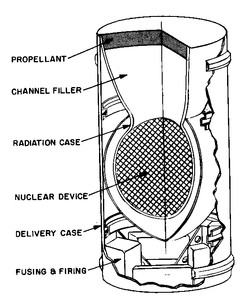
- Common name: Casaba Howitzer / Casaba Breacher
- Manufacturer: Maialen-Silenus, Inc. (MSI) — Ordnance & Breach Systems Division, Mars
- Role: Ship-board airlock breaching and precision crippling of hardened bulkheads during forcible boardings. Issued to Colonial Fleet Marine boarding detachments and select orbital assault teams.
Physical Envelope
- Installed footprint (typical rack-mounted variant): 2.0–3.5 m long × 1.0–1.6 m wide × 1.2–1.8 m high (includes breech, mounting cradle, and power/conditioning housings).
- Standalone portable launcher variant (assault-pack / tactical cradle): 1.2–1.8 m long × 0.8–1.0 m wide × 0.9–1.2 m high designed to be craned or vehicle-delivered onto a hostile hull for emergency use.
- Stowed transport volume: fits within a heavy lift pallet or small cargo pod; requires mechanized handling gear for emplacement.
Mass & Handling
- Installed system mass (whole unit, combat-ready): 8–40 metric tons (range depends on model variant, shielding and support housings; fleet-grade rack units sit at the high end).
- Tactical cradle / deployable module mass: 2.5–10 tons (requires crane/vehicle to move; carried on dedicated assault lorries or shipboard logistic skids).
- Mounting requirements: heavy structural tie-downs and local hull reinforcement required on emplacement; not a hand-carried device.
Cost & Economic Footprint
- Factory unit (fleet-contract, integrated rack system): 120 million – 480 million cr (includes weapon module, directional shielding array, fire-control interface, and basic spares contract.)
- Tactical/portable cradle variant (single-shot-ready deployable): 45 million – 95 million cr
- Per-shot consumable / warhead package (sealed, single-event cost): 4 million – 28 million cr each depending on yield band, anti-forensics coatings, and lot-sterilization services.
- Maintenance & certification (annual fleet-level sustainment per unit): 1.2 million – 8.5 million cr (depends on operational tempo and regulatory safety recertifications).
- Black-market / stripped unit (illicit sale, cleaned of telemetry): street prices vary wildly — ~85 million – 1+ billion cr depending on provenance, scrub level, and buyer risk premium.
Logistics & Ancillary Costs
- Emplacement: requires power conditioning and structural bracing; costs in time and shipyard credits to install. A rushed emplacement in-the-field carries extra risk and penalty clauses in contracts.
- Insurance / liability: firing a Casaba is an insured event with massive premium surcharges; BuCol incident reporting triggers indemnity reviews and long audits.
- Salvage value: the support housings and shielding arrays have scrap value (rare alloys, drive capacitors) but are heavily tracked; salvage usually requires BuCol permits or attracts armed recovery teams.
High-level characteristics
- Yield band: Adjustable within a low- kiloton range of 3–9 kilotons.
- Directional energy coupling: Factory doctrine claims an ultra-short temporal energy shaping field is deployed at detonation, which focuses a very high proportion of the effect through a narrow aperture with ~98.8% energy coupling into a targeted opening. In practical terms, that makes the Casaba devastating to whatever lies on the far side of the breach while (in theory) minimizing stray structural shock when properly used.
- Temporal shield: The anti-scatter field lasts only microseconds just long enough to direct the brunt of the event, short enough to prevent global structural collapse of the host hull when used as designed.
- Mounting: Typically rack-mounted to a ship’s breach lattice or used from an assault launcher platform; normally fired remotely with strict authorization chains.
- Employment: Considered non-standard for open combat and tightly regulated. Used by Colonial Fleet Marines for emergency forced entry against hostile ships and stations it is not a general bombardment weapon.
Command, control, and legal status
- Authorization: Firing requires multi-party positive confirmation: boarding CO + ship master or authorized Fleet officer + encrypted launch token. Post-Machine Wars treaties and BuCol statutes make each firing a reportable incident.
- Firesafes: Strict interlocks, telemetry logging, and an automatic event record that is forwarded to BuCol and the issuing fleet command following any employment.
- Legal & ethical standing: Legal only when used under Fleet regulations. Post-accident controversy has made casual or off-book use a felony in most civilized jurisdictions.
- Collateral realities: Even with high directional coupling, a Casaba blast leaves thermal, radiation-like, and shrapnel signatures that are nearly impossible to fully mask.
Forensics & evidence
- Post-detonation signature: investigators find unique energy coupling residues and event timing stamps enough to reconstruct the orientation and time of the detonation but not anything actionable beyond that.
- Chain-of-custody: MSI’s after-action logs are classified.
Item type
Weapon, Explosive
Current Location
Manufacturer
Owning Organization
Rarity
Uncommon in the Colonial Fleet Marine Corps.
Weight
8–40 metric tons
Dimensions
2.0–3.5 m long × 1.0–1.6 m wide × 1.2–1.8 m high (includes breech, mounting cradle, and power/conditioning housings).
Base Price
120 million – 480 million cr

Comments