
Selmatiros
"Death comes as three wolves and three colours; white, black and grey. The white wolf comes dreadful in tooth and claw—pursuing always and relentlessly—snapping and howling as creatures great and small flee from its advance. All fear the white wolf, as all must fear it lest it overtake them, but the wise know that the one who keeps it always in sight goes further than the one who turns and runs. The black wolf comes silent and sudden. A hidden prowler that strikes from the depths of moonsless night and takes its prize so swiftly that one can neither flee nor hide from it. Many fear the black wolf, for it cannot be seen and no measure can be prepared against it, but the wise know to fear it not. For the one that lives in fear of it will see it behind every shadow and never know a night of peace. But the grey wolf is neither prowler nor predator. It does not run, nor does it hide, it waits as a hound might for its master to return. Then when your feet grow weary and your breath thins it comes to lay beside you. Some still fear this wolf, as any would fear to return to a place they no longer remember, but the wise know that to fear it is to run from the dawn and shiver in sight of the hearthfire. O mortal, remember this, your life is but a thread which winds and must be unwound—you will not evade the wolves forever! So honour the Gods in your works and keep alight the fires for the needy and the sick, so that when death comes it comes to you as an old friend." The Ballad of the Three Wolves - A Common Mannish Folk Tradition, found in the Proverbs of the Selmite Faith
Divine Domains
God of the Harvest, of Death and Grieving, of the Earth, of Stones and Mountains. Patron of Miners, Millers, Quarriers, Farmers, Masons, Apothecaries, Butchers, the Injured, the Disabled, the Dying, Graveminders and Undertakers.
Divine Symbols & Sigils
The Millstone
Selmaater's most important holy symbol is the Millstone, typically depicted with engravings of the cycle of the seasons, sowing, planting, reaping and threshing. The Holy Millstone is said to represent the inescapable passage of time, age, and the cycle of life and death.\
The Wheel Under the Mountain
The chief sigil of Selmaater is a wheel turning beneath a mountain. Figuratively representing both his Lordship over the earth and over the cycles of life and death. This sigil
The Warspade
The Monks of Selmater's Orders are well-known for using a weapon known as the warspade, this tool, a simple spade on a long staff sharpened to act as a polearm, is intended to be used defensively and to give them proper burials after being dispatched.
The Sickle, Thresher and Scythe
All tools commonly used in the harvest, these have obvious connection with Selmater's role as the God of Harvest. However these are only sparingly seen in actual symbology. Rather it is more common for smiths to engrave his sigil onto these farming tools, and then to give them over as a blessing to poor farmers. It is then expected for such farmers to after using them leave them within the shrines of Selmater overwinter to be given out again to others in need. While rarely used symbolically, all of these tools are very common in the iconography of Selmaater, and Selmaater himself is often depicted with a sickle hanging from his belt.
The White Lantern
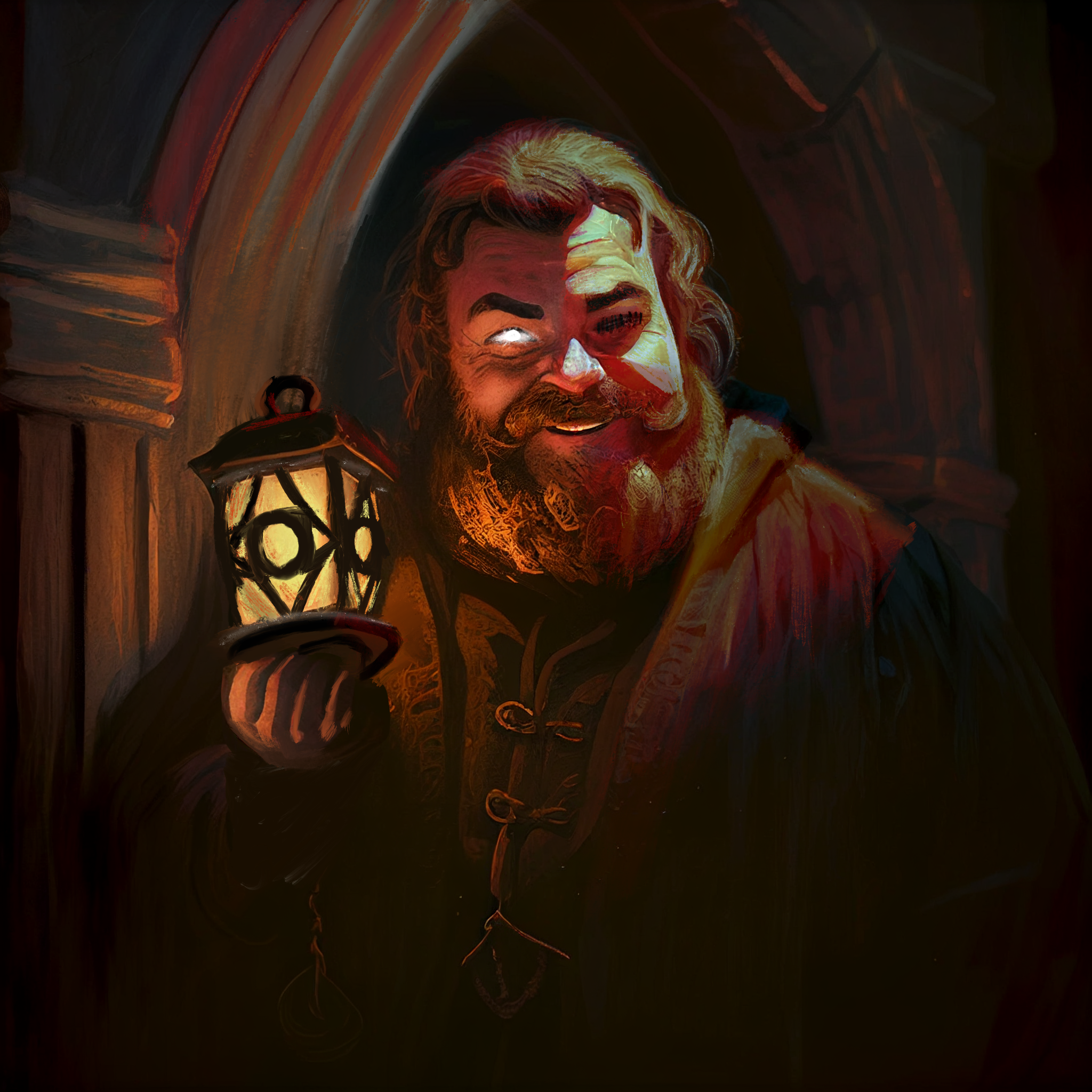
A lantern sometimes hanging from a pole, sometimes held up in an open hand. The white lantern is a symbolic representation of the comfort of death, it is said to be the source of the "Bright Light" some claim to see in their dying moments. Strongly associated with Selmater in his capacity as a guide for the dead.
The Grey Wolfhound
The chief psychopomp of Selmater, who is said to appear to the dying as a guide to the afterlife. The Wolfhound by legend is associated with the Wolves of Krenawyn, it is said that the wolfhound, known by various names, is one of her former wolves that turned tame to Selmater. In funerary practice, it is customary to leave an offering to the hound immediately after a body is interned or disposed. This offering is typically a fresh bone from a pig or ox, a bit of sausage, or other customary "dog treats".
Tenets of Faith
Selmater
Holidays
Selmanalia: The Four Feasts of Selmaater
Selmanalia is one of the most important and festive holidays celebrated on the Covenantal Calender.Relationships
Divine Classification
God
Religions
Church/Cult
Spouses
Siblings
Children
Eyes
One eye is blinded and covered with a patch or by his hand. The other is typically green, white or black.
Hair
Typically bald or closely shaven. As a dwarf his beard is black and woven with silken strands.
Skin Tone/Pigmentation
Commonly depicted as pale white or of ashen grey skin.

Comments