

The Western Continent
The Western Continent is a land of vast diversity and dramatic contrasts, stretching from temperate forests and broad plains to dense, ancient jungles older than recorded history. Its northern half, Westbroon, resembles a sweeping wilderness of rivers, swamps, plains, and redstone deserts, while its southern half, Tilçanhu, forms a humid, vibrant expanse of towering trees, forgotten stone temples, and ecosystems so dense and alive they often overshadow the civilizations living within them. The two regions are linked by trade routes, river networks, and long-standing cultural exchanges, yet their climates, magic, and histories have shaped them into profoundly different societies. Mystics speak of a leyline that runs the length of the continent, a pulse of natural magic that changes character as it flows from forest to desert to jungle.
The continent is known for extremes: storms that spawn over vast inland seas, jungle canopies so thick they blot out the sun, red deserts filled with whispering spirits, and ancient structures swallowed by vines or eroded by time. Here, nature is not simply a backdrop but a force that shapes the destinies of those who live upon it.
Geography
Westbroon
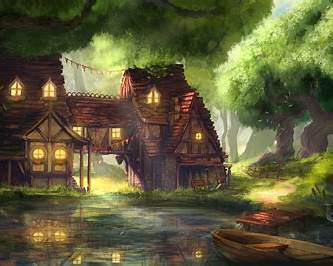
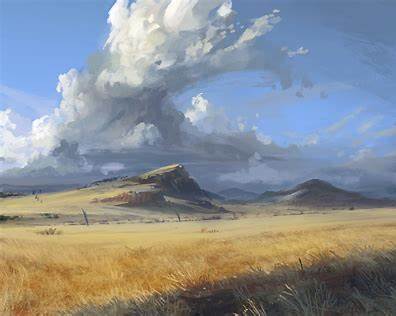
Westbroon spans the northern expanse of the continent and contains an enormous variety of terrain. To the east lie deep evergreen forests fed by massive rivers that carve their way from mountain foothills to the sea. In the south, fetid swamps and marshlands brim with life, from alligator-like beasts to ancient trees draped in silver moss. The western region breaks into cracked redstone deserts, sculpted by wind into towering arches and mesas, with hidden canyons that hold remnants of long-dead cultures. Between these extremes lie the Great Plains, sweeping grasslands where storms gather without warning and roll across the horizon like armies of thunder.
Tilçanhu
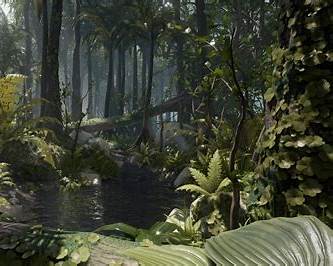
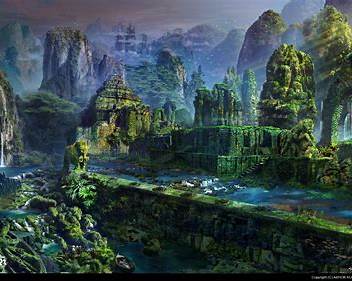
Tilçanhu dominates the southern half of the continent, a sprawling jungle realm with multiple layers of ecosystem stacked upon one another. Rivers twist through undergrowth so thick it seems to swallow the land whole. The central highlands rise into clouded ridges and sky-mountains, where ancient cities cling to cliffsides and terraces. Deep in the lowlands stand monolithic temples half-consumed by vines and time, some still whispering with the lingering presence of old serpent-gods. The air is heavy with humidity, magic, and the constant roar of unseen creatures.
Ecosystem
The Western Continent’s ecosystem mirrors its sweeping geography. In Westbroon, towering hardwoods, dense prairie grasses, and resilient swamp flora foster a wide variety of creatures, from herd beasts roaming the plains to apex predators that stalk both forest and marsh. As one travels south, the land transitions to Tilçanhu’s overwhelming biodiversity: carnivorous plants, glowing fungi, and colossal trees that host entire ecosystems in their branches. The jungles teem with creatures both mundane and fantastical — jaguar-like guardians, winged serpents, river spirits, and massive constrictors known in local lore as “the roots that move.”
Localized Phenomena
Localized phenomena further distinguish the continent. In Westbroon’s desert reaches, red dust storms known as Emberwinds can scour the land clean, sometimes revealing long-forgotten ruins beneath the sand. The Great Plains are famous for Skywhirls, towering columnar vortices of wind touched by elemental magic, said to be the restless spirits of ancient warriors. Tilçanhu, on the other hand, suffers from the Blooming: periods when magical energy saturates the jungle, causing plants to grow uncontrollably or awaken with predatory behavior. Sporadically, the leyline beneath the continent flares to life, resulting in shimmering mirages, floating stones, or sudden bursts of bioluminescence across entire forest valleys.
Climate
The climate ranges from temperate in the north to scorching and humid in the south. Westbroon experiences four seasons, with harsh winters in the forests and dry heat in the deserts. Storms are common across the plains, sometimes forming enormous supercells that sweep entire regions. Tilçanhu’s climate is marked by relentless warmth, heavy rainfall, and near-constant humidity, with monsoon seasons that turn rivers into temporary seas and make travel almost impossible.
Fauna & Flora
The continent’s flora and fauna are among the richest in the known world. Westbroon boasts great bison herds, marsh drakes, thunderbirds, and ironbark trees that resist both magic and flame. Tilçanhu contains an even greater variety of life, including luminescent orchids, medicinal herbs found nowhere else, colossal canopy beasts, jade-scaled serpents, and the elusive sky-mountain avians that glide between mist-wreathed peaks. Many species are sacred or feared, and some remain undocumented except in oral traditions.
Natural Resources
Natural resources vary dramatically across the continent. Westbroon provides timber, iron, coal, medicinal swamp resins, and rare redstone that is prized for its resonance in enchantments. Tilçanhu is rich in herbs, exotic woods, magical orchids, gemstones, and serpentine jade, a stone believed to carry protective magic. Gold, obsidian, and ceremonial metals lie buried throughout its ridges and ancient ruins, though mining them is perilous and often forbidden by local custom.
History
The Western Continent’s history is layered and complex. Westbroon’s earliest peoples lived as nomads who revered the storms and followed the migrations of massive herd animals. Over time, river kingdoms formed, building trade networks and forging alliances across the plains and forests. The red deserts hold remnants of an older age when an elemental cult or proto-civilization harnessed the power of wind and sand. Tilçanhu’s history is still deeper, shaped by serpent-worshipping empires, sky-mountain priesthoods, and jungle city-states locked in cycles of competition, reverence, and collapse. Earthquakes, blooms of wild magic, and cataclysms both natural and supernatural contributed to the rise and fall of countless societies. Today, the continent stands at a crossroads, as explorers, mystics, and merchants rediscover ancient paths — and disturb forces best left forgotten.
The Western Continent is a land of thunder and jungle, of rivers that remember their gods and deserts that whisper through the night. Every corner teems with life, mystery, and the remnants of civilizations swallowed by time.
Westbroon
Tilçanhu

Comments