

The Kurai
The Kurai
People of Iron Silence
(Ethnicity / Ancestry Overview Article)
The Kurai are a disciplined Wolfen people shaped by volcanic mountains, ancestral oaths, and a legacy of both honor and tragedy. Once the most elite warriors of the First Empire, they now live in exile upon their island homeland of Sukoku, forging a culture where silence carries weight, oaths bind fate, and the past is never forgotten.
Feared, respected, and often misunderstood, the Kurai remain one of the most influential societies in Arcasia—despite the isolation they imposed upon themselves after their failed uprising. Their culture blends rigid martial philosophy with an austere artistic tradition, creating a people who value restraint as deeply as they value strength.
Appearance
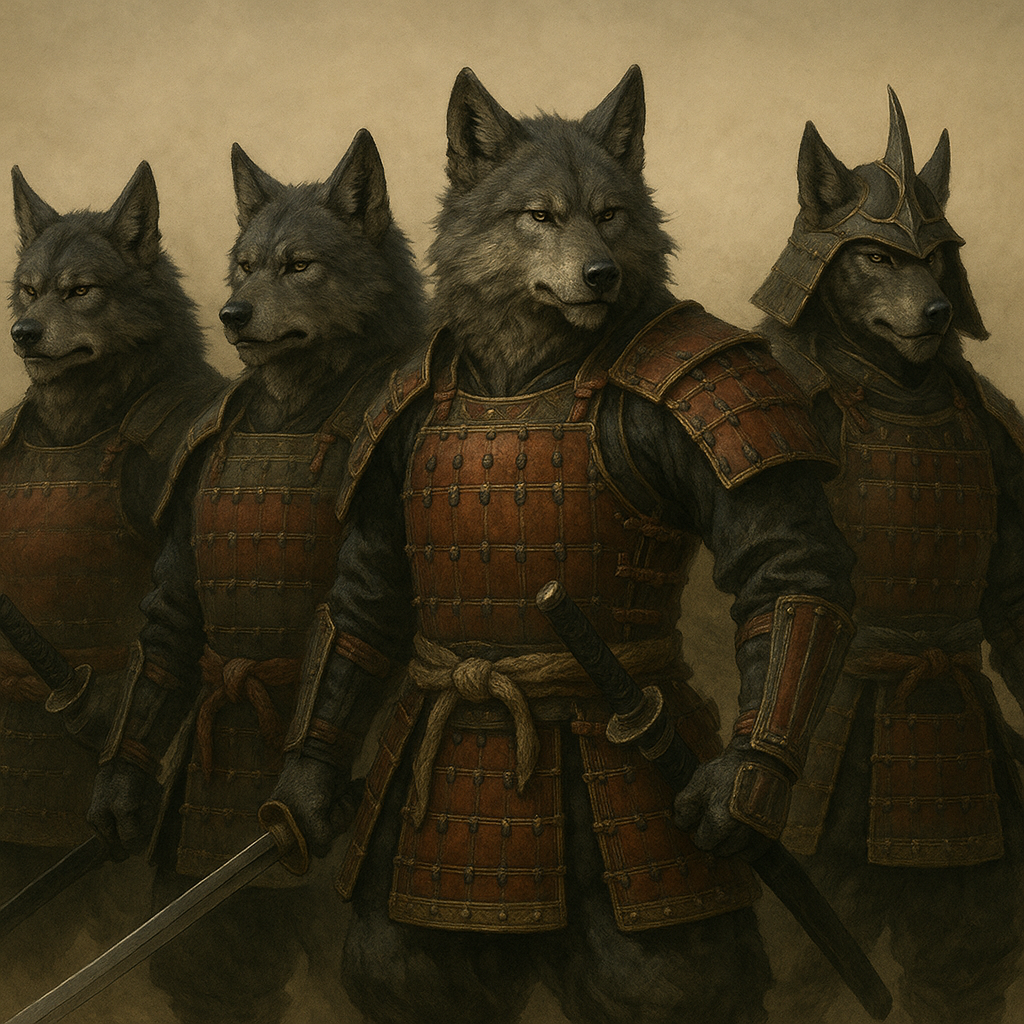
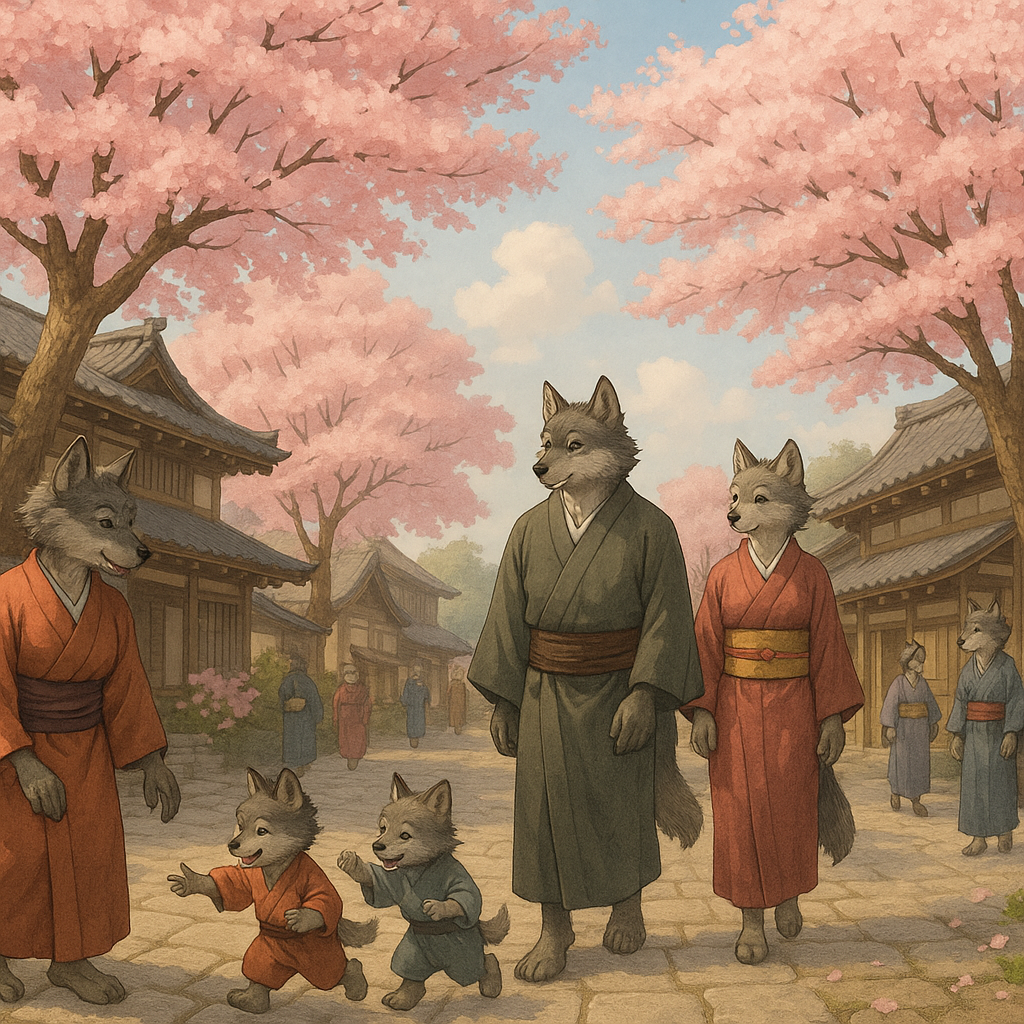
Kurai are Wolfen—tall, broad-shouldered, furred, and digitigrade, with keen senses and striking lunar-reflective eyes. Their posture and bearing are unmistakable: upright, poised, and controlled.
Many adorn their fur with clan markings, scar-ink patterns, or lacquered hairplates worn during formal duels.
Their gaze is often described as unsettling in its stillness, a trait attributed to their training in the Way of Iron Silence.
Origins and Identity
The Kurai trace their beginnings to Sukoku, a mountainous island west of Faenas. Life amid cold seas, volcanic stone, and predatory spirits forged a people who learned discipline not as philosophy, but as survival.
Over centuries they formalized this discipline into a cohesive cultural code—one that impressed early imperial explorers. The Empire later invited Kurai warriors into its service, beginning a long and complicated relationship that ultimately shaped both societies.
To be Kurai is to walk a path of precision, restraint, and inherited expectation. Every individual is a reflection of their clan, their ancestors, and the oaths they choose to swear.
Cultural Principles
The Way of Iron Silence
The philosophical heart of their culture.
Speech is measured. Emotion is tempered.
A Kurai speaks only after thought has been sharpened into clarity. This stillness is not stoicism—it is discipline. A warrior who governs themselves cannot be governed by impulse.
Oaths
All Kurai take a binding Oath upon reaching adulthood.
These determine duties, privileges, and one’s place within society.
Common Oaths include:
- Oath of the Blade (martial mastery)
- Oath of the Path (pilgrimage and enlightenment)
- Oath of the Clan (service and fealty)
- Oath of Exile (sworn after the failed Coup)
Oaths are sacred. Breaking one is a spiritual wound that follows the individual for life.
Clans and Hierarchy
Kurai society is structured around powerful clans led by Daisho—Blade-Lords and Blade-Ladies tasked with maintaining honor, upholding ancestral law, and training future generations.
Above them stands the Shogun of Sukoku, whose authority persists even in exile.
The Shogun’s rule is not absolute, however; it is shaped by centuries of precedent, rigid ceremony, and the ever-present weight of ancestral expectation.
Aesthetic and Martial Traditions
Despite their reputation for severity, the Kurai cultivate a refined artistic culture.
Crafts and disciplines include:
- Patterned calligraphy written in controlled, deliberate strokes
- Garden design emphasizing sparse beauty and meditative silence
- Forging of lacquered armor and single-edged warblades
- Ritual duels conducted under Selunvar’s full light
- Poetry, rarely spoken aloud, often carved into wooden tablets or stone
To the Kurai, beauty arises from control. Every gesture, stance, and crafted object is a meditation.
Relations with Other Cultures
Faenas and the Free Peoples
The Kurai Coup left wounds that have not fully healed.
Many mainlanders remember the uprising as betrayal rather than attempted salvation. Kurai travelers are tolerated, but rarely welcomed.
Chelonia and the Merfolk
Mutual respect exists between the disciplined Kurai and the arcane guardians of the sea. Their exchanges are rare, formal, and cautious.
Dwellomel
Dwarves and Kurai share a kinship in endurance and craftsmanship. While they differ greatly in temperament, they understand one another well.
Zareem
Desert-trained clans of Zareem resonate with Kurai discipline.
Occasional alliances form between the two.
The Shadow of the Coup
(Full event covered in its own article.)
Generations ago, the Kurai attempted to seize control of the Empire, believing discipline and resolve could restore a realm they saw as corrupt. The attempt failed. Many members of the imperial family died, and the Kurai were exiled to Sukoku.
Their society was reshaped by this defeat—more rigid, more introspective, more burdened by legacy.
To this day, mainlanders whisper the phrase:
“Beware the silent blade.”
The Kurai respond:
“Silence is not threat. It is memory.”
Kurai as Player Characters
A Kurai adventurer carries the tension of a people balancing honor and regret.
Common motivations include:
- Seeking redemption on behalf of their clan
- Proving themselves beyond the confines of exile
- Exploring their identity separate from ancestral duty
- Facing or fleeing the legacy of the Coup
- Acting as messenger, guardian, or wandering swordsage
Such characters bring discipline, inner conflict, and deep narrative weight to any party.
Daggerheart Ancestry Features
Top Feature — Lupine Instincts
Add +1 to Instinct rolls made to detect danger, track, or perceive hidden things.
Bottom Feature — Pack Coordination
Once per scene, when an ally within Close Range hits an enemy, you may move to engage that enemy.
If you enter Melee range this way, you gain +1 on your next attack roll against that enemy before the scene ends.

Comments