

Chelonia
For most of recorded history, Chelonia exists only as a scattering of tropical atolls — warm waters, coral reefs, and small island communities built atop the tallest remnants of a landmass that lies miles beneath the surface. To sailors, the Chelonian Atolls are little more than a remote archipelago, rich with fish and pearls but otherwise unremarkable. Yet legends persist everywhere across Arcasia: the “islands” are merely the peaks of a drowned continent, once home to flourishing civilizations whose grandeur rivaled any in the world.
Every three thousand years, during a rare celestial alignment, the ocean recedes and the entire continent rises from the depths for a single year. Rivers reform, jungles burst through the seabed, lost cities reemerge still draped in barnacles and coral, and forgotten structures glitter with encrusted treasure. This cycle has shaped myths, destroyed empires, and launched countless expeditions — both noble and ruthless. When Chelonia rises, the world changes with it.
For the brief year it stands above the waves, Chelonia becomes the greatest frontier on the planet: a land of mystery, opportunity, danger, and wealth beyond imagining. Scholars race to uncover history. Treasure hunters seek fortune. Kingdoms dispatch fleets to claim territory. And pirates swarm like sharks around every ship that dares to enter the newly resurfaced waters.
Geography
The Chelonian Atolls — The Peaks of a Drowned World
While submerged, only the highest mountain ridges remain visible as chains of coral-fringed atolls scattered across warm tropical seas. These islands are lush, humid, and rich with marine life. Their inhabitants navigate by stars and currents, build homes from driftwood and palm, and pass down ancestral knowledge about the year the “Great Shell” will return — a poetic name for the rising continent their forebears once called home.
When the continent rises, these atolls transform into towering highlands overlooking vast, newly exposed landscapes.
The Emergent Lands — A World Reborn
Once the waters fall away, Chelonia reveals sweeping coastlines, mangrove swamps reclaiming the former seabed, and dense jungles that grow with unnatural speed as sunlight touches ground unseen for millennia. Rivers carve new paths through layered sediment. Colossal stone structures, covered in coral, open like ancient wounds in the earth. Entire valleys filled previously with ocean become salt flats, deep basins, or freshwater lakes depending on how the waters drain away.
The continent is not stable — the land shifts, cracks, and heaves as it adjusts to the immense pressure changes of resurfacing. Some areas remain flooded, forming internal seas or labyrinthine marshlands perfect for pirates, smugglers, and hidden coves.
Ruined Cities of the Deep
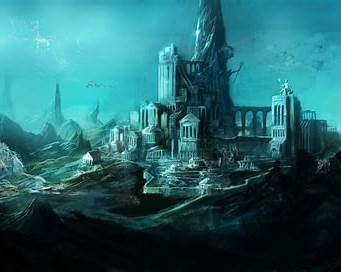
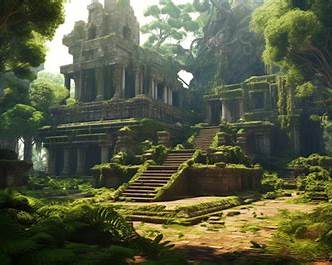
Throughout Chelonia lie the remnants of a lost civilization: temples half-collapsed under coral weight, towers stained by millennia of tides, and monumental statues eroded into haunting silhouettes. Streets of stone remain intact in surprising places, preserved by silt and dark water. Some ruins glow faintly due to endemic bioluminescent organisms that once fed on deepsea nutrients.
Treasure hunters are irresistibly drawn to these sites — but so are predators, hazards, and rival expeditions.
The Receding Sea
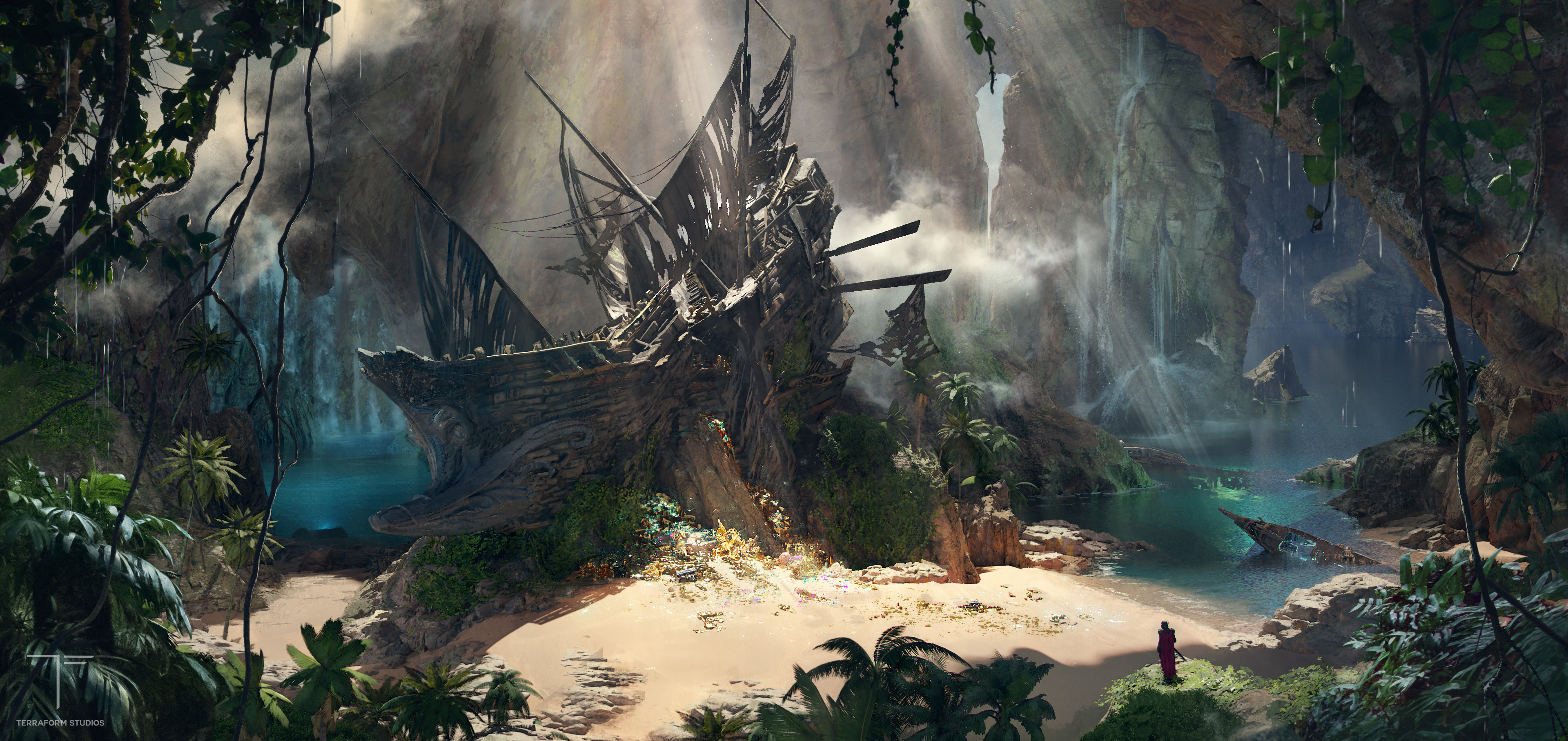
The coastline during the rise year is a shifting thing. Bays widen or shrink daily. Sandbars appear overnight. Entire ships have been lost simply because yesterday’s waterway became today’s mudflat. As the year progresses, the waters begin to creep back, slowly reclaiming lowlands and forcing adventurers to retreat toward higher ground or return to the sea before the final descent.
Ecosystem
Chelonia’s ecosystems are unlike any other in the world because they transform radically depending on whether the continent is submerged or risen. In its sunken state, marine life dominates: coral forests, massive sea turtles, reef serpents, and vast schools of brilliantly colored fish thrive where sunlight reaches only faintly. Some species have adapted to survive the rise year by burrowing deep into wet sand or entering long dormancy cycles.
When the continent ascends, plants erupt across exposed earth — hardy mangroves, salt-resistant grasses, and thick jungle growth that feeds on the nutrient-rich seafloor. Strange hybrid creatures prowl these new lands: amphibious predators emerging from ancient trenches, enormous crabs that scuttle through ruined plazas, and birds that migrate to feast upon the insects that hatch in explosive numbers.
The sudden change in environment creates ecological chaos. New niches open overnight, and old ones vanish just as abruptly. During the rise year, the continent feels wild, raw, and unstable — a place where the natural world is still figuring itself out.
Localized Phenomena
Chelonia is defined by upheaval. Earthquakes ripple across the land during the first weeks after rising. Caverns collapse as air replaces water. Enormous geysers erupt where trapped pressure finds release. In some places, trapped pockets of seawater explode upward, drenching entire valleys in sudden storms of brine.
The exposed seabed often holds strange hazards: quicksand-like mud, razor-sharp coral plains, and deep pits formed by collapsed trenches. Some areas release toxic gases long trapped beneath the waves, creating shimmering mirages or deadly fogs.
Ship navigation near Chelonia becomes treacherous. Currents shift wildly around the rising landmass, forming whirlpools and unpredictable tides. Piracy flourishes in this chaos — hidden coves, new channels, and temporary islands offer countless opportunities for ambush.
Weather also behaves oddly over the continent. The sudden presence of so much new land disrupts wind and water cycles, leading to sudden squalls, heatstorms, and abrupt shifts from blazing sun to lashing rain.
Climate
Chelonia’s risen climate is tropical, humid, and volatile. Temperatures soar in the newly exposed lowlands, which trap heat rapidly. Rainfall is heavy, especially in the early months when evaporating seawater fuels powerful storms. Inland jungles saturate quickly, creating rivers where none existed before.
Higher elevations — the former atolls — remain warm but breezier, offering the most stable climates for settlement or encampments during expeditions.
As the year progresses and the sea begins its slow return, the climate becomes even more unpredictable. Certain areas plunge back into wet conditions long before the final submergence.
Fauna & Flora
Plants grow explosively across the nutrient-rich soil of the exposed seafloor. Ferns, palms, and flowering vines appear almost overnight. Strange algae that once clung to coral now spread across the land, forming mats that glow faintly at dusk. In deeper regions, forests of towering kelp collapse onto the ground, creating tangled labyrinths that conceal predators.
Animals display remarkable adaptability. Sea creatures linger in flooded basins. Turtles and amphibious reptiles roam widely. Massive crustaceans occupy the ruins of ancient cities. Birds migrate from across the world to feast on insects that erupt in seasonal waves. And predators — both known and entirely new — take advantage of the chaos.
The top of the food chain includes reef-backed lizards, shark-like amphibians that lurk in brackish lakes, and colossal scavengers that feed on the remains of creatures stranded when the continent rose too quickly to escape.
Natural Resources
Chelonia is a treasure trove. The rising continent exposes rich mineral veins, ancient vaults, and artifacts untouched for millennia. Corals hide pearls of extraordinary size. Ruined vaults contain relics from the vanished Chelonian culture — stone tablets, metalwork, gemstones, and lost technologies or mysteries.
Timber from rapidly growing sub-tropical forests becomes invaluable during the rise year, though difficult to harvest safely. Salt flats, mineral deposits, and rare biological specimens draw scholars and merchants alike.
Most valuable of all, however, is the simple fact of novelty: everything in Chelonia is temporary. Anything left behind will be swallowed by the sea when the year ends.
History
The original Chelonian civilization vanished long before contemporary nations existed. Legends speak of a powerful people who mastered both land and sea, whose monuments rivaled those of any surviving culture. Their downfall remains the subject of debate: catastrophe, hubris, or slow decline under rising waters.
Recordkeepers across Arcasia maintain timelines of past risings. Every appearance of Chelonia has shaped global history — sparking wars, fueling golden ages, destroying fleets, and tempting countless adventurers to their doom. Entire dynasties in Faenas, Dwellomel, and Zareem have risen or fallen based on the wealth extracted from the sunken continent.
The current age approaches yet another rising, and the world prepares. Empires gather ships. Scholars dust off ancient charts. Smugglers sharpen daggers. And pirates, more than anyone, anticipate the chaos — for the rise of Chelonia is their greatest season.

Comments