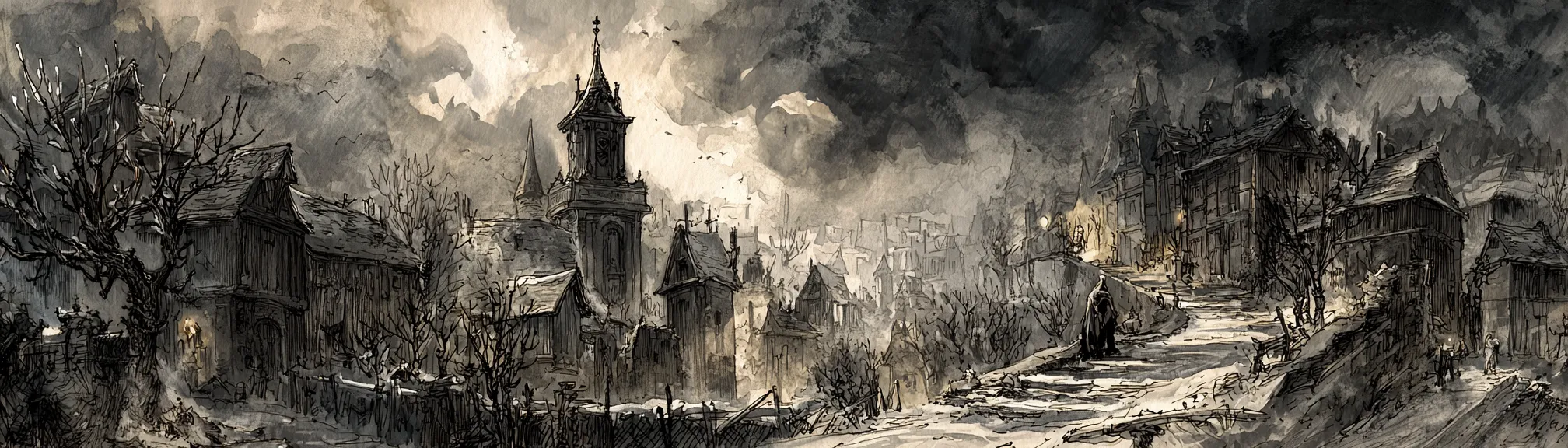
The Black Frost of Bridgeport County


GM-Info!
Work in progress!
Slightly NSFW!
FEATURED
The Frost That Stung.
Every generation in Bridgeport preserves a few nights in its memory. The Black Frost was several of them in a row. Winter's cold came in like a taxman and did not leave when paid. The frost that formed was not the familiar silver filigree of honest winter but a matte, light-drinking rime the colour of soot, coating stone, wood, slate and skin with equal indifference. It moved without wind, muffled sound and drew heat from hearths until flames cowered low and blue. By morning, orchards stood as if lacquered in black shellac; by the second night, panes burst outwards; by the third, the city knew it was living through something that would insist on being remembered.
Bridgeport names its tragedies plainly. The name "Black Frost" stuck because no poet had the breath to make it prettier.
Details
Those who were there insist the first sign was not cold but quiet. Street cries dwindled to whispers that seemed ashamed to travel; the bell of Saint Celandine gave three dull thuds and would ring properly only months later after being rehung. Rime crept across cobbles with a slow, almost deliberate advance. It did not glitter. It did not catch lantern light. It swallowed it. In the harbour, mooring ropes went rigid and snapped with a dry pop. Fish floated belly-up beneath a lid of thin, smoky ice, as though the sea had taken a deep breath and held it too long. In Honeywell, hedges drooped under a black glaze, the roses sealed in perfect, breathless prisons. The villa windows of the leisure set showed silhouettes moving briskly between rooms, carrying kettle to brazier to fireplace, none of it helping very much. In Pigtown, pipes split; in Harehall, the snow turned a sort of dead grey where the frost settled deepest; in the workshops upriver, carefully kept thermometers gave readings that scholars still argue over because the bulbs themselves went opaque. People were marked by the frost. Some were kissed by it lightly and kept only a memory of pins and needles. Others suffered "frostburn" - dark, leaf-shaped scars that never wholly faded, as if a winter leaf had pressed itself into their skin. A few who breathed the night air too greedily developed the Quiet - weeks where their voices would not carry more than a few feet, no matter how they shouted.
- The Black Frost was not merely cold; it was a hunger for heat.
- It moved along edges such as lintels, eaves, rope fibres, leaf veins, and hair, gaining traction where the world grew finer.
- It reacted poorly to fire but very well to salt, sound, and running water.
Ongoing Aftereffects
The county did not thaw evenly. It still hasn’t.
In the low meadows beyond the city, there are patches called Deadshine - acres where the grass grows with a dull, waxy sheen and the morning dew never quite sparkles. Cattle avoid them. Kids dare each other to cross them at dawn, squealing that the air tastes like nails. Orchardists learned new pruning: any branch showing the Black Line - an inner ring that drinks lamp-glow - must be cut in high summer and burned with brine in the flame. Those who ignored this advice lost whole trees to a slow internal winter.
Masons speak of frost-rot. Mortared seams that looked sound go soft under a finger, but only on north-facing walls and only when the air falls still. The city has an unlovely new profession - seam-tappers - who go street by street listening to brickwork with little bone hammers and chalking crosses where the rime left a hidden bruise.
The harbour learned to whisper. Even in mild weather, there are pockets by the piers where voices refuse to carry far. Dockhands mark them with scraps of red cloth so orders are given on either side of the hush. The Wharfmaster’s ledger lists three vessels lost not to storm but to "calm of an unnatural and smothering sort", as if the sea itself laid a blanket over the crew’s breath.
In kitchens and taverns, folk keep a saucer of salted water on the sill in deep winter. The superstition is new enough to remember its birth and sensible enough that even scoffers follow it. The good people of Honeywell still schedule winter galas around the Harbour Board’s Hush-Night Bulletins, which warn of fog banks "exhibiting damped acoustics". No one calls them frost warnings. The city refuses to invite that guest by name.
Commerce changed course. Glassmakers learned to temper panes with a web of hair-thin latticework - uglier to the eye, but less likely to shatter should the frost take a liking to them. Chimneywrights began lining flues with a new mixture that sweats a little brine when the draught falls strange. The beekeepers of the county suffered badly the first year; hives went still even under wind-tight wraps. Those beekeepers who persisted developed the practice of "singing the hives", which involves humming a low, sustained tone each dawn for a minute or two through the lid; they swear that the practice keeps the clusters lively on the worst days. Whether the bees agree is hard to ask, but the honey returned.
Magically inclined citizens note smaller oddities. Certain spells, especially those that push warmth or voice, stumble near old frost grounds as if the air holds its breath and refuses to help. Diviners who read by breath on glass have taken to using polished tin instead. A handful of folk bear enduring marks: breath that shows even on the warmest days, hands that leave faint dark prints on cold panes, and voices that are strong indoors but fall strangled in fog. Bridgeport, never a city to waste experience, made place for them - some are employed to test for bad nights simply by stepping out and speaking a line of verse. If the rhyme dies early, shutters are closed and kettles set to boil.
The law kept pace. After the second winter, the Council codified the Salt and Sound Ordinance, permitting citizens to scatter brine on steps and maintain public wind chimes even in the hours when noise ordinances once held sway. Bells were rehung in pairs: a bright, ringing bronze and a duller iron. On certain nights, both are rung together, the twin tones said to keep the rime from finding purchase on lintel or lace.
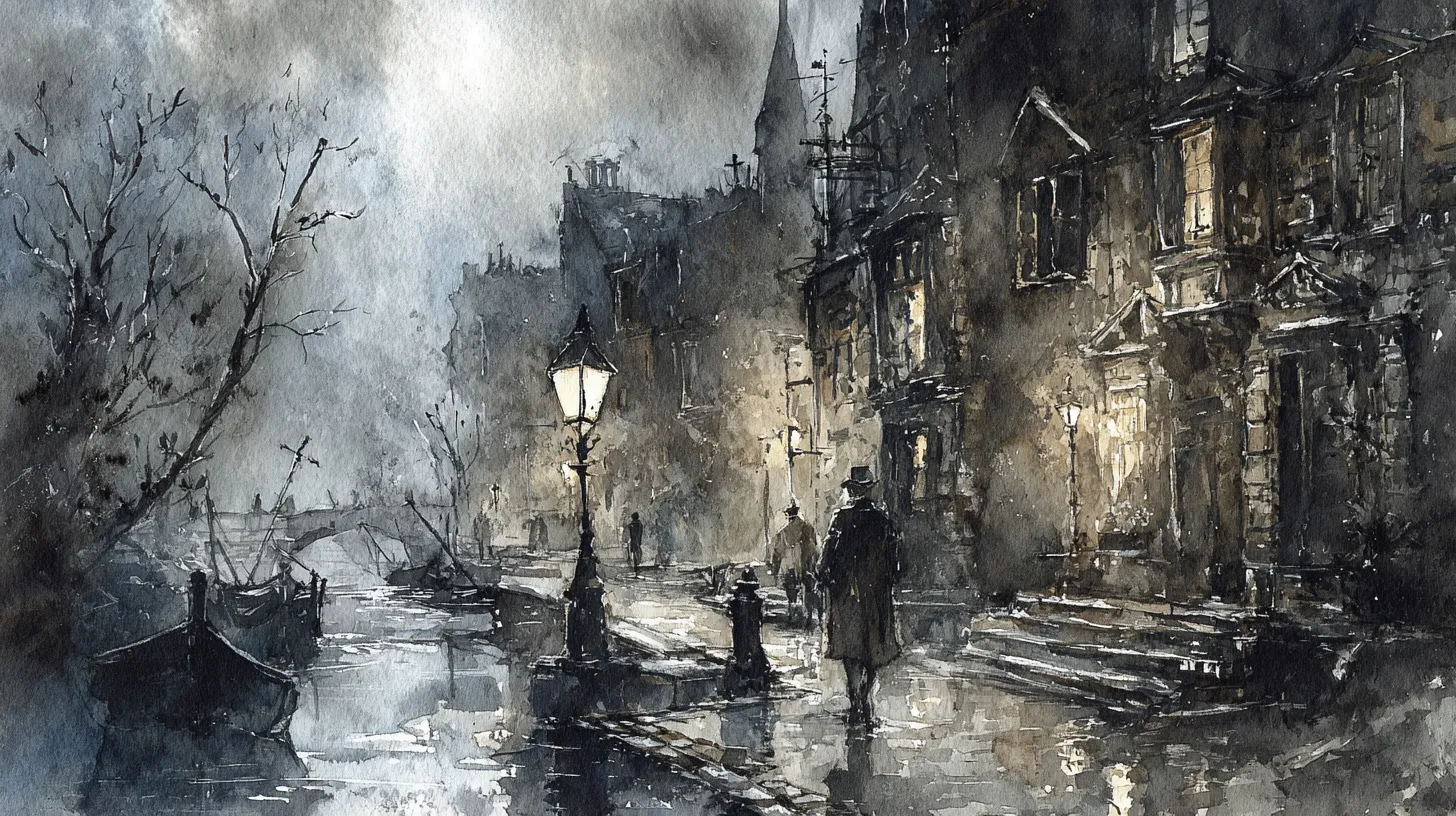
Black Frost by Tillerz using MJ
Memory and Meaning
The Black Frost stitched itself into culture the way a scar becomes part of a face. Children learn the rhyme about the year the frost came black. The winter market sells cheap glass charms - little frozen teardrops darkened with soot and varnish - which every grown-up knows are a bit tasteless, but everyone buys anyway. A generation of songs runs quiet in the middle eight as a sort of tribute. The Good Time Society held a series of night lessons that winter - lectures on science and sensible preparedness dressed in good wine and flattering candlelight - and the habit of making mutual aid look fashionable has never left them.
There is, inevitably, debate. Some scholars argue the event was a natural confluence of cold, soot and sea mist, an "unfortunate but ultimately mundane concatenation". Others insist the city brushed its hem against a deeper fabric - that the frost was weather from an adjacent place, a pressure wave from rituals performed unwisely, or a tired world crossing a snag in its memory. Most citizens, being pragmatic, hold two thoughts at once: it was both a winter and a warning.
When the moon is small and bright,
Cold feet tiptoe through the night.
Close the shutters, light the glow,
Keep it warm so breezes go.
Ring the bell, let voices play,
Sing a song to chase the grey.
Morning comes, the chill will flee,
Warm hearts keep us safe and free.
Cold feet tiptoe through the night.
Close the shutters, light the glow,
Keep it warm so breezes go.
Ring the bell, let voices play,
Sing a song to chase the grey.
Morning comes, the chill will flee,
Warm hearts keep us safe and free.

Fascinatingly chilling.