Generator - Murder Mystery


GM-Info!
Work in progress!
Slightly NSFW!
FEATURED
Also see the Creature Generator.
A murder mystery takes place in the dark halls of a medieval fantasy world, where danger hides in every corner and every whisper may conceal a lie. At the centre is a riddle: a brutal, planned killing that upsets the fragile peace between powerful noble families, secret guilds, and strange magical forces. The tale mixes dark magic, political schemes, and personal grudges, pushing both heroes and villains to uncover the killer before more blood is shed. In this land of swords and sorcery, the truth is hard to find, and every clue could lead to trickery or betrayal, making the search for justice a dangerous path through a world of shadow and light.
- Work through the tables in order (top to bottom).
- Sometimes roll randomly to let chance decide.
- At other times, select manually to ensure an entry fits with the developing story (especially when one table’s results should complement or reinforce earlier choices).
- Reuse tables as needed.
- A table doesn’t need to be used just once.
- You may return to the same table multiple times if a suspect has more than one quirk, odd habit, item, or clue attached to them.
- Build the plot progressively.
- As you fill out results from the tables, start piecing together the murder plot.
- Adjust your choices so that the various details (quirks, pocket contents, habits, suspicious items, relationships) begin to interlock into a coherent mystery.
- Create a time table of events.
- Once the core murder plot feels clear, map out a chronological sequence of what happened:
- Key moments before the murder (suspects’ positions, confrontations, suspicious activity).
- The murder itself.
- Events immediately after (e.g., discovery of the body, someone taking the chance to steal valuables or even clues, false alibis emerging).
- This timeline serves as the backbone of the mystery for the players to unravel.
Key Elements of a Murder Mystery Story
The Murder
Central to the story - the crime typically happens at or near the beginning and sets everything in motion. The nature of the murder, its location, and method are all key details. A list of sample locations see in the Appendix.The Victim
Details about the murdered victim. This list can be used in two ways: 1. Who has been found dead on the crime scene? 2. Who is the person actually? 1d42- Body of victim not found, only clues or eye witnesses point out there was a murder
- Actor, playwright, or theatre impresario
- Alchemist, potion-wright, or glass-blower of philters
- Artificer, clockmaker, or gnomish inventor
- Butler, house-steward, or majordomo
- Caravan master, spice factor, or desert guide
- Cartographer, surveyor, or relic-hunting antiquarian
- Duckfolk explorer
- Esteemed mage, scholar of the arcane, or wizard
- Estranged noble kin or banished clan member
- Falconer, stablemaster, or gamekeeper of a great estate
- Fence, blackmailer, or underworld fixer
- Harbourmaster, river pilot, or ship's captain
- Healer, herbalist, or apothecary
- Heir to a noble estate or princely domain
- High priest, abbess, or temple hierophant
- Innocent village commoner or wandering traveller
- Lady's maid, valet, or discreet manservant
- Magistrate, judge, or city bailiff
- Minstrel, bard, or court musician
- Moneylender, banker, or guild treasurer
- Monk, archivist-scribe, or cloistered illuminator
- Necromancer, warlock, or forbidden-arts scholar
- Outcast hermit, exiled druid, or lone mercenary
- Reformed brigand, ex-bandit, or outlaw
- Regent, lord, or member of the royal court
- Renowned knight, royal favourite, or celebrated adventurer
- Retired knight, war veteran, or former commander
- Royal cook, poison-taster, or master of the kitchens
- Sculptor, painter, or court portraitist
- Secretive guild partner or shadowy trade merchant
- Spouse of a noble, betrothed, or court consort
- Spy, royal courier, or masked informant
- Street urchin, chimney-sweep, or quick-fingered pickpocket
- Tax collector, excise officer, or tithe reeve
- Town crier, scribe, or chronicler
- Town guard, city watchman, or castle sentinel
- Unknown wanderer, mysterious ranger or shadowy stranger
- Village merchant, innkeeper, or blacksmith
- Wealthy patron, landholding noble, or prominent lord
- Young page, apprentice squire, or novice mage
- Zealous faith preacher or temple advocate
Cause of Death
This list can be used in two ways: 1. What was the actual cause of the victim's death? 2. What does the death look like before all the clues have been found/investigated? 1d40- "Hunting accident" concealing deliberate murder
- Asphyxiation in a collapsed tunnel, cellar, or crypt
- Battlefield casualty during siege, war, or skirmish
- Buried alive under cairn, rubble, or quicklime
- Burned by dragon's breath, salamander, or fire elemental
- Clandestine political assassination disguised as an accident
- Crushed by falling chandelier, portcullis, or cargo net
- Death by duel of wits turned lethal through enchantment
- Death caused by attack from wild beast or supernatural creature
- Death caused by catastrophic failure of magical or alchemical experiments
- Death during heist or burglary gone awry
- Death in self-defence during violent confrontation
- Death inflicted by a malevolent curse or dark sorcery
- Death resulting from torture or prolonged suffering
- Death through a trial by ordeal, witch test, or divine judgement
- Deliberate and premeditated assassination
- Drowned in a barrel, vat, or cistern (no river required)
- Execution by royal decree, vigilante justice, religious tribunal, or lynch mob
- Exsanguination for blood-magic, leechcraft, or vampiric feeding
- Failed assassination: assassin perishes and intended victim escapes
- Fatal accident or unintended mishap (eg. victim may have been clumsy, drugged, drunk, misguided, performing a dare)
- Fatal illness, plague, or contamination of water supplies or food
- Fatal outcome of a judicial duel or trial by combat
- Frozen solid by winter sorcery or rime-spirit
- Heart stopped by banshee wail, killing song, or fear-hex
- Lethal miscast backlash from a stolen spell or wand
- Petrified to stone (gorgon, basilisk, or curse)
- Poisoning disguised as fever or "bad shellfish"
- Premeditated assassination resulting in the wrong target's death
- Pushed from a high stair, gallery, or clock-tower
- Ritualistic or honourable suicide
- Soul torn free by pact, wraith, or cursed mirror
- Starvation or death by thirst
- Suffocation by smoke during a conveniently timed blaze
- Trampled in festival crush, riot, or panic at a spectacle
- Victim didn't die, but is enchanted, cursed, or drugged
- Victim didn't die, it is a doppelganger or a fake body with false evidence (eg. cover-up to flee with a beloved, from prosecution, or debt)
- Victim sacrificed in occult ritual or by secret cult
- Victim slain elsewhere and body moved via teleport, portal, or cart
- Victim slain long ago; body animated to obscure true time and cause
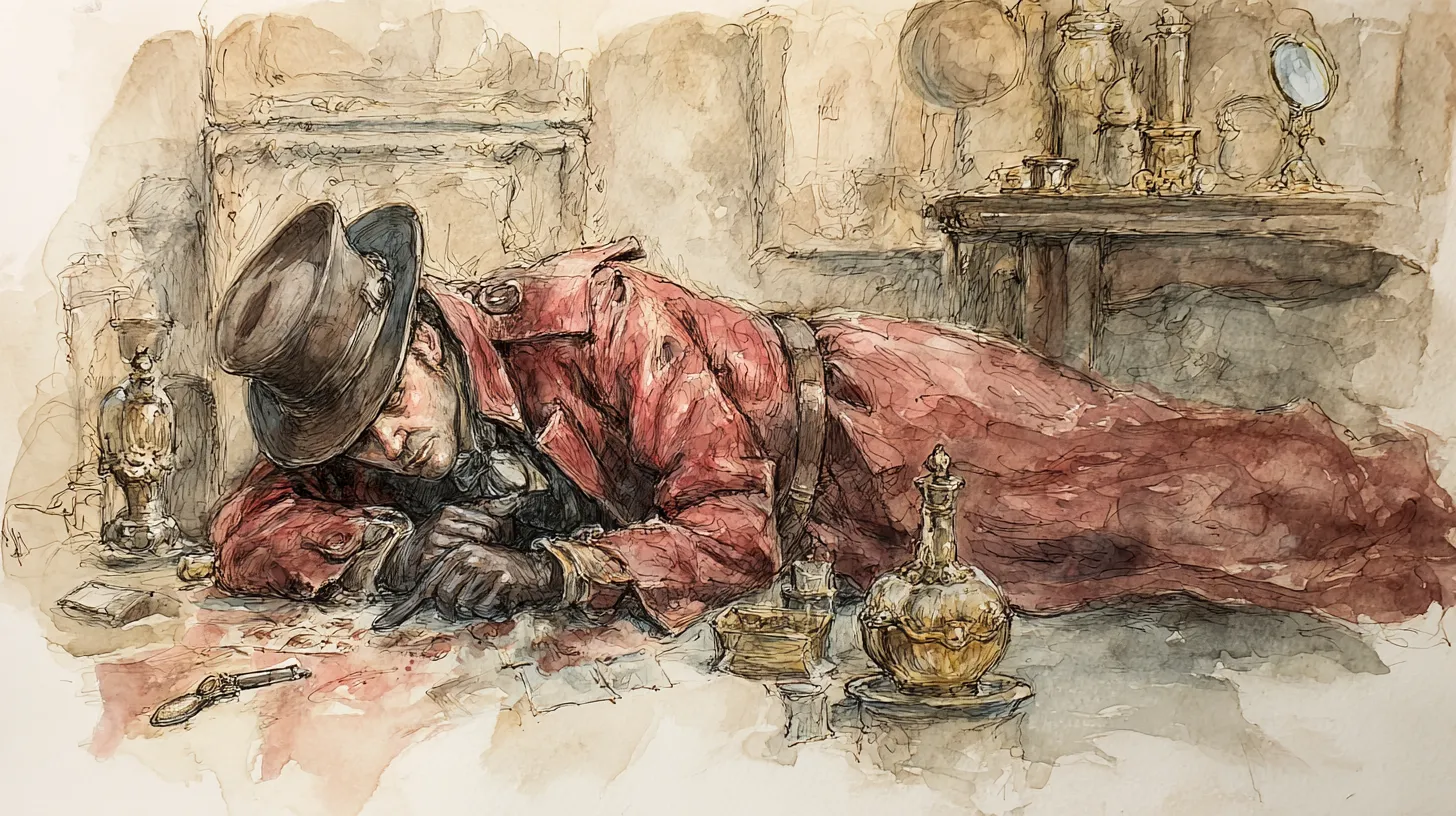
Investigator by Tillerz using MJ
Who could have a motive for the murder
| Type / Role | Connection to Victim | Motive (why) | Notable hint |
|---|---|---|---|
| Actor | Lost a role | Career spite | Mask straps cut and re-tied |
| Alchemist | Formula seized | Profit and prestige | Unlabelled vials matching residue |
| Artificer | Patent challenge | Monopoly on design | Filing swarf from stolen part |
| Assassin-for-hire | Contracted by another | Coin and reputation | Receipt mark from a known broker on glove lining |
| Banker | Risky loans exposed | Avoid ruin | Collateral deed altered after hours |
| Bard | Replaced at court | Humiliation | New ballad vilifying the victim |
| Bastard heir | Disinherited by silence | Recognition or inheritance | Birth token hidden in a locket |
| Blackmailer | Mark fought back | Control and coin | Threat note in neat block letters |
| Brewer / vintner | Adulteration reported | Trade at stake | Bitter almonds in the bin, but 'no marzipan baked' |
| City watch captain | Bribes exposed | Keep the rackets going | Confiscated goods without receipts |
| Clerk | Auditor on their trail | Hide forged accounts | Two inks on the same signature line |
| Competitor (merchant) | Rival in trade routes | Seize contracts and clients | Duplicate shipping docket prepared in advance |
| Corrupt magistrate | Named in a complaint | Silence a witness | Draft warrant with the accuser's name pre-filled |
| Courtier | Blocked promotion | Remove an obstacle | Seating chart with the victim's name crossed out |
| Falconer | Illegal baits exposed | Keep employment | Pouch with contraband lure |
| Fence | Buyer named in print | Keep silence | Receipt written to a false name matching them |
| Foreman (docks) | To be sacked | Save position | Tidebook rewritten in different hand |
| Forger | Exposed by the victim | Self-preservation | Trial plate with the victim's signet |
| Gamekeeper | Poaching accusation | Keep his post | Snare wire coil with fresh cut |
| Guild enforcer | Took orders from above | Payment for a job | Purse fat with unfamiliar coin |
| Guild master | Opposed reforms | Power and precedent | Minutes of a vote with names scratched out |
| Harbourmaster | Licence dispute | Kickbacks threatened | Back-dated permit in desk drawer |
| Healer / apothecary | Quack cures exposed | Avoid sanction | Shelf gap where "quick sleep" should be |
| Hedge witch | Accused of harm | Fear of trial | Charm-bag with the victim's hair |
| High priest | Doctrinal dispute | Authority challenged | Sermon notes naming the victim obliquely |
| Jealous spouse | Domestic conflict | Possessiveness or inheritance | Ring indentations on a bruised wrist |
| Librarian / archivist | Denied access | Vengeance over status | Key impression pressed in wax |
| Lighthouse keeper | Paid for "thicker night" | Cover for a job | Logbook gap at second bell |
| Mason / engineer | Shoddy work unveiled | Avoid penalties | New pins in an old hinge they "repaired" |
| Menagerie keeper | Licence threatened | Save the show | Cage lock filed to open with any key |
| Messenger | Caught tampering | Silence the complainant | Opened letter expertly re-waxed |
| Minstrel / busker | Turf dispute | Coin and corner | Knife nick matching their busking stool |
| Moneylender | Held the victim's note | Debt erased by death | IOU stamped "paid" the morning after |
| Noble rival | Land boundary feud | Titles and rents | Survey stakes moved at night |
| Physician | Lost patient to victim's advice | Professional jealousy | Casebook page removed |
| Playwright / satirist | Lampooned in return | Pride wounded | Script page torn at their entrance |
| Rival investigator | Beaten to a big case | Career and fame | Anonymous broadside impugning the victim |
| Rival patron | Lost beneficiary | Social dominance | Donation list with victim struck through |
| Scene-master | Owed wages | Retaliation | Counterweight line retied wrong |
| Scribe / tutor | Publicly corrected | Pride and poverty | Copybook full of the victim's name practised |
| Servant | Dismissed or mistreated | Revenge and back pay | Master key missing from the ring they once held |
| Ship's captain | Fined by testimony | Revenge and livelihood | Logbook page neatly razored out |
| Smuggler | Reported by the victim | Eliminate the informant | Secret mooring token in pocket |
| Spice factor | Under-weighed sacks | Profit protected | Seal-stamps for two different houses |
| Spurned lover | Relationship ended | Humiliation turned violent | Bundle of returned letters tied with cut ribbon |
| Stablemaster | Sabotage alleged | Avoid dismissal | Saddle girth shortened and re-stitched |
| Steward / factor | Managed the victim's estates | Hide embezzlement | Two ledgers: "public" and "private" totals differ |
| Tax collector | Target of scrutiny | Remove an accuser | Forged exemptions bearing fresh wax |
| Teamster boss | Short weights exposed | Protect the ring | Lead-drilled weights in cart |
| Zealot acolyte | Inflamed by preaching | Fanatical "cleansing" | Ash-smeared poppet found in cell |
Suspect(s) / Perpetrator
A cast of characters, each with motives, means, and opportunities to commit the crime. Their interactions and secrets drive the narrative forward and supply red herrings. This list can be used in two ways: 1. Roll several times to create a list of suspects due to being at the location (seen by eye witness, evidence point to them). 2. Roll once to find the actual perpetrator. 1d40- Alchemist, artificer, or gnomish inventor with volatile means
- Bitter rival knight or duelling adversary
- Bodyguard, man-at-arms, or mercenary sworn to the wrong oath
- Butler, steward, or estate factor with keys to every door
- Corrupt magistrate or city official
- Court jester, actor, or impresario masking malice as mirth
- Debt-ridden gambler or tavern frequenter
- Disgruntled bard or artisan
- Disgruntled servant or squire
- Estranged sibling from rival noble house
- Experienced con artist or trickster
- Former betrothed or jilted lover
- Former outlaw or bandit recently released
- Fortune-teller, witch, or hedge-magus selling “advice”
- Friend coerced by dark magic or magical threat
- Greedy heir to a fiefdom or estate
- Guild enforcer, teamster boss, or strikebreaker with a cudgel
- Harbourmaster, pilot, or ship's master entangled in tariffs
- High priest, zealot acolyte, or temple inquisitor
- Illegitimate heir, foundling, or adopted child with a claim
- Innkeeper, tavern host, or vintner who overhears too much
- Jealous noble spouse or betrothed
- Lady's maid, valet, or dresser guarding lethal confidences
- Local thief, highwayman, or brigand
- Moneylender, banker, or guild treasurer with silent ledgers
- Mysterious wanderer, mercenary, or exiled mage
- Necromancer, warlock, or cult adherent cloaked in piety
- Overprotective parent of a noble offspring
- Physician, barber-surgeon, apothecary, or chirurgeon
- Rival guild master or merchant competitor
- Rival investigator, town watch captain, or inquisitor
- Rival suitor, jealous patron, or patroness spurned
- Royal spymaster, informer, or black-hood agent
- Secret lover from a forbidden class or rival house
- Shady duckfolk wizard
- Shape-shifter, glamour-caster, or illusionist wearing a face
- Smuggler, fence, or dock foreman with cargo to hide
- Tax collector, excise man, or tithe reeve with many enemies
- Troubled apprentice or young page
- Tutor, archivist, or librarian privy to forbidden texts
Motive
Every suspect should have a reason ("why"). 1d41- Accident concealed to protect reputation or office
- Ancient family feud reigniting
- Attempt to get the investigator into trouble
- Blackmail involving magical or political secrets
- Breaking an oath or forbidden love
- Cover-up of scandalous parentage, affair, or heirship
- Covering dark secrets or forbidden magic
- Desperation caused by famine or war
- Escaping crushing debt, usury, or guild penalties
- Extortion or blackmail spiralling into murder
- Fear of prophecy naming the victim a future tyrant
- Financial gain through usury or theft
- Gaining inheritance or rising social class
- Greed for a rare artefact, spellbook, or relic
- Greed for land, titles, or treasure
- Greed masked as charity - killing to redirect endowments
- Hatred fuelled by clan or guild rivalries
- Jealousy over a noble or romantic favour
- Mental instability or cursed madness
- Misguided "mercy killing" prompted by false diagnosis
- Mistaken identity in feuding factions
- Obedience to patron demon, fae, or capricious deity
- Political framing to topple a rival house or official
- Political power struggles between houses
- Possession by spirit, artefact, or curse twisting will
- Preventing a peace treaty, merger, or marriage alliance
- Preventing exposure of magic or betrayal
- Preventing exposure of treason, heresy, or forbidden rituals
- Professional jealousy in the arts or crafts
- Professional rivalry over commission, stage, or discovery
- Protecting lineage or heirs
- Protecting personal or family honour
- Protection of secret identity (spy, cultist, or royal bastard)
- Religious zeal, prophecy, or fanatic interpretation of doctrine
- Revenge for a dishonoured family
- Revenge for a past war, crusade, or fight
- Revenge for abuse, exploitation, or broken apprenticeship
- Securing silence about illegal trade, smuggling, or slavery
- Self-defence against a dangerous foe
- Silencing a whistle-blower or troublesome witness
- To inherit a curse into a hated rival's line
Means
"How" was the murder committed? A list of sample murder weapons see in the Appendix. 1d41- "Accidental" push into kiln, glassworks, or lime pit
- Arrow or crossbow bolt
- Attack by trained war animal or beast
- Bewitched food at feast, wake, or holy day
- Blowpipe dart, thorn, or spine tipped with paralytic
- Blunt trauma from mace or club
- Booby trap in castle or dungeon
- Clockwork device set to strike at the hour
- Collapsing ceiling, chandelier, or stage rigging
- Dagger or short sword stabbing
- Dismemberment after ritual sacrifice
- Dosed incense, brazier fumes, or censer smoke
- Drowning in well, river, or moat
- Drug overdose through magical potions
- Electrocution via enchanted artifacts
- Enchanted music (heart-stopping chord, siren lullaby)
- Explosion of alchemical concoctions or magical blast
- Exposure to curses or dark magic
- Exposure to freezing elements or cold magic
- Falling from castle battlements or cliffs
- Fire or torch arson
- Freezing charm, rime-blade, or ice-slicked step
- Garrotte, silk sash, or rosary cord
- Hexed coin, letter, or book that curses on touch
- Horse riding accident or fall from tower
- Medical malpractice by inexperienced healer
- Mirror, portrait, or lens that drinks the soul
- Petrifying gaze redirected by polished shield or glass
- Pierced by a frozen duck
- Poison from rare herbs or alchemical mixtures
- Poisoned ring, needle, hairpin, or cuff-stud
- Runic trap etched on threshold, chest, or handrail
- Sabotaged carriage, harness, or stair baluster
- Starvation or sabotage of food supply
- Strangulation with cord or bare hands
- Suffocation in confined space
- Summoned elemental, bound demon, or animated statue
- Tainted wine, sugared fruits, or doctored communion cup
- Tampered armour buckle, saddle girth, or lifeline
- Tethered war-beast slipped at a signal
- Trap door, oubliette, or secret chute to water
Opportunity
"When" was the murder committed? This list can be used in two ways: 1. To explain why a suspect has been at the crime scene (or what they would say when asked). Note: if the murder happened during a masked ball, the opportunity would probably be fixed "Attending a social event or gathering" for all suspects and not be rolled for. 2. Why they were actually at the crime scene (everyone can have another hidden cause why they were at the crime scene). 1d40- Attempting to retrieve stolen goods or valuable item
- Attending a social event or gathering (feast, festival, market)
- Bath-house, steam-rooms, or healing wards with privacy
- Being forcibly brought or kidnapped by others
- Blackout: lanterns doused, wards falter, or fog rolls in
- Busy market day, livestock fair, or harvest moot
- Carriage ride, canal barge, or ferry crossing
- Changing of the watch, bell-ringing, or curfew confusion
- Changing rooms, armoury, or wardrobe confusion
- Conducting secret or clandestine meeting
- Confessional, seance, or divination sitting
- Court hearing, proclamation, or tax inspection
- Delivering or receiving a message or parcel
- Engaging in an argument or dispute with the victim
- Errand to fetch medicine, relic, or charter seal
- Fireworks, parade, or tourney noise covering the deed
- Following or spying on another character
- Harbour fog, spring tide, or lock rotation
- Hiding from an enemy or bounty hunters
- Hunt in the royal preserve or boar-drive
- Hunting or trapping in nearby woods or fields
- Investigating a previous crime or strange occurrence
- Investigating suspicious sounds or rumours
- Library, archives, or scriptorium after hours
- Masked ball, masquerade, or costume fête
- Meeting a secret lover or forbidden acquaintance
- Night of eclipse, comet, or auspicious star
- Overnight vigil for the dead or relic-watch
- Participating in religious rites or ceremonies nearby
- Passing through while travelling or on a journey
- Performing their duties as a guard, servant, or official
- Procession, pilgrimage, or holy fast with strict routines
- Refuge taken during siege drill or fire alarm
- Searching for evidence or clues themselves
- Secret tryst at folly, grotto, or hedge-maze
- Seeking private audience with victim or noble
- Seeking shelter or refuge during a storm or attack
- Trading or negotiating business deals
- Visiting someone for healing or spiritual counsel
- Workshop din (forge, loom, mill) masking struggle
Clues and Evidence
Tangible facts discovered throughout the story - often at the crime scene or through interviews - help the investigator to piece together the mystery. Clues should be fair, yet cleverly placed. Note: not all clues are necessarily found at the crime scene, but could also be in the hands of witnesses (they found them or try to introduce false misleading clues), suspects, or their homes (or discarded somewhere nearby). Some of these can also be used as red herrings leading nowhere or may have been planted to mislead investigators. A list of sample clue items see in the Appendix. 1d40- Animal hair, scale, or feather: points to familiar, beast, or shape-shifter presence
- Arcane ward scored or inverted: suggests knowledgeable tampering rather than wild magic
- Bits of torn clothing or armour: fragments of fabric or chain-mail indicating a struggle or escape
- Blood spatter directionality: indicates position, handedness, or post-mortem staging
- Blood-stained weapon or dagger: a weapon marked with fresh or dried blood, possibly the murder weapon
- Boot-nail pattern or horse-shoe stamp: distinctive tread known to local farriers or guards
- Broken weapon or armour pieces: shattered swords, bent arrows, or damaged shields suggest violent combat
- Confession notes or coded messages: secret writings revealing guilt, intentions, or hidden alliances
- Duck Feathers: a handful of duck feathers
- Footprints in dust/dirt/mud/blood: tracks leading to or from the scene, including unusual or partial prints
- Foreign coin, token, or ferry chit: places a traveller at a dock or city gate at a precise hour
- Hair braid cut cleanly: trophy taking or ritual marker
- Half-eaten food, wine tally, or menu card: narrows timing and points to poison vector
- Hidden passageways or secret doors: concealed entries that indicate stealthy movement or escape routes
- Ink on sleeve, lime on boots, or resin on palms: trade stains giving away recent labour
- Key missing from ring: one ward opened whilst others remain locked
- Ledger anomalies or duplicate invoices: money trails exposing motive, bribe, or hush payment
- Missing family heirloom or relic: stolen valuables that might provide motives or clues to the crime
- Monogrammed glove, kerchief, or ribbon: an owner too careful to lose - unless in struggle
- Needle prick or bruised welt: tiny puncture in fingertip, throat, or wrist suggests toxins or darts
- Parchment ash and wax fragments: a letter burned in haste; seal imprint recoverable in the dross
- Poisoned cup, vial, or wine-sediment: trace alkaloids, bitters, or glittering crystals in residue or teeth of the cork
- Pollen, spores, or unusual sawdust: botanical traces placing suspect at grove, loft, or workshop
- Rope fibres or knots: remnants of bindings or strangulation, possibly magical cords or common hemp
- Royal decree or forbidden document: official papers that could implicate or protect suspects or victims
- Scrying echo or mirror-ghost: faint replay of the last moments caught in reflective magic
- Secret letters or scrolls: clandestine correspondence that discloses relationships, threats, or plans
- Security guards' reports or logs: official accounts noting unusual activity or suspicious visitors
- Signs of magical disturbance: glowing runes, disturbed magical wards, or residue from spells cast
- Soil, clay, or brick dust: local strata tying a suspect to tunnel, quarry, or cellar
- Soot or ashes from a recent fire: evidence of arson, ritual burning, or accidental blaze
- Stopped timepiece or sand-glass overturned: fixes the moment of death with fair precision
- Strange herbs or magical residue: traces of exotic plants or enchanted substances not native to the area
- Strange smells of decay, poison, incense etc.: odours that suggest toxins or ritualistic incense used in magic or suggest undead, aberrations etc.
- Tallow drips of uncommon colour: candle from temple, lodge, or cult site
- Unexplained arcane symbols: mysterious sigils or glyphs that may be warnings or part of a ritual
- Unreliable witness contradictions: conflicting statements from those near the scene, sowing confusion
- Unsent letter or draft apology: reveals victim's planned meet or confession
- Unusual footprints from magical creatures: tracks belonging to beasts or spirits, not ordinary humans or animals
- Witness testimony from nearby people: folk knowledge or eyewitness accounts shedding light on suspicious happenings
Red Herrings
False clues or misleading information crafted to distract and mislead both the investigator and readers, keeping them guessing until the end. Entries from the Clues list can also be used as red herrings. A list of sample red herrings see in the Appendix. 1d40- "Werewolf" prints belonging to a very ordinary mastiff
- A "haunted" painting whose whispers are draughts in the frame
- A forged map leading investigators to an empty warehouse
- A staged "beast attack" to mask a very human stabbing
- Anonymous threats sent to many households by a bored student
- Anonymous warnings or threats sent to multiple parties that sow distrust but have no direct link to the murder
- Bloodied apron from a butcher or chirurgeon unrelated to the crime
- Coincidental arrival of strangers - travelling merchants, pilgrims, or adventurers - around the time of the crime raising suspicion
- Confusing or contradictory directions given about someone's path near the crime scene
- Court jester's trick dagger swapped back before the show
- Crime staged as a beast attack or natural disaster, invoking fear of supernatural creatures etc. to cover human motives
- Cult symbols chalked by children playing at secrets
- Disguised noble or covert spy blending in with common folk, leading to mistaken identity and misplaced blame
- Doppelganger or shapeshifter sighting reported, stirring rumours and fear but ultimately proven false or misleading
- Elaborate fake suicide note designed to misdirect suspicion and confuse investigators
- Escaped prisoner nearby whose offence is petty and unrelated
- False alibi provided by a fiercely loyal servant or companion aiming to protect their master regardless of truth
- False eyewitness testimony from terrified villagers or servants who misinterpret innocent actions as suspicious (eg. witch hunt)
- Foreign coin or token dropped by a tourist, not the killer
- Forged magical evidence or falsified spellcraft residues deliberately planted to implicate an innocent party
- Framed suicide note copied from a chapbook template
- Glamour or disguise misleads about height, sex, or gait
- Innocent passerby caught near the crime unintentionally, such as a traveller or messenger on official business
- Kingdom messenger or herald delivering false news or misleading orders that disrupt the investigation or frame a suspect
- Love letters planted to suggest an affair that never was
- Misleading arcane fingerprints or magical residue left by unrelated spellcasting or common enchantments
- Mysterious enchanted message or cryptic rune that seems threatening but is actually a benign communication or prank
- Noble in disguise performing charity rounds at night
- Ominous prophecy mistranslated to implicate the innocent
- Red-stained hands from beetroot, madder, or dye mistaken for gore
- Secret affair or clandestine meeting with a rival lord or noble that appears scandalous but is unrelated to the crime
- Smashed scrying glass staged after the fact to imply magic
- Suspicious but entirely innocent peasant found near the scene, possibly carrying tools or goods that look incriminating but are unrelated
- Tampered enchanted surveillance, such as broken scrying mirrors or disrupted magical wards, creating false impressions of guilt
- Threatening rune stones, curses, or warding symbols placed nearby that hint at dark magic but serve as mere superstition
- Torn button traced to a rag-seller's barrel, not a suspect's coat
- Twin, double, or look-alike sighting muddling witness statements
- Vanishing family heirloom that surfaces mysteriously, distracting investigators with false leads about theft or motive
- Voodoo doll, poppet, or curse token used as a cruel prank
- Wrong motive suspected by guards or witnesses, such as jealousy or greed, that draws attention away from the real cause
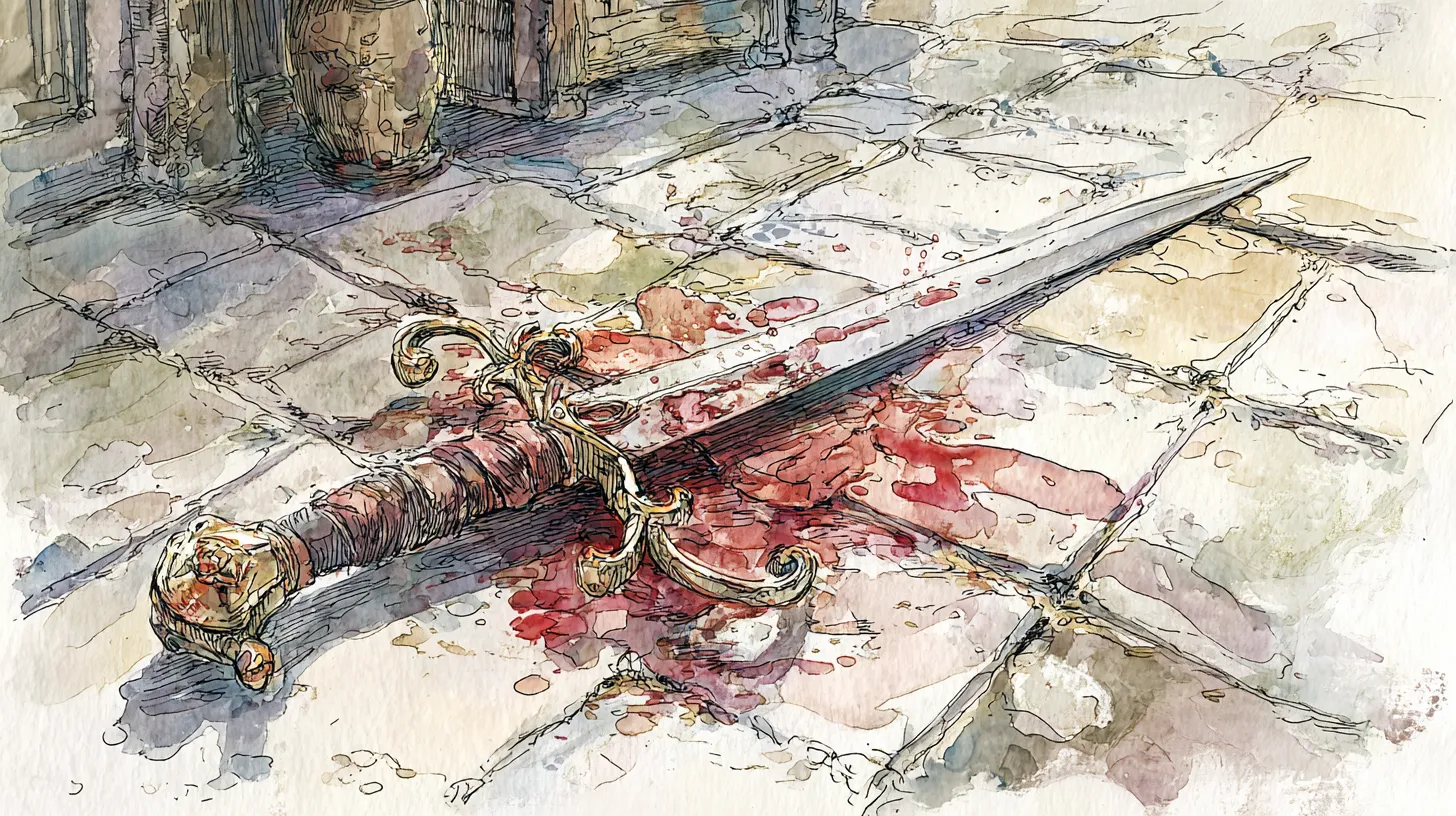
Bloody Dagger by Tillerz using MJ
Suspicious items in a suspect's pockets
These could also be used as clues or red herrings. Note: not all suspects need to have something suspicious in their pockets, but at least one should have something that is a real clue. 1d50- A bloodstained lace handkerchief
- A brass bell clapper, missing the bell itself
- A broken cufflink
- A broken locket with no picture
- A candle stub chewed at one end
- A folded love letter with no signature
- A folded map with one route marked in red ink
- A foreign coin with a hole pierced through
- A key-shaped pendant but made of wood
- A knife hilt, blade missing
- A page torn from a diary
- A pastry crust wrapped in cloth (with a hidden note baked inside)
- A pawn chess piece cut from ivory
- A pebble carved into the shape of an eye
- A playing card with a crude drawing on the back
- A quill nib bent as if used violently
- A rolled-up sketch of the murder victim
- A rosary or prayer beads missing one piece
- A scented note sealed but unopened
- A scrap of scorched parchment with runic symbols
- A set of tiny brass keys on a chain
- A sharpened quill soaked in ink-stains
- A short length of green ribbon tied around a twig
- A signet ring not belonging to them
- A silver coin sharpened on one edge
- A single raven feather tied with thread
- A small vial of dark powder (poison or medicine?)
- A smudged charcoal sketch of a hidden alley
- A strange brass gear (part of a clockwork?)
- A theatre token or ticket
- A tiny bone charm carved with runes
- A tiny glass vial of dried blood
- A tiny vial of perfume with unfamiliar fragrance
- A torn button covered in bloodstains
- A torn page from a psalm book
- A torn strip of silk ribbon
- A wax tablet smudged with faint writings
- An earthenware bead coated in ash
- Crumpled tavern receipt with torn edges
- Crystals wrapped in leather cord
- Deed to a disused piece of property
- Dried herbs bundled with twine (healing… or poison?)
- Folded pouch of salt (warding charm?)
- Miniature portrait of an unknown woman/man
- Oyster shell with something carved inside
- Playing dice weighted slightly on one side
- Shards of broken mirror
- Strange tally marks scratched into thin slate
- Strip of red cloth resembling part of a uniform
- Wax seal stamp carrying another family's crest
Random other items in a suspect's pockets
1d50- A bit of string or twine knotted in odd fashion
- A carved bone needle case
- A child's marble or clay bead
- A child's toy soldier (pewter, wood, or rag)
- A copper hairpin or simple brooch
- A crumbling piece of bread or hard biscuit
- A dog-eared prayer pamphlet
- A dried flower pressed flat
- A folded paper fan (Regency fashion)
- A folded scrap of parchment with shopping notes
- A folded scrap of sheet music (without notes written in)
- A half-finished crochet or knitting sample
- A half-smoked twist of pipe tobacco
- A handbill from a town crier or theatre troupe
- A homely knitted coin purse with a hole in it
- A jar stopper with no jar
- A knotted string used for tallying debts or prayers
- A leather strap fragment with worn stitching
- A lock of hair tied with string (keepsake, not sinister)
- A lucky rabbit's foot or animal tooth on a cord
- A lump of beeswax for sealing or mending
- A pair of dull scissors wrapped in cloth
- A pebble smoothed by the river (pocket worry stone)
- A piece of chalked slate for notes or accounts
- A polished wooden spoon
- A rolled-up strip of oiled cloth (for protecting steel)
- A seashell from a distant shore
- A simple clay pipe
- A simple wax candle stub
- A single chestnut or walnut
- A small brass thimble
- A small comb of carved wood
- A small devotional medal or trinket
- A small pouch of bread crumbs kept for feeding ducks or pigeons
- A small pouch of common coins (coppers, farthings, or pennies)
- A smooth bit of broken pottery
- A sprig of holly or ivy for good luck
- A sprig of lavender or rosemary
- A square of soft linen used as a handkerchief
- A string of dried apple slices
- A stub of chalk or charcoal
- A tangle of sewing thread and a bent needle
- A tiny dice pouch with plain bone dice
- A tiny wooden whistle
- A twist of paper containing sugar crystals
- A wooden button saved for mending
- A woolen glove missing its partner
- A worn bootlace, saved "just in case"
- An empty tiny inkwell with a cork stopper
- Worn rosary beads or prayer token
Rumours about the Victim
1d35- A charm-seller says the victim's aura turned "grey as rain".
- A courier delivered a black-sealed letter; they burned it unread.
- A fortune-teller told them to avoid mirrors this week.
- A healer warned them that continued indulgence would be the end of them.
- A rival swore in the tavern, "One more slight and I'll end them."
- A sailor claims the victim prayed at the wrong shrine the night before.
- A secret meeting was held after curfew in the cloister garden - voices were raised.
- I saw them slip a parcel to a hooded figure by the quay.
- Someone switched their cup at the feast - two servants swear it.
- Someone tampered with their saddle last week, but they noticed in time.
- The temple warned them publicly about "indecent dealings".
- The victim blackmailed a noble over an old campaign atrocity.
- The victim had a second life under another name.
- The victim mocked a zealot preacher who then cursed them in public.
- The victim was gifting coin to a hidden heir no one acknowledges.
- The victim was heard arguing with a lover behind the playhouse.
- The victim's signet ring is a fake - pawned the real one months ago.
- Their best friend was secretly paid to watch them.
- Their familiar vanished two days before - bad omen, folk say.
- They boasted at the auctions they could "sink a house with a sentence".
- They carried a vial of antidote at all times - "occupational habit".
- They changed their will the night before their death, cutting out a close relation.
- They cheated at cards and were caught.
- They drank only from sealed bottles, yet one arrived already opened.
- They had an appointment with a magistrate to "set the record straight".
- They meant to expose high-ranking officials participating in a smuggling ring and wanted to deliver the evidence the next day.
- They offered to sell a relic to two buyers at once.
- They owed a lot of money to someone.
- They planned to flee the city on the morning tide.
- They planned to publish a list of names in the morning edition.
- They purchased a map of the city's catacombs.
- They quarrelled with an apprentice about missing pages from a ledger.
- They tested a spell on the roof at midnight.
- They were promised a seat on the guild council if they kept quiet.
- They were seen rehearsing a duel in the practice yard.
Rumours about the Suspect(s) / Perpetrator
1d33- A child saw them drop a coin into the wishing well and whisper the victim's name.
- A fortune-teller warned them "beware a mirror" and they smashed one that night.
- A guard saw them near the archive door when the wards flickered.
- A maid found dried blood on their cuff; they said it was pheasant.
- A pawnbroker says they redeemed a heirloom <murder weapon> the day of the killing.
- A stable-hand swears they changed horses at midnight to avoid notice.
- A stevedore says they bribed him to look the other way at Pier Five.
- Someone saw them exchanging ribbons with a known assassin.
- The baker says they bought two cakes - one "without the bitter almonds".
- The harbourmaster's ledger shows them renting a skiff at an odd hour.
- The hounds would not go near them after the deed.
- The tax reeve claims they offered him "a generous forgetfulness".
- The temple scribe claims they sought a "general absolution" in haste.
- Their blade shows nicks from parrying, not practice.
- Their cloak reeked of incense not used by any local shrine.
- Their familiar - if that raven is theirs - mimics the victim's voice eerily well.
- Their ring bears a sigil known to a secret lodge; the victim loathed that lodge.
- They asked a printer how to remove ink from skin "in a hurry".
- They bought rare herbs from an apothecary who asks no questions.
- They can pick a knot one-handed - a sailor's boast that now sounds ill.
- They have a cousin in the lighthouse - dark nights come cheap.
- They keep company with a fence who moves things nobody should own.
- They lost heavily at cards to the victim last week.
- They once boasted they could "move unseen through any masquerade".
- They once served in the victim's household and left without references.
- They practised left-handed fencing though they sign their name right-handed.
- They quietly asked a locksmith to copy a key they did not own.
- They suddenly paid off all debts in crisp coin the next morning.
- They were first to "discover" the body and somehow already knew where to look.
- They were seen arguing with the victim two nights before the murder.
- They were seen burning letters.
- They were struck from their guild roll for "conduct unbecoming" last winter.
- They wore mourning-black before the death was public.
(Eccentric) Quirks a Suspect may have
These may also be used as rumours about the Suspects. 1d40- Always counts stairs, steps, or doorways out loud.
- Always tastes unfamiliar objects, plants, or powders.
- Believes knocking on wood prevents bad luck.
- Carries scraps of paper and doodles obsessively.
- Catalogs smells of every place they visit.
- Closes doors twice "just to be sure."
- Collects small pebbles and carries them.
- Collects the feathers of random birds.
- Collects unusual buttons or scraps of ribbon.
- Collects words/phrases they overhear, repeating them.
- Constantly compares strangers to animals ("You look like a hawk...").
- Declares every coin they find "lucky."
- Gives everyone unusual nicknames.
- Insists on drinking from a particular mug/cup.
- Insists on sitting facing the door in any room.
- Invents "home rules" no one else understands.
- Keeps belongings arranged in perfect symmetry.
- Laughs at inappropriate or grim moments.
- Laughs too loudly at minor jokes.
- Memorizes gossip and recites it word-for-word.
- Mimics accents after only a few minutes of hearing them.
- Narrates their actions aloud as if speaking to an audience.
- Reacts with fascination to broken or ruined objects.
- Records random numbers or tallies on paper/walls.
- Refuses to walk on cracks or uneven stones.
- Reorganizes objects on tables into neat lines.
- Rubs a lucky charm before answering questions.
- Sniffs flowers (or herbs) constantly, even fake ones.
- Speaks in rhyme when excited.
- Speaks in riddles or metaphors.
- Speaks in whispers, even when not needed.
- Sprinkles foreign words into everyday speech.
- Squints dramatically when someone mentions secrets.
- Stares too intently at other people’s belongings.
- Starts humming old folk songs absentmindedly.
- Talks to themself under their breath.
- Tilts their head strangely when listening.
- Uses exaggerated, theatrical hand gestures.
- Wears mismatched socks or gloves on purpose.
- Winks frequently, for no apparent reason.
(Behavioural) Habits a Suspect may have
These may also be used as rumours about the Suspects. 1d40- Adjusts belts, straps, or sashes constantly.
- Always clears their throat before speaking.
- Always sniffs food before eating.
- Always touches doorframes when passing through.
- Avoids eye contact, preferring to look downward.
- Bites their nails or chews writing quills.
- Blinks slowly when asked direct questions.
- Bounces legs while sitting.
- Checks their pockets nervously and often.
- Constantly cleans dirt from fingernails.
- Constantly fiddles with rings/jewelry.
- Counts change or beads repeatedly even if nothing has changed.
- Cradles cups, mugs, or tankards when not drinking.
- Flips or rolls coins, tokens, or buttons.
- Folds and unfolds scraps of paper or cloth when waiting.
- Forgets names, replacing them with nicknames.
- Has a sudden, odd laugh or snort.
- Hums while pacing.
- Laughs nervously in tense silence.
- Licks their lips before speaking.
- Mutters quick prayers before tasks.
- Nail taps on tabletops or glasses rhythmically.
- Picks loose threads at sleeves or clothing.
- Picks teeth with small tools or fingernails after meals.
- Pulls at their earlobe absentmindedly.
- Rarely finishes drinks or meals.
- Recites the same phrase before making decisions ("Well then, here we go…").
- Rubs coins or medallions smooth in their pockets.
- Rubs their temples when frustrated.
- Runs fingers through their hair when thinking.
- Scratches head or chin thoughtfully—even without an itch.
- Shuffles feet loudly instead of stepping lightly.
- Sighs heavily or dramatically.
- Smells their own hands or wrists absentmindedly.
- Snaps or cracks knuckles often.
- Straightens their clothing and cuffs repeatedly.
- Sways side to side when standing still.
- Taps their foot when nervous.
- Whistles tunelessly without noticing.
- Yawns at inappropriate times.
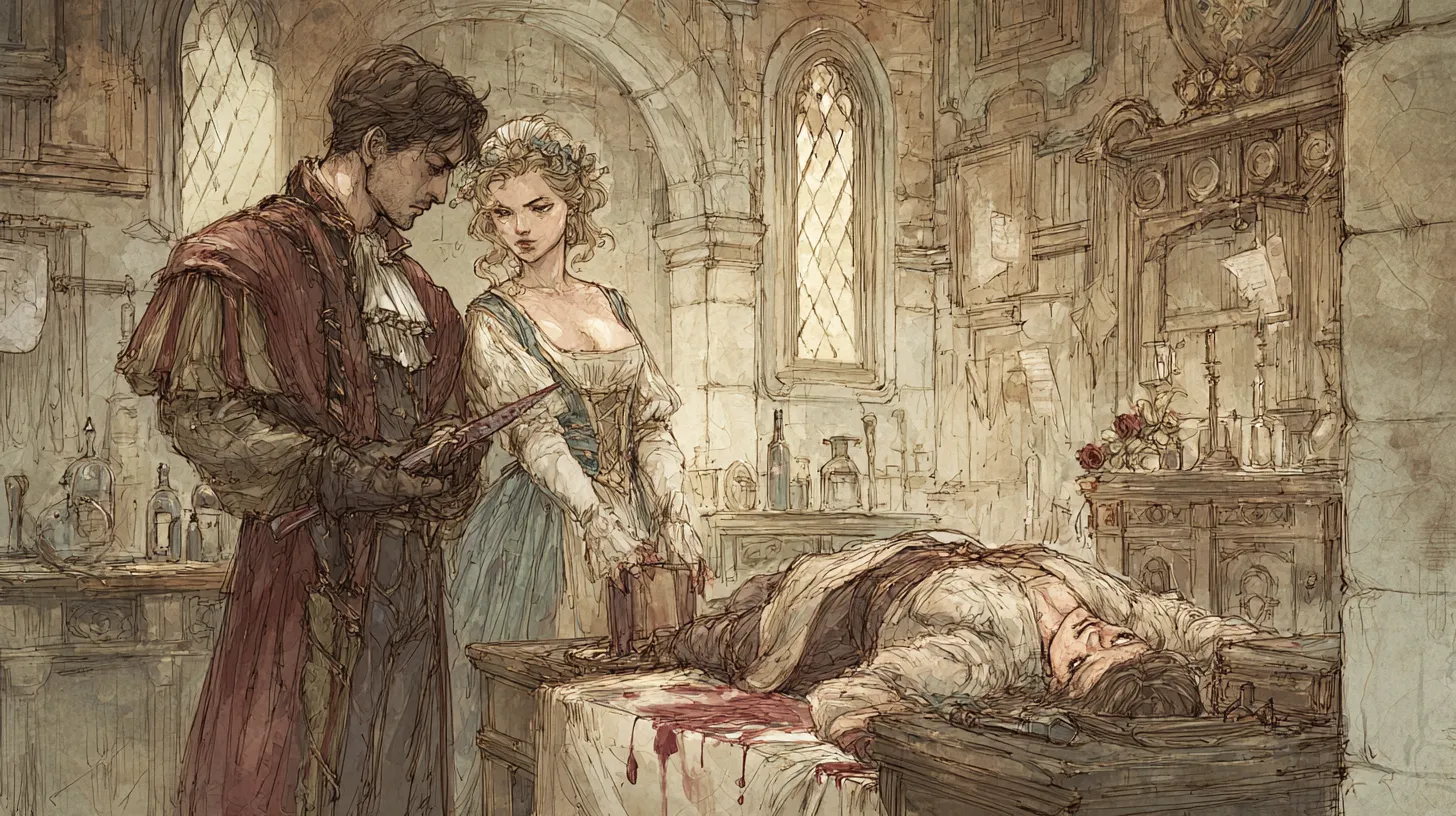
Investigation by Tillerz using MJ
Plot Twists
Surprising revelations or shifts in the investigation keep the story engaging and unpredictable. The final twist should make sense in retrospect. A second selection from the Cause of Death list can also be used as a plot twist. 1d28- A confession or admission of guilt is extracted through dark magic, enchantment, or mind control by a 3rd party, casting doubt on its validity
- A demon's bargain means the killer cannot be tried by mortal court - only exorcised
- A hidden royal lineage or secret heir is revealed, changing the stakes and motives behind the crime entirely
- A long-ago accidental death covered up; today's murder silences the last witness
- A secret magical pact or forbidden alliance comes to light, explaining the crime through arcane or political intrigue
- A secret romance or forbidden relationship between a suspect and the victim is uncovered, providing motive and emotional tension
- A time-bound curse repeats the killing each eclipse unless broken
- A treaty clause means solving the case will trigger war or avert it
- A trusted ally or close companion of the investigator is revealed to be a traitor, betraying the investigation for hidden reasons
- An accomplice or co-conspirator is discovered hiding among the servants or minor characters, playing a dangerous double role
- Long-buried crimes from a distant crusade, war, or campaign resurface to haunt the present case
- The artefact manipulates memories; everyone "remembers" a crime that differs from truth
- The confessed killer was protecting the actual target from a worse fate
- The ghost names a killer… but lies, bound to protect their beloved
- The investigator is kin to the victim, hidden by adoption or scandal
- The killer was bribed, blackmailed, or coerced into committing the murder, revealing deeper conspiracies
- The murder weapon is a family heirloom recently returned - by the investigator
- The murderer (or any suspect) unexpectedly confesses to an unrelated crime, complicating motives and suspect lists
- The noble or high-ranking suspect who was arrested and seemed guilty is ultimately proven innocent, upending assumptions
- The patron who hired the party engineered both motive and means to test them
- The shape-shifter replaced the victim weeks earlier; the "murder" freed the real one
- The supposed corpse is a simulacrum; the real victim lives under a new name
- The victim is also the murderer by proxy (compelled suicide that frames another)
- The victim led a double life as a spy, assassin, or covert agent, adding layers of deception and danger
- The victim orchestrated their own death or disappearance to escape an unbearable fate or achieve a secret goal
- The victim's will rewards the wrong arrest, inviting miscarriage of justice
- Two killers acting independently collide in the same night
- Two seemingly unrelated murders are uncovered to be intricately linked by an ancient family feud or forgotten betrayal
Timeline of Events
A carefully constructed sequence of events, including alibis and the crime's timeline, is essential for maintaining logical consistency and increasing tension. Creating a proper timeline for a murder mystery involves carefully organizing the sequence of events surrounding the crime to ensure consistency, plausibility, and suspense. Start by listing all key moments related to the murder itself, including the victim's last known activities, the time and place of the crime, and the discovery of the body (or the absence of it). Then, map out the actions and whereabouts of each suspect around these crucial times, noting discrepancies between their accounts and solid alibis. Consider including parallel events that influence the atmosphere, such as social gatherings, secret meetings, or supernatural occurrences. Create a list of all the clues and where/how they can be found, and where they lead to. Ideally, each clue takes some time of investigation until it leads to the next clue, or finally to the perpetrator.Conflict
The central struggle, often between the investigator and the perpetrator, forms the backbone of the narrative. The tension is maintained through interrogations, discoveries, and false leads. 1d38- A key suspect claims sanctuary; breaching it makes enemies
- A prime suspect exploits a royal pardon or loophole to evade capture, slipping from justice's grasp
- A relentless assassin stalks the investigator, threatening their life and forcing caution at every turn
- A rival sleuth publishes reckless accusations
- An uneasy alliance is forced between the investigator and a prime suspect, fraught with distrust and tension
- Betrayal from within the investigator's own circle of allies threatens to unravel the investigation
- Bribed gaolers "lose" prisoners or swap cell assignments
- Buried family grudges and ancient vendettas resurface, shaping motives and deepening tensions
- Competing investigators or agents from different factions clash, vying for control of the case
- Couriers and informants spread misinformation, muddying facts with rumours and false leads
- Enemy agents intercept critical messengers or letters, obstructing communication and spreading falsehoods
- Ethical dilemmas arise over using magical justice or forbidden spells to solve the crime at a cost
- Evidence ordered destroyed by a patron - obey, defy, or leak?
- Guild strike halts ferries, presses, or morgue services
- Hostages taken in chapel or guildhall to halt the inquiry
- Informant network compromised; double agents everywhere
- Jurisdiction tug-of-war: city watch vs. temple vs. guild magistracy
- Magic ban in effect; using sorcery risks arrest
- Magical evidence is sabotaged by rival spellcasters or conspirators seeking to derail the case
- Noble house feud threatens open violence in the streets
- Nobles and courtiers openly mistrust the investigator due to class prejudice or political rivalries
- Oath to a deity forbids certain spells the case seems to require
- Plague quarantine seals the district, stranding suspects and clues
- Press censorship and broadsides muddy public sentiment
- Royal progress arrives; courtiers bury evidence for "decorum"
- Siege or storm traps everyone in a keep with a killer
- Street mob demands instant justice; the lock-up is besieged
- Suspects hurl accusations at rival noble houses, igniting old animosities and complicating the investigation
- Suspects scheme to frame each other, weaving layers of deception and betrayal
- The accused wields a royal pardon that may be counterfeit
- The investigator confronts corruption within the royal guard, struggling against those sworn to uphold the law
- The investigator faces a dark sorcerer wielding forbidden magic, challenging their skills and resolve
- The investigator wrestles with personal vows or religious oaths that conflict with their pursuit of truth
- The investigator's patron demands a convenient culprit
- The victim's faction offers bounty for vengeance, not truth
- Trial by combat invoked; a champion must be found by dawn
- Unexpected royal interference disrupts the investigation, forcing political considerations over justice
- Witnesses are silenced or coerced by secret cults or shadowy cabals afraid of exposure
Suspense and Tension
The story should continually build tension as the investigator approaches the truth, often putting themselves at risk. 1d39- A beloved NPC turns up with the murder weapon - planted
- A courier bearing exonerating proof vanishes between gate and inn
- A desperate soul confesses falsely, confusing the investigation and diverting attention
- A false warrant names the investigators; flight or courtroom gambit?
- A familiar (cat, raven, homunculus) shadows the party with stolen clues
- A key ally collapses from a slow poison; time for the antidote runs short
- A key witness is poisoned, either fatally or to silence their testimony, escalating the stakes
- A last-minute prophecy or spell foretells the fate of suspects or the outcome of the case
- A looming deadline before the king's tribunal demands swift justice, putting pressure on investigators
- A message in blood fades from enchantment at sunrise
- A precious magical relic crucial to the investigation goes missing or is stolen at a critical moment
- A sealed letter reveals a different crime that must be solved first
- A suspect flees on horseback under cover of darkness, triggering a tense chase or manhunt
- A trusted ally unexpectedly betrays the investigator, switching loyalties or revealing secrets to enemies
- An innocent noble is wrongfully arrested, sparking political tension and urgency to find the real culprit
- Classic locked-room: wards intact, no ingress, yet a corpse within
- Deadly traps are uncovered within the castle or estate, designed to kill or delay investigators
- Hidden secrets or revelations emerge during a rare eclipse or mystical celestial event
- Magical traces or enchantments inexplicably point suspicion toward the investigator themselves
- Masquerade identities tangle alibis; masks must come off before the bell
- Midnight ritual deadline - fail to name the killer and a curse completes
- Ominous threatening messages appear inscribed in ancient runes, hinting at dark magic or curses
- Rooftop, ship's rigging, or bell-tower finale with perilous footing
- Suspects erupt into violence, threatening chaos in court or interrogation chambers
- Tempest, blizzard, or flood cuts roads and ferries; the killer is among you
- The court demands a verdict before the eclipse ends
- The evidence vault is compromised by mimic, ooze, or tunnelling thieves
- The final suspect offers a confession if granted five minutes alone with a relic
- The investigator is ambushed in a dark forest or shadowed alley by unknown assailants aiming to stop the inquiry
- The investigator is haunted by visions, curses, or demons linked to the crime or victim
- The killer strikes again, accelerating the timetable
- The killer taunts investigators by leaving enchanted tokens, arcane markers, cryptic messages, or "business cards" at key locations
- The killer taunts via street-ballads, riddles, or carved tokens
- The last witness can only speak via séance or dream-walk
- The party must choose: save the next target or secure the proof to convict
- The true motive is too scandalous to print; justice vs. stability
- Time runs out before a final verdict or royal decree, heightening tension and urgency
- Vital evidence inexplicably vanishes from the crime scene or evidence chamber, throwing the case into chaos
- Vital evidence inexplicably vanishes from the crime scene or evidence chamber, throwing the case into chaos
Resolution
The ending should tie up all loose ends, explain the clues, deliver justice, and provide closure, ideally with a satisfying comeuppance for the murderer.Appendix
Crime Location Ideas
1d48- Alchemist's Workshop: Filled with strange potions and volatile chemicals, possible source of poison
- Ancient Ruins: Crumbling relics of the past, hiding forgotten clues or dangers
- Artisan's Workshop: Place of craft and art, concealing motives or hidden clues in tools and materials
- Battlefield Remnants: Ground scattered with bones and weapons, site of old grudges and new violence
- Blacksmith's Forge: Hot and noisy workspace, clearing for heated disputes or hidden weapons
- Bridge Over River: Site of accidents, secret exchanges, or ambushes
- Caravanserai: Traveler's rest filled with strangers and potential witnesses or threats
- Castle Battlements: Open-air fortifications where sudden confrontations can turn deadly
- Castle Dungeon: Dark, damp prison where secrets and suffering abound
- Castle Great Hall: Central gathering place for nobles and guests, often the scene of political intrigue
- Chapel Bell Tower: Overlooks village, place of lookout or secret signals
- Chapel Crypts: Underground burial chambers holding more than just bones
- Commoner's Cottage: Humble home revealing hidden connections or illicit activities
- Courtyard Fountain: Social crossroads, often a discreet meeting place for whispered conversations
- Farmer's Field: Open land hiding footprints or abandoned weapons
- Fisherman's Dock: Waterfront location prone to smuggling or secretive rendezvous
- Forest Clearing: Isolated spot where illicit meetings or ambushes can occur
- Forest Path: Dangerous and winding, where ambushes and suspicious meetings happen
- Granary: Food stores potentially sabotaged to starve or poison victims
- Graveyard Mossy Tomb: Neglected resting place, site of desecration or secret messages
- Guildhall Meeting Room: Center of political power for merchant or craft guilds, tensions run high
- Herbalist's Garden: Full of healing and deadly plants, clues hidden among the foliage
- Hermit's Cave: Hidden refuge for outcasts or spies, holding secrets or threats
- Hidden Passageway: Secret tunnels allowing stealthy movements and escapes
- Hill Fort: Defensive position with strategic importance and political secrets
- Hilltop Shrine: Sacred site overlooking the land, home to rituals and divine secrets
- Mage's Tower: Arcane laboratory filled with magical instruments and experiments - dangerous secrets abound
- Market Square: Bustling hub of commerce and gossip, witness to many confrontations
- Marketplace Stalls: Crowded and chaotic, with plenty of opportunities for spying or theft
- Merchant Caravan Camp: Temporary location with many transient characters and shifting alliances
- Noble's Private Chamber: Personal quarters potentially filled with hidden evidence or secrets
- Noble's Private Library: Filled with forbidden knowledge and secret correspondences
- Old Mill by River: Isolated working place, site of accidental or deliberate death
- Prison Guard's Quarters: Place of power abuse or betrayal
- Prisoner's Cell: Contains suspects or victims' secrets hidden behind bars
- Royal Chapel: Sacred space for worship and rituals, hidden motives may surface here
- Royal Gardens: Beautiful but dangerous, hiding secret meetings or poisons among flowers
- Royal Stables: Home to prized horses, site of sabotage or hidden violence
- Royal Treasury: Guarded vault of wealth and treasures, tempting target for thieves or murderers
- Ship's Cabins: Confined spaces on water, breeding grounds for conspiracy or murder
- Stone Circle: Ancient and mystical, often associated with pagan rites or gatherings
- Tavern Common Room: Loud and chaotic, perfect for overheard secrets or secret meetings
- Town Square: Center of civic life, where public accusations or beatings might occur
- Village Blacksmith's Hammering Grounds: Loud place, where accidents or violent disputes might occur
- Village Cemetery: Quiet resting place for the dead, sometimes the site of eerie discoveries
- Village Well: A source of life and potential poison, central to many conflicts
- Watchtower: A vantage point with sweeping views, often the place for solitary vigil or hidden observations
- Witch's Hut: Isolated and eerie, a place of magic and mistrust
Murder Weapon Examples
1d47- Ancient long-sword with runic inscriptions: A broad steel blade etched with glowing symbols, wielded in a powerful downward strike
- Barbed trident spear: With wicked barbs designed to inflict agonizing wounds, weaponized for close combat
- Blowgun with poisoned darts: Used to discharge small, lethal projectiles from a distance
- Blunted spear tip, bent and bloodstained: Detached from a larger shaft, repurposed as a stabbing implement
- Bone-handled sickle stained with rust: An agricultural blade sharpened to a deadly edge, used to slash a throat in a swift, covert attack
- Broken glass vial with dried residue: Shattered remnants of a dead man's potion, spilled near the victim's body
- Broken spear shaft sharpened at an angle: Modified piece used for stabbing in tight quarters
- Ceramic shard from broken chalice: Sharp fragment used unexpectedly to slash victim
- Ceremonial dagger with jeweled pommel: Ornate blade associated with dark rituals, found embedded in the victim
- Chainmail fragment with jagged edge: Broken piece wielded as an impromptu stabbing weapon
- Charred torch club: A thick wooden torch blackened by flame, wielded to deliver devastating blunt force
- Crossbow quarrel tipped with poison: A sleek bolt coated in deadly venom, silently fired into the victim's back
- Cursed bone charm imbued with necromantic magic: Used to curse or poison the victim indirectly
- Curved bone-handled throwing knife: Small and balanced, ideal for a quick fatal toss that pierces deep
- Enchanted crystal shard emitting eerie glow: A jagged fragment harnessing dangerous magic, plunged into the victim to disrupt their life force
- Heavy boulder wedged atop victim: Used in staged accident or intentional crushing death
- Heavy double-headed battle axe: A fearsome weapon with twin crescent blades and a shaft wrapped in bloodstained cloth, capable of devastating blows
- Heavy iron chain snapped and coiled: Used to strangle or bludgeon, marked with fresh blood and broken links
- Heavy iron studded gauntlet with blood smears: Used to punch or crush in close combat
- Heavy leather belt with large iron buckle: Used to throttle or bludgeon, found wrapped around the victim
- Heavy stone from a broken statue: Round and smooth, thrown or dropped to inflict fatal blows
- Heavy velvet-wrapped book used as a bludgeon: Tome struck with force, leaving bruises and broken bones beneath its weight
- Iron war-hammer with spikes: A brutal weapon featuring a heavy, spiked head perfect for crushing bone and armour through sheer force
- Iron-shod war mace with flanged head: A crushing weapon built to puncture and dent armour, swung with lethal intent
- Jagged obsidian dagger: A razor-sharp black blade with a serrated edge, its handle wrapped in worn leather - used to silently strike vital arteries
- Jewelled rapier with a poison-filled hollow tip: A slender, elegant blade concealing deadly toxins for precise strikes
- Knotted hemp rope, frayed and stained: Used for strangulation, tight around the victim's neck with telltale abrasions
- Mace with twisted flanges that pierce armor: A brutal weapon designed to crush and puncture simultaneously
- Magical firebomb (small vial of volatile oil): Thrown to ignite curtains or cause a deadly blaze
- Molten lead poured down chimney flue: Death caused by suffocation and burns from hot metal
- Poison-laced bread or fruit: Mundane item used to disguise lethal intent
- Poisoned quill pen dipped in venom: Used for covert stamping or stabbing, leaving damaging toxins on tiny wounds
- Ritual athame with obsidian blade: A ceremonial knife associated with cult sacrifices
- Rust-covered iron claw grappling hook: Repurposed as a brutal weapon to scratch and tear flesh
- Sharpened bone shard: Jagged prehistoric fragment used in a desperate, savage attack
- Shattered lantern glass, its frame twisted: Thrown or used in hand-to-hand combat to cause fatal injuries
- Shattered mirror splinter with sharp edges: Broken glass used as a slashing tool in panic or desperation
- Silvered dagger designed to pierce enchanted armour: Thin and lightweight, engraved with protective glyphs
- Silvered hunting spear: A gleaming, slender spear designed for penetrating both flesh and magical protections
- Slingshot with sharply jagged stones: Used to strike from a distance lethally
- Spiked wooden cudgel: Club embedded with nails or spikes, inflicting gruesome wounds
- Splintered wooden plank: A shard from a broken beam, wielded as a makeshift club to bash in the victim's head
- Throwing axe with blood on the haft: Small yet deadly, with a worn wooden handle and chipped blade
- Vial of shimmering alchemical poison: Contained in a delicate crystal bottle, dropped discreetly into a cup of wine to silently end life
- Warped and sharpened farming hoe: Agricultural tool repurposed as a deadly weapon in desperation
- Warped iron poker, scorched and misshapen: Found near a hearth, used in a violent fit of rage
- Wooden flail with iron ball: A farmer's tool transformed into a fearsome weapon, its spiked metal ball swung viciously to crush skulls
Clue Examples
You probably do not pick randomly from this table but select one or more entries matching the murder weapon / previous results. 1d49- Bent arrow lodged in nearby wood: Shows signs of recent use but not involved in the killing
- Bent iron key: May open a locked door or chest near the crime scene
- Blood-stained handkerchief: A finely embroidered cloth soaked with fresh blood, hinting at a struggle or injury
- Broken fence board or gate latch: Shows forced entry or escape path
- Broken quill pen: A shattered feather pen lying beside spilled ink, possibly used to write a secret note
- Broken spectacle lens: Possibly dropped by an old witness or scholar in shock
- Charcoal drawing on wall: A crude pictograph or message left as a clue or threat
- Chipped piece of pottery or glass: Belongs to a broken vessel possibly used as weapon or container
- Cracked gemstone pendant: Possibly stolen or dropped in panic at the scene
- Crumpled letter: A hastily discarded note with illegible but urgent writing
- Discarded gloves: Found near doorway, possibly left by suspect in haste
- Disturbed dust or soil: Uneven ground suggesting someone crouched or was dragged through the area
- Disturbed flower bed or garden patch: Suggests hidden objects or secret meetings
- Dried blood splatter pattern: Forensic clue for direction and nature of attack
- Drop of poison residue on cup rim: Faint traces detected by herbalists or alchemists
- Faint footprints leading to secret passage: Seems inconspicuous to untrained eye
- Faint magical aura: A barely perceptible shimmer in the air, evidence of recent spell-casting nearby
- Faint scent of rare herb or incense: A lingering aroma that might indicate poison or ritual use
- Footprints in soft earth: Partial boot prints leading to or from the scene, some unusually small or large
- Footprints of mythical creatures: Unusual tracks resembling hoof or claw marks that don't match any known animal
- Freshly dug earth or overturned soil: Sign of a hidden object or hastily concealed body part
- Hairpin with bloodstain: Ornate accessory dropped during sudden attack
- Half-burned candle: Flickering wax remnants still warm, indicating recent presence
- Hand-drawn map with marked locations: A guide to hidden places or intended routes
- Hidden compartment door slightly ajar: Suggests secret concealment or hurried escape
- Loose chain or broken shackle: Implies struggle or escape of a prisoner
- Loose coins spilled near victim: Possible bribe, theft distraction, or hasty payment
- Marks of bootlaces on soft ground: Helps identify type of footwear or social status
- Parchment with coded symbols: Confusing message or cipher related to investigation
- Recent footprints alongside animal tracks: Shows presence of a companion animal or familiar
- Rope fibres caught in the bushes: Signs of binding or strangulation nearby
- Ruined letter worn by rain or flame: Alters original message but hints at secret communication
- Scorch marks on fabric or parchment: Evidence of a magical or incendiary attack
- Scratch marks on victim's nails: Defensive wounds implying a fight with the assailant
- Scratched rune on wood or stone: A hastily carved symbol, potentially a warning or magical ward
- Smouldering incense stick: Used in rituals, possibly to mask scent or as a distraction
- Smudged fingerprints on a door handle: Partial prints hinting at who may have entered or fled
- Soot smudges on wall or floor: Scattered black marks from a recent fire or torched object
- Spilled ink on the floor: Suggests hurried note-taking or a sudden struggle
- Stray lock of hair: Golden or dark, found caught in the victim's grasp or on nearby branches
- Streak of blood on a door frame: Indicates victim or suspect moved through in haste
- Threads of expensive fabric caught on barbs: Indicates clothing torn during pursuit or fight
- Tobacco pipe with ashes: Still warm, belonging to a suspect who smokes illicit substances
- Torn letter seal fragment: Part of a noble's wax seal suggesting political intrigue
- Torn page from a forbidden book: Fragment containing arcane or secret knowledge, torn to hide evidence
- Torn sleeve fabric: Ragged cloth caught on a nail or thorn, suggesting a hurried escape or scuffle
- Unusual feathers scattered on ground: Possibly from a rare or magical bird passing through
- Upturned chair or furniture: Suggests a violent struggle took place in the room
- Whispered rumours or fearful notes found nearby: Indirect clues when documented
Red Herrings: Item Examples
1d51- Animal bone fragment: Found outdoors, unrelated to human harm
- Animal tracks: From a stray dog frequenting the area, unrelated to crime
- Black feather: From a pet raven, not a sign of dark magic
- Bloodstained glove: Actually belongs to a healer who treated victim after accident earlier
- Broken chain-mail link: Left behind by a guard on patrol, unrelated to struggle
- Broken lute string: From a bard performing nearby, not connected
- Broken magical amulet: Belongs to a bystander, no connection to the crime
- Broken quill pen: Fell during writing, not linked to secret documents
- Broken wax seal: Seal of a distant lord, no ties to local disputes
- Candle wax drippings: Form shapes mistaken for coded messages
- Charcoal sketch of victim: An artist's unrelated work found on floor
- Clay pipe with unusual tobacco: Hinting at a merchant, but unrelated to murder
- Colourful bent pin: Used by a court seamstress, no malicious purpose
- Crumpled map of forest paths: Found on victim but unrelated to murder
- Dagger sheath with distinctive engraving: Owned by unrelated mercenary
- Discarded glove: Once belonging to a noble, lost days prior in market
- Dried blood of unknown origin: Belonged to messenger with nose bleed, unrelated to murder
- Dried flower petals: Remnants from a wedding altar, not a clue
- Empty perfume bottle: Gift given earlier, no relevance to death
- Empty vial of poison: Actually harmless potion used for better sleep
- Faded family seal ring: Lost earlier during a gathering, creating false suspicion
- Fake note warning of plot: Planted to mislead investigators deliberately
- Folded cloak hidden in bushes: Left by a passerby to dry, no sinister intent
- Glowing crystal shard: Common light source, mistaken for magical residue
- Gold earring: Common style worn by many, no link to suspects
- Locket with no portrait: Gift for a servant, unrelated to victim
- Loose page from book on herbs: Left by scholar, unrelated to poisoning
- Mask discarded near scene: Used for a festival, not by the killer
- Mirror shard: Fell from decorative frame, unrelated to crime scene
- Odd-shaped stone talisman: A souvenir from a travelling fair unrelated to crime
- Oil lamp knocked over: Accidentally spilled, causing confusion about timing
- Old coin pouch: Lost during a robbery days earlier, creating false trail
- Personal diary with torn pages: Missing pages unrelated to investigation
- Ripped pouch with no contents: Left from a pickpocket unrelated to murder
- Rope remnants: Tied up provisions, not used for violence
- Rusted key: Lost by a blacksmith, not connected to secret chambers
- Rusty dagger: Common weapon found but unrelated to the murder
- Scrawled threatening note: Forged to mislead about suspect's intent
- Shattered glass vial: Contents long evaporated, no implication
- Smudged footprint: Caused by spilled water, not from suspect's boots
- Snapped arrow shaft: Part of routine training nearby, no signs of combat
- Snuffed candle: Used during nightly prayers, misleading about timing
- Soot smudges on wall: From a hearth fire, misread as signs of arson
- Stained handkerchief: Belonged to a drunken guest at the feast nearby
- Strange rune stone: A gaming token mistakenly seen as a magical symbol
- Torn banner piece: From local militia, no connection to victim
- Torn parchment scroll: Part of a discarded story, mistaken for important letter
- Torn piece of noble's cloak: Could imply presence but results from earlier unrelated event
- Torn sleeve fabric: Flung aside in a tavern brawl hours before murder
- Unfinished love letter: Might distract investigators with suspected romance motive
- Velvet pouch with herbs: Common medicinal mix with no poisonous intent
Red Herrings: Witness Testimony Examples
These are just some basic ideas, you may have to adjust them matching the case. 1d20- "I heard shouting and the sound of a fight coming from the upper chambers late at night."
- "A cloaked figure with green skin was sneaking around the east wing just before dawn."
- "There was a strange scent of burning herbs drifting through the hall right before the scream."
- "I saw a tall man in a hooded cloak vanish into the secret passage behind the bookcase."
- "Footsteps echoed rapidly down the corridor, but when I looked, no one was there."
- "A group of ragged strangers were seen arguing loudly near the stables well past curfew."
- "I swear I saw a pale woman with glowing eyes standing by the chapel ruins at midnight."
- "Someone was fiddling with the alchemist's vials just hours before the body was found."
- "A servant covered in dirt and blood raced past me towards the courtyard in the dead of night."
- "I overheard a heated dispute about a hidden treasure in the gallery before the disaster."
- "There was the faint sound of chanting coming from the forest glade near the village."
- "An armored knight rode through the village square, his horse rearing as if frightened."
- "I found strange footprints leading from the riverbank to the castle gate."
- "A thick fog rolled in suddenly, hiding what looked like shadowy figures moving silently."
- "The candle flames flickered wildly as if disturbed by a ghostly presence."
- "A merchant with a heavily bandaged hand was acting suspiciously near the market stalls."
- "A mysterious note sealed with a black wax crest was slipped under the lord's door."
- "I saw a shadow dart across the courtyard, but no one was visible when I turned."
- "The village blacksmith was seen arguing with the victim over a cursed blade days before."
- "A cloaked figure was spotted burying something near the old mill at dusk."
Example Murder Mysteries
The Frozen Feather
A despised tax collector is found on the quay at dawn, transfixed by a duck-shaped shard of ice that melted almost clean away. Victim: Aldous Venn (human), Royal Tax CollectorCause of death: Impaled by a (conjured) ice projectile and an ice pick
Means: Cold magic shaping and hurling a frozen missile, stabbed with ice pick
Opportunity: Harbour fog during lock rotation
Suspects:
- Lysa Bramble (innkeeper) - over-taxed and furious
- Master Quill (moneylender) - owed arrears
- Quorix Puddlenote (duckfolk wizard) - seen casting frost spells
Motive: Rafe: Ledger fraud, Lysa: Revenge for the over-taxation
Clues: Rafe: Ferry chit timed to the fog, frost residue only at wound, bespoke boot-nail pattern, duplicate invoices, Lysa: over-taxation visible in the Tax Collector's books, ice pick from a decorated set in her inn
Red herrings: Market duck feathers at the crime scene, rumours of a "were-duck"
Plot twist: Two killers acting independently collide in the same night
Conflict/Tension: Harbourmaster and city watch wrangle over jurisdiction



This is so amazing. Makes it incredible easy to make a one-shot in pretty much any setting. I so much love those generators you are making.