
Susma, the Kingdom of Kingdoms
Nestled between the Chora Jungles and the Valeyri Shelf lies a massive desert, the largest and most 'true' of deserts on Valerick, the Great Bala Desert. Here and amongst the surrounding savannah and scrublands, one might be forgiven for expecting naught but harsh wilderness, sand, sun and heat. The lack of water and lack of any proper rivers flowing anywhere within this massive stretch of land save for but two or three exceptions to the far east and north, could reasonably lead one to believe that life here should be next to non-existent, or certainly limited, and in particular civilization as we know it.
Yet this is not truly the case. Though large maps of the world or even those of the Continent of Gavis-Lune do not truly show it, this region is actually more ecologically diverse and less lacking in water than one might initially expect. Whilst true save one small exception no major river systems that eventually exit to the sea exist, she is not without fresh water. Oases exist, dotting the landscape, and a notable number of the larger ones, even during the harsh dry season, do not run out of water. Furthermore there are smaller river and stream systems that do exist, though they are seasonal and even in the more lush savannah and scrublands surrounding the Bala itself, over the lengthy dry season they do dry up and become dotted pools of great danger. hosting crocodilians and other dangerous fauna around them. Life here follows water as a precious necessity and water is in many ways equivalent to wealth.
Thus was it that the twelve Caliphs came to be. The merchant principalities that now make up this kingdom of kingdoms, each of their founding cities built and raised and run around the twelve largest and most consistent of these Oases, ones that have not ever run dry, though every dry season does see them shrink, see hardship and difficulties. Trade is not merely commerce in Susma, it is life, it is blood and water combined it is not only luxury but necessity. Commerce is life, without it none of these 'kingdoms' within the larger region could survive. No one city could survive. Thus a culture has grown. A strange blend of fiercely independent mercantilism combined with a fierce almost nationalistic pride. A nation of spirit and commerce unlike the world has known. Susma is not unified and the mercantile kingdoms oft have spats and disputes, even conflicts, with battle and bloodshed. Yet they all hold court to, and sway under the great jewel of the sands, the city built around a true paradise, shrouded by the great dunes and dangers of the Bala. Tiate, the seat of the greatest of gambles, the city of monuments, carved out of the sand around a veritable paradise. Here isolated from all, yet with dominion over them, is the seat of the Shah, the rulers of the sands.
Though they may fight often and argue eternally, the true power of Susma is a unity unlike any that any other nation presents. A unity born of cultural identity through hardship, codependance and survival. Only the Suranthi can truly compare, their frozen land just as punishing, though in a different vein. Susma for many decades has been viewed as a nobody on the political stage as we enter this industrializing era, and an era of a more connected world. However her control of the center of the largest continent on the planet and its only safe routes of egress from one side to the other has seen her prominence and therefore the value of these lands rise. With that have come desires for dominion from outside influence.
This presents another unifying aspect to the culture of the sands. Though they may disagree, spat, fight even. Such is the nature of siblings, and trade rivals. It is all, in its own way, good natured. Not so when outside powers have dared try to tamper with her dominion. Thus has a reputation of a powerful player on the world stage begun to grow and come to form and age. Paid for in blood, influence, and skillful trade networks and alliances. Susma has risen to power as unified yet not, as one nation yet as many. They play the great game of chance at the tables of diplomacy better than any other culture in the world, for long before other nations were doing it between each other, the many 'kingdoms' within the Kingdom of Susma were doing it twixt themselves. Whilst the world is still in its infancy, the peoples of the Sands have already acquired a masters degree. Such has been her rise, and such now is the view of Susma.
She is a pride of lionesses, fierce, and will scrap and establish dominion amongst themselves most certainly. But much like a pride, though this may be the case, they all turn as one to meet any outside challenge with teeth, claws, and ferocity, both in the field and at the negotiating table. As this era moves forward, and we see the Ascended founded nations establishing themselves each within roles they are comfortable with, Susma is a nation to watch, a power on the rise, and in their own right perhaps a superpower to come. For they play the game well, control what is theirs with skill and tact, and most importantly, understand the value culturally of both might and manipulation, of commerce and steel, and have spent their entire cultural existence studying and mastering not just one or the other, but both.
Yet this is not truly the case. Though large maps of the world or even those of the Continent of Gavis-Lune do not truly show it, this region is actually more ecologically diverse and less lacking in water than one might initially expect. Whilst true save one small exception no major river systems that eventually exit to the sea exist, she is not without fresh water. Oases exist, dotting the landscape, and a notable number of the larger ones, even during the harsh dry season, do not run out of water. Furthermore there are smaller river and stream systems that do exist, though they are seasonal and even in the more lush savannah and scrublands surrounding the Bala itself, over the lengthy dry season they do dry up and become dotted pools of great danger. hosting crocodilians and other dangerous fauna around them. Life here follows water as a precious necessity and water is in many ways equivalent to wealth.
Thus was it that the twelve Caliphs came to be. The merchant principalities that now make up this kingdom of kingdoms, each of their founding cities built and raised and run around the twelve largest and most consistent of these Oases, ones that have not ever run dry, though every dry season does see them shrink, see hardship and difficulties. Trade is not merely commerce in Susma, it is life, it is blood and water combined it is not only luxury but necessity. Commerce is life, without it none of these 'kingdoms' within the larger region could survive. No one city could survive. Thus a culture has grown. A strange blend of fiercely independent mercantilism combined with a fierce almost nationalistic pride. A nation of spirit and commerce unlike the world has known. Susma is not unified and the mercantile kingdoms oft have spats and disputes, even conflicts, with battle and bloodshed. Yet they all hold court to, and sway under the great jewel of the sands, the city built around a true paradise, shrouded by the great dunes and dangers of the Bala. Tiate, the seat of the greatest of gambles, the city of monuments, carved out of the sand around a veritable paradise. Here isolated from all, yet with dominion over them, is the seat of the Shah, the rulers of the sands.
Though they may fight often and argue eternally, the true power of Susma is a unity unlike any that any other nation presents. A unity born of cultural identity through hardship, codependance and survival. Only the Suranthi can truly compare, their frozen land just as punishing, though in a different vein. Susma for many decades has been viewed as a nobody on the political stage as we enter this industrializing era, and an era of a more connected world. However her control of the center of the largest continent on the planet and its only safe routes of egress from one side to the other has seen her prominence and therefore the value of these lands rise. With that have come desires for dominion from outside influence.
This presents another unifying aspect to the culture of the sands. Though they may disagree, spat, fight even. Such is the nature of siblings, and trade rivals. It is all, in its own way, good natured. Not so when outside powers have dared try to tamper with her dominion. Thus has a reputation of a powerful player on the world stage begun to grow and come to form and age. Paid for in blood, influence, and skillful trade networks and alliances. Susma has risen to power as unified yet not, as one nation yet as many. They play the great game of chance at the tables of diplomacy better than any other culture in the world, for long before other nations were doing it between each other, the many 'kingdoms' within the Kingdom of Susma were doing it twixt themselves. Whilst the world is still in its infancy, the peoples of the Sands have already acquired a masters degree. Such has been her rise, and such now is the view of Susma.
She is a pride of lionesses, fierce, and will scrap and establish dominion amongst themselves most certainly. But much like a pride, though this may be the case, they all turn as one to meet any outside challenge with teeth, claws, and ferocity, both in the field and at the negotiating table. As this era moves forward, and we see the Ascended founded nations establishing themselves each within roles they are comfortable with, Susma is a nation to watch, a power on the rise, and in their own right perhaps a superpower to come. For they play the game well, control what is theirs with skill and tact, and most importantly, understand the value culturally of both might and manipulation, of commerce and steel, and have spent their entire cultural existence studying and mastering not just one or the other, but both.
Structure
Only recently claiming and recognizing status of a singular nation, more or less as a direct response to Valewyr's attempts to utilize their lands in their previous war with the Nation of Rohara, Susma is unique in its structure. Of course Rafiq shall cover the details of their culture and society structures more in depth, however it bears mentioning here, the rather interesting and unique structure of the Desert Kingdoms. For it is 'kingdoms' as in the plural, quite on purpose in fact.
Susma is made up of a loose coalition of twelve mercantile principalities, all acknowledging the leadership in foreign affairs and national defense of the largest of these principalities. Outside this barest recognition of authority however, each Caliphate, as they are known locally, is in fact as if a nation unto itself, enforcing its own laws, trade standards and with its own traditions, values and cultural nuances. They share few things, but those few things are key tenets of being Susman. A love of the game of tongues, that of diplomacy, barter and trade is a key one. Another is favoritism, perhaps unsurprisingly, to Varis Tomain, the Ascended halfman, deity of luck, coin and trade.
Susma is made up of a loose coalition of twelve mercantile principalities, all acknowledging the leadership in foreign affairs and national defense of the largest of these principalities. Outside this barest recognition of authority however, each Caliphate, as they are known locally, is in fact as if a nation unto itself, enforcing its own laws, trade standards and with its own traditions, values and cultural nuances. They share few things, but those few things are key tenets of being Susman. A love of the game of tongues, that of diplomacy, barter and trade is a key one. Another is favoritism, perhaps unsurprisingly, to Varis Tomain, the Ascended halfman, deity of luck, coin and trade.
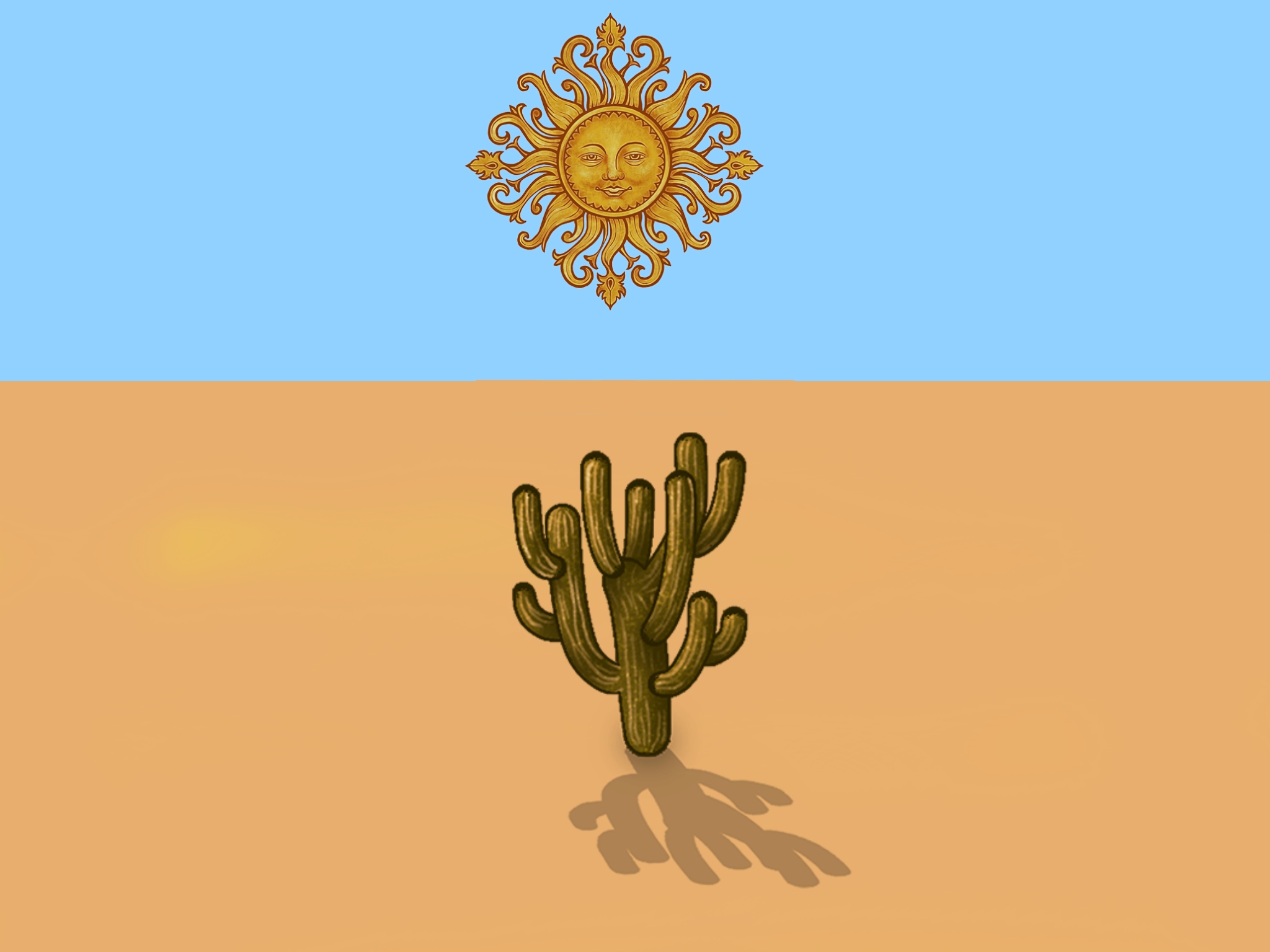
Coin and Blood, languages all peoples speak.
Maps
-
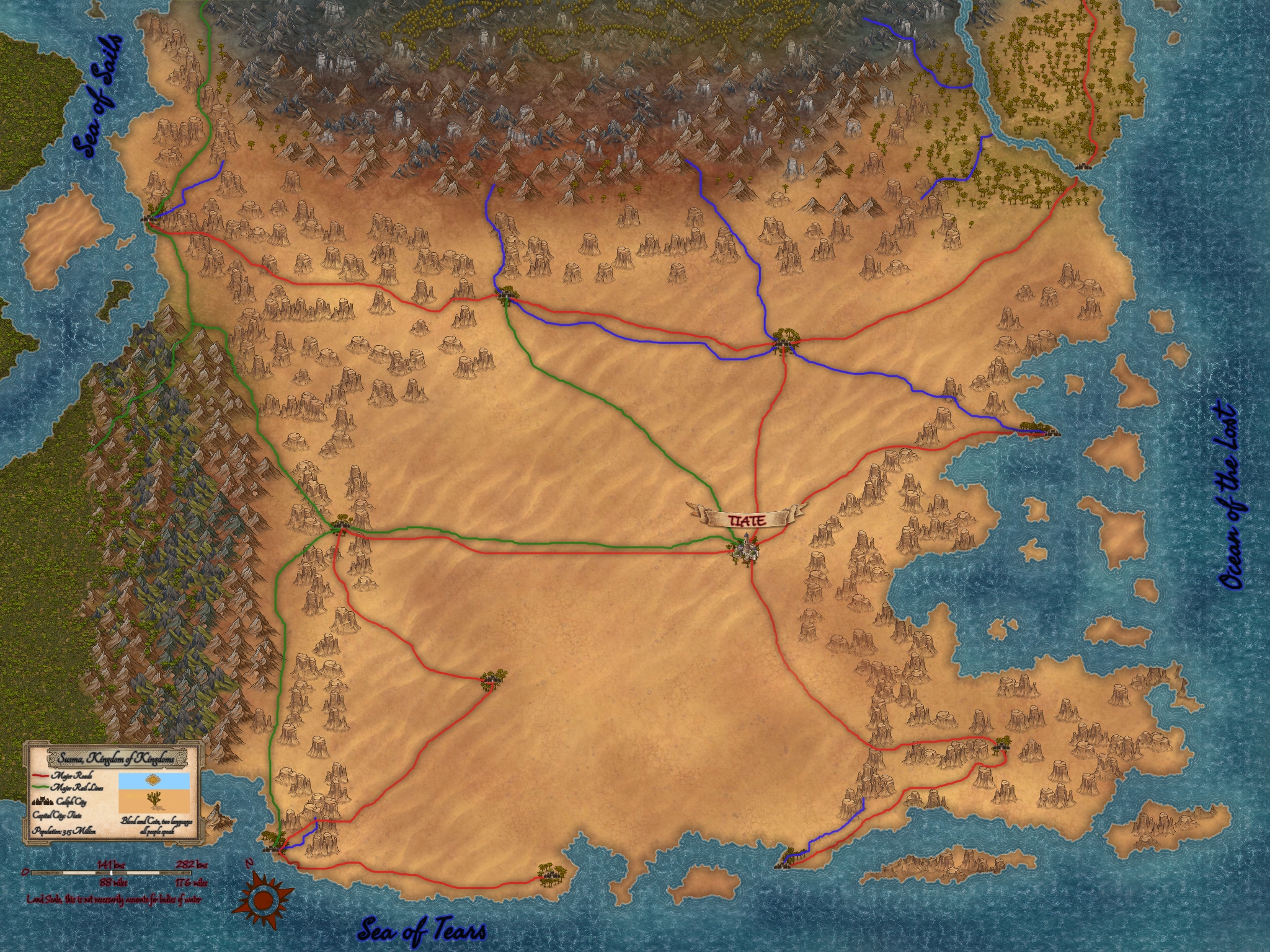
Susma, Kingdom of Kingdoms
Type
Geopolitical, Country
Currency
Susman currency is uniquely named and was uniquely stamped with specific sized vessels for holding and transporting water. Susma has in recent years begun printing their largest denominations, those of Casks (their gold coins) as papyrus notes, but this transition has been slow. However Susma intends to keep two coins in circulation, that of the 1 cask and 2 casks varieties. The notes shall be 5, 10, 15 and 30, which is a bit of an odd counting system, without the knowledge of its basis, which is that from the nation's capital in each of the four cardinal directions (more or less, following roads of course) those numbers are the number of casks of water two people, since travelling the Bala alone is considered foolhardy, would need to make it out of the desert should all oases on their route be dry, from each cardinal direction. In order, matched to how I listed the number, it is East, North, South and West.
Their next coins, silvers, are known as flasks, and there are 10 of them to a cask. They are thusly named for no real proper reason compared to the gold coins, it is simply a reference to a smaller vessel for liquid. These coins come in the standard assortment of denominations, 1, 2.5, 5, and 7.5.
Finally the brass coins are known as cups, and this is actually a cultural nomenclature choice to. For 10 cups (which makes a flask) is the number it is generally accepted one person crossing the Bala will need to drink daily to be comfortable. Not to survive, you can survive on likely as little as seven, but to be comfortable whilst travelling. These coins too come in the more typical denominations you'd expect, a single (1), 2.5, 5, and 7.5.
Their next coins, silvers, are known as flasks, and there are 10 of them to a cask. They are thusly named for no real proper reason compared to the gold coins, it is simply a reference to a smaller vessel for liquid. These coins come in the standard assortment of denominations, 1, 2.5, 5, and 7.5.
Finally the brass coins are known as cups, and this is actually a cultural nomenclature choice to. For 10 cups (which makes a flask) is the number it is generally accepted one person crossing the Bala will need to drink daily to be comfortable. Not to survive, you can survive on likely as little as seven, but to be comfortable whilst travelling. These coins too come in the more typical denominations you'd expect, a single (1), 2.5, 5, and 7.5.
Controlled Territories
Neighboring Nations


Sounds like a fascinating country. I would love to know more about each of the caliphs.
Explore Etrea | WorldEmber 2025
It will be part of the great reconsolidation I intend to put Valerick thro after camp all of the next year til next camp. Some rewrites, tidying, housekeeping and the last three nations, which this is one, shall get proper articles in full. So in due time i shall have such a thing :) Im glad it tickles your curiosity!